Chromebooks are the most standardized laptops in education: nearly every model charges over USB-C with PD, which makes fleet charging simpler than any other platform. This guide covers Chromebook wattage tiers, charging-cart planning, cable requirements and the spare-charger math that school budgets need.
How Chromebooks standardize on USB-C
Chromebooks standardized on USB-C and USB Power Delivery early, which means one charger standard covers most of the fleet: a certified PD charger that meets the wattage tier charges any compatible Chromebook. The standardization eliminates the per-brand charger mess of older laptop fleets and makes cross-device compatibility a spec question rather than a mystery.
The standardization is the platform's quiet advantage: one USB-C PD standard across models means a school's charger inventory is a wattage decision, not a compatibility matrix. The same standard makes cross-brand charging work — a Chromebook charger charges a staff ultrabook and vice versa, which simplifies district procurement and classroom swaps. For districts, standardizing one charger SKU is the inventory strategy that survives device refreshes.
Wattage needs across Chromebook tiers
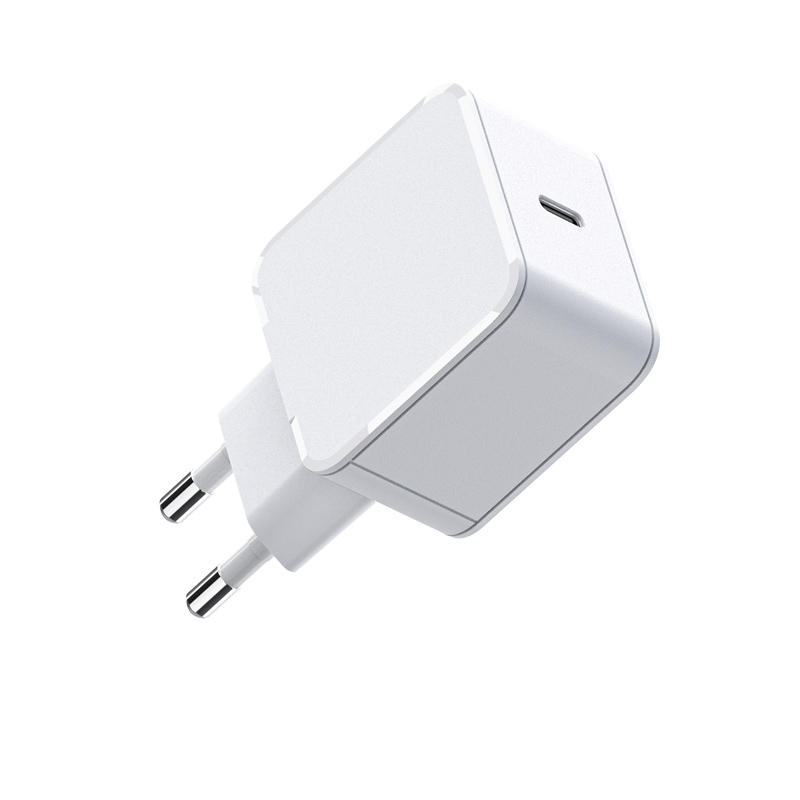
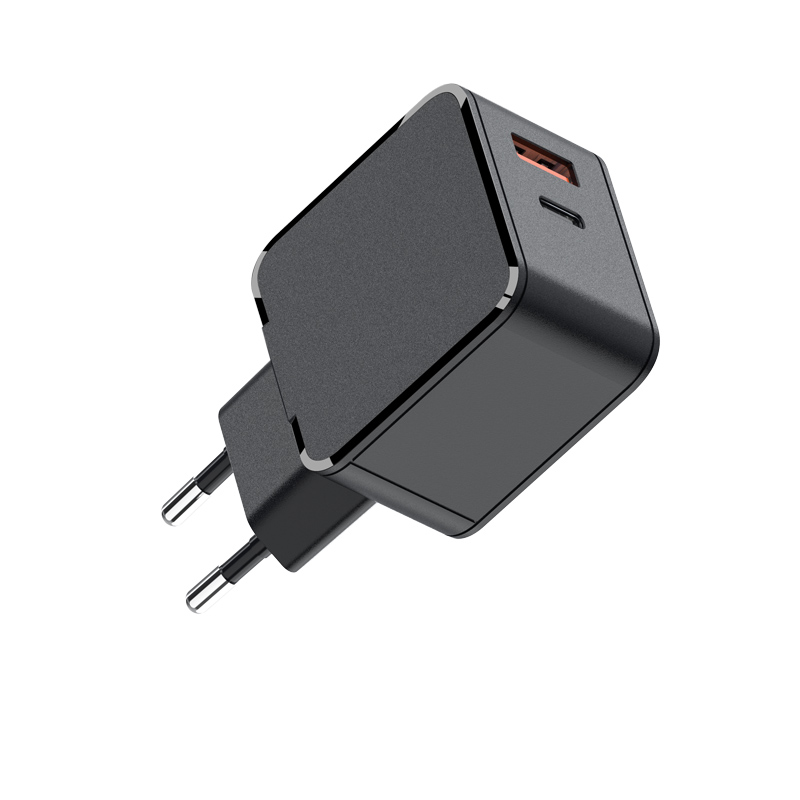
Chromebooks split into two practical tiers: entry and education models that accept 45W, and larger or higher-performance models that accept 65W. A 45W charger covers the majority of school fleets, while 65W adds headroom for the larger models and charges faster. The WET-65-C 65W charger covers both tiers with margin.
Charging Chromebook fleets efficiently
Fleet efficiency is a cart and scheduling problem, not just a charger problem: carts with per-slot PD charging, charging schedules that avoid peak power, and a spare-ratio plan (5–10%) that keeps every class covered. The charger tier drives the cart's power design — a cart of 30 slots at 45W needs about 1.35kW of distributed power, which affects circuit planning.
Fleet efficiency is scheduling plus power architecture: carts that charge overnight at lower wattage, top-up carts that deliver useful charge between classes, and spare pools that keep coverage constant. The power architecture follows the PD negotiation per slot — distributed charging matches each Chromebook's request instead of bottlenecking through one brick. Districts should plan the charge schedule around class timing, because a cart that charges in four hours and a 40-minute class break do not mix.
Cables and classroom carts
Cables for Chromebook fleets should be USB-C-to-C, rated 60W or higher, and durable enough for student handling — braided or reinforced construction, strain relief and a length that reaches the device without excess slack. In carts, cable management keeps connectors from being yanked, and per-slot cable routing prevents tangles. Buy spares at the same ratio as chargers.
Cable durability is a classroom spec: braided jackets, strain-relieved connectors and a length that reaches devices without slack. The USB-C cable standard guarantees the connector, but durability is a physical design choice that shows up in the first semester of student use. Buy spare cables at the same ratio as chargers, and inspect cart cables on the maintenance schedule — the cable is the cheapest component and the first to fail.
Compatibility with other USB-C laptops
A Chromebook charger is a standard PD charger, so it works with any USB-C PD laptop at the negotiated wattage: an ultrabook accepts 45W or 65W, and a workstation accepts what its USB-C input allows. This cross-compatibility is a procurement advantage — one charger SKU serves the Chromebook fleet and most staff laptops, shrinking the inventory line.
Sourcing guidance for education buyers
Education buyers should source chargers with four things: certification per market, per-batch inspection reports, quantity pricing with a stable BOM, and a warranty that matches the school year. Private-label options with school branding are available through OEM/ODM programs, and the certificate set should be part of the bid. Durability testing (drop, cable strain, plug cycle) belongs in the spec for student-use hardware.
Power requirements of popular Chromebook models
As a guide, education Chromebooks typically ship with 45W adapters, while convertible and higher-performance models ship with 65W. The school's fleet mix decides the standard: a uniform 65W charger covers every tier with one SKU, while a 45W standard saves cost at the price of slower charging on larger models. Verify the fleet's actual adapter specs before standardizing.
The fleet mix decides the standard, and the mix changes with procurement: a district that buys convertible Chromebooks for older students may need 65W, while an elementary fleet of entry models runs fine at 45W. The practical move is to audit the current fleet's adapters before standardizing, then choose the tier that covers 95% of devices with one SKU. The remaining 5% get a documented exception. This one-decision-per-fleet approach keeps inventory, spares and carts aligned, and it survives the next device refresh because USB-C PD is the constant. Audit the fleet mix annually, because a district that adds convertible devices mid-contract may need to move the standard up a tier.
Charging carts sized for Chromebook batteries
Cart sizing should account for charge time, not just capacity: a cart that charges the fleet overnight can run lower wattage per slot, while a cart expected to top up between classes needs enough power to deliver a useful charge in 30–60 minutes. Distributed PD at the device's negotiated wattage is the design that handles both schedules.
Cable management for classroom charging
Classroom cable management has two goals: no tripping hazards and no yanked connectors. Carts with per-slot channels, desks with grommets, and cable clips that release cleanly all help. Students should be able to connect and disconnect without forcing anything — a connector that requires force is a connector that will fail.
Comparing Chromebook chargers by durability
Compare on durability specs that matter in schools: plug-cycle rating, cable strain relief, drop resistance of the brick and the connector, and a warranty that covers the school year. A charger that fails mid-year costs more in replacement and downtime than the price difference on the order. Ask suppliers for the durability test data, not just the marketing language.
Durability comparison needs numbers: plug-cycle rating, cable pull force, drop resistance and a warranty that covers the school year. The certified charger options that publish these specs give procurement a defensible comparison instead of a brand popularity contest. Ask suppliers for the durability test report — the report is the difference between a charger that survives a school and one that becomes a spring semester replacement.
Planning spare chargers for school budgets
The spare math for schools: 5–10% of fleet size as a working spare pool, plus a small emergency stock at the IT office. Lost and damaged chargers are a constant in schools, so the spare pool should be replenished on a schedule, not when complaints peak. Standardizing one charger SKU keeps the spare pool simple and the replacement cost predictable.
FAQ
What charger does a Chromebook use?
Most Chromebooks charge over USB-C with USB PD at 45W or 65W, depending on the model. A certified PD charger that matches the wattage tier works across the fleet.
Is a 45W or 65W charger better for a school fleet?
65W covers every tier with one SKU and charges larger models faster; 45W is cheaper and sufficient for entry Chromebooks. Standardize on one and size the carts and spares around it.
Can a Chromebook charger charge other laptops?
Yes — it is a standard USB-C PD charger, so it charges any USB-C PD laptop at the negotiated wattage. That cross-compatibility simplifies fleet inventory and makes the Chromebook charger a natural spare for staff laptops too.
How many spare Chromebook chargers should a school keep?
Typically 5–10% of fleet size as a working pool, plus emergency stock at the IT office. Lost and damaged chargers are constant in schools, so replenish on a schedule.
Planning Chromebook charging for your school or district? Send your fleet size and device mix to our team through the contact page — we can supply certified 45W/65W chargers with school-ready durability and documentation.
This article is part of Laptop Charger OEM & Fleet Programs, the guide that covers this topic in decision order.