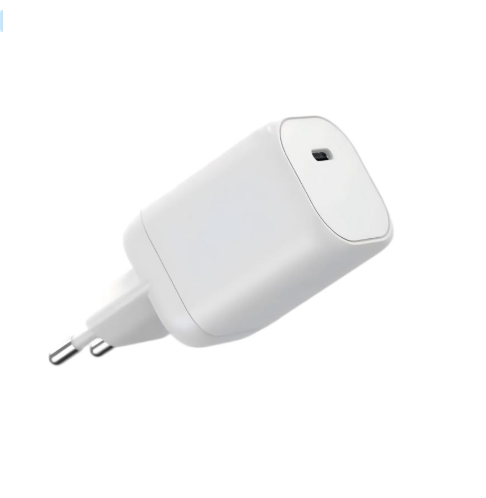
A phone charger that is perfectly legal in one country can be stopped at another — the plug does not fit, the voltage rating does not cover the mains, or the certificate does not name the configuration that arrived. Compliance is not a single global checkbox; it is a per-market combination of plug shape, input voltage and safety certification. This guide breaks the combination into the three things every market checks, walks through the US, EU, UK and AU specifics, and ends with a regional matrix you can use as a sourcing checklist.
The Three Things Every Market Checks
Every market checks the same three things, even though the details differ:
- The plug. The physical connector must match the wall outlet standard of the market.
- The voltage. The charger's input range must cover the market's mains voltage.
- The certification. The charger must carry the safety and compliance marks the market recognizes, and the certificate must name the exact model and configuration.
The three are independent. A charger with the right plug and the wrong input range fails in a market even though it fits the wall. A charger with the right plug and voltage but no matching certificate is a compliance risk at customs and in the marketplace. Sourcing teams that treat the three as one step discover the gaps at the worst moment — at the border or after a listing complaint.
The correct order is: define the market list first, then map each market to its plug, voltage and certificate, then freeze the configurations. Every market added after the freeze is a new configuration, a new certificate conversation and a new cost line.
US: FCC, UL and 120V Reality
The United States runs on 120V mains, and a charger destined for the US market needs to handle that input as well as the safety and EMC picture:
- FCC. Radio-frequency and electromagnetic compatibility compliance is a US requirement, and FCC compliance is a familiar part of electronics market entry. The responsible party, testing and documentation follow the FCC's rules.
- UL and safety standards. UL is the widely recognized safety certification organization in the US; chargers sold through major retail and marketplace channels are commonly expected to carry UL-listed certification or an equivalent recognized safety mark.
- 120V input. A charger rated only for 220–240V will not work on US mains; the input range must include 120V.
The practical sourcing note is that the certificate must name the exact model and the plug configuration. A certificate for a UK-plug variant does not cover a US-plug variant, even when the internal design is identical, because the plug and the market configuration are part of what is certified.
Two US-specific details belong in the plan. First, FCC compliance is tied to the responsible party — the entity that markets the product in the US — so the buyer or importer, not just the factory, carries part of the obligation and should hold the documentation. Second, major retail and marketplace channels increasingly ask for recognized safety certification in their vendor requirements, which means a charger destined for a big US retailer needs the safety certification planned from the start, not discovered during the listing review.
EU: CE, RoHS and 230V Reality
The European Union runs on 230V mains and uses the CE marking framework:
- CE. The CE mark indicates the product meets applicable EU directives, including safety and EMC requirements. It is a self-declaration backed by the technical file, and it is the entry requirement for the EU market.
- RoHS. The RoHS directive restricts hazardous substances in electrical and electronic equipment, and RoHS compliance is part of the EU paperwork for chargers.
- 230V input. The input range must cover 230V (and ideally the broader 100–240V range that also covers other markets).
- EU plug. The EU market uses the Type C/E/F plug system; the certificate and the plug configuration must match.
The EU framework also moves: connector standardization for portable devices is an ongoing regulatory direction, so the plug and port configuration of a charger line should be checked against current official requirements when the line is planned and again when it is updated.
The CE paperwork is a technical file, not a single sticker: the declaration of conformity, the test evidence and the risk assessment sit behind the mark, and the importer or responsible party must be able to produce them when asked. A buyer who only checks that the mark is printed on the box is buying half of the compliance; the file is the other half, and it should be requested with the sample, not at the border.
Expert view — WECENT compliance team: The pattern we see in every market is the same: the certificate and the shipped configuration must agree on three fields — model number, plug variant and input range. When a buyer keeps those three aligned, customs and marketplace audits become paperwork; when one field drifts, a whole shipment can stop. Check the alignment per batch, not just at the start.
UK, AU and the Long Tail
The UK and Australia add their own combinations to the matrix:
| Market | Mains voltage | Plug standard | Certification notes |
|---|---|---|---|
| United Kingdom | 230V | Type G | UKCA (or CE recognition per current rules); UK-specific plug |
| Australia | 230V | Type I | RCM / electrical safety requirements; AUS plug |
| Japan | 100V | Type A/B | PSE mark; 100V input critical |
| Korea | 220V | Type C/F (round) | KC mark |
The long tail of markets matters because each one is a configuration: the same internal charger becomes a different SKU when the plug, the input range or the certificate changes. A global line that starts with US, EU, UK and AU covers the volume, and the long tail is added market by market as the business justifies it. The matrix below is the planning tool that keeps the additions orderly.
The UK deserves a planning note because its marking framework has changed over time. Buyers should confirm the current official requirement for the UK at the moment of sourcing — the recognition rules between UKCA and CE have shifted, and the correct answer at one date may not be the correct answer later. The same discipline applies to any market where the framework is in transition: the official regulator's page is the source, and the sourcing plan should be re-checked when the line is updated.
A Regional Compliance Matrix
| Region | Plug | Voltage | Key certification | Sourcing note |
|---|---|---|---|---|
| US | Type A/B | 120V | FCC; UL or recognized safety mark | Certificate must name US plug config |
| EU | Type C/E/F | 230V | CE, RoHS | 100–240V input covers most markets |
| UK | Type G | 230V | UKCA (or current recognition rules) | Separate plug variant and certificate |
| AU | Type I | 230V | RCM / electrical safety | AUS plug variant |
| JP | Type A/B | 100V | PSE | 100V input critical |
| KR | Type C/F | 220V | KC | Round-pin plug variant |
Use the matrix as a sourcing checklist: for each market in the plan, confirm the plug variant, the input range and the certificate in one row, and confirm all three against the shipped configuration on every batch. The GaN charger section lists models with their regional plug options, and the WECENT support FAQ covers the compliance questions buyers raise during sourcing. For model-specific documentation, the WECENT solutions team can confirm which certificates and reports exist for your configurations.
For export programs, the compliance matrix is the sourcing tool: plug, input and certificate in one row per market, verified on every batch.
Frequently Asked Questions
What certifications does a phone charger need in the US?
FCC compliance is a US requirement, and UL or a recognized safety mark is commonly expected in retail and marketplace channels. The certificate must name the exact model and the US plug configuration.
Is CE enough for the UK market?
The UK operates its own marking framework (UKCA) with recognition rules that have changed over time. Confirm the current official requirement for the UK market at the time of sourcing; do not assume CE alone covers it.
Can one charger with interchangeable plugs serve all markets?
Interchangeable plugs cover the socket, but the certificate and the input range still need to cover each market configuration. A universal charger is only "universal" when the documentation matches each market it ships to.
Why does the same charger need different certificates per region?
Because certification covers a specific configuration: the model, the plug variant and the market's standards. Different plugs and different market requirements mean separate certification conversations.
What happens if the shipped configuration does not match the certificate?
The product is effectively uncertified for the market that receives it, which can stop a shipment at customs or trigger a listing removal. The certificate-to-configuration match should be checked per batch.
Does WECENT support regional certifications?
WECENT supports target-market certifications such as CE, FCC, RoHS, CCC, PSE and KC on a model-specific basis. Share your market list with the project team to confirm the certificates and reports for your configurations.
This article is part of Compliance & Power Supplies, the guide that covers this topic in decision order.