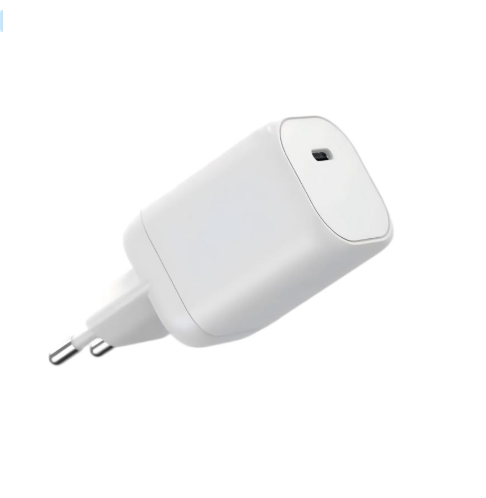
The question of whether a power supply is evaluated under IEC 60601-1 or IEC 62368 is answered by the device it powers, not by the adapter’s appearance or its “medical” label. IEC 60601-1 is the framework for medical electrical equipment; IEC 62368 is the framework for consumer and ICT equipment. This guide explains what each family governs, the classification decision flow, where they overlap in practice, the documentation differences buyers see, and why the decision belongs early in the program.
Key takeaways
- Device classification decides the standard family, not the adapter label.
- IEC 60601-1 covers medical electrical equipment; IEC 62368 covers consumer and ICT equipment.
- The classification decision belongs to the buyer’s QA or regulatory team, confirmed per configuration.
Content updated: August 2026 — confirm current standard editions and model-specific details before ordering.
Scope note: This guide is industry information, not regulatory, legal or certification advice; standards applicability is confirmed per configuration.
What Each Standard Family Governs
IEC 60601-1 is the base safety standard for medical electrical equipment and systems, supported by collateral standards such as 60601-1-2 for EMC. IEC 62368 is the safety standard for audio, video, information and communication technology equipment — the framework that replaced the older 60950 and 60065 families for consumer and ICT products.
The two families answer different questions:
| Framework | Scope | Typical products |
|---|---|---|
| IEC 60601 family | Medical electrical equipment and systems | Patient-connected devices, clinical equipment |
| IEC 62368 | Consumer and ICT equipment | Laptops, monitors, adapters, accessories |
A charger used in a hospital can fall under either family, depending on what it powers and how the system is classified. The framework is a consequence of the device, not the location.
A Decision Flow for Device Classification
The classification decision follows a short flow:
- Define the device and its intended use.
- Confirm the regulatory framework for the device type and market.
- Identify whether the device is medical electrical equipment as classified.
- Select the standard family — 60601 for medical, 62368 for consumer/ICT.
- Confirm the power supply’s role in the device or system.
The flow is run by the buyer’s QA or regulatory team, because the classification is a regulatory determination, not a supplier preference. Suppliers provide evidence; the buyer owns the decision.
The flow is deliberately short because the classification question is usually answerable from the device’s intended use. A device designed for diagnosis, monitoring or treatment of a patient is the medical direction; a general-purpose computer or accessory is the ICT direction. The difficulty is not the rule, it is the edge cases — and the edge cases are exactly why the decision is made in writing and revisited when the device changes.
The classification decision also has a timing consequence. It is made before the platform is chosen, because the platform’s certificate coverage depends on which family applies. A program that chooses the platform first and the classification later tends to discover that the documentation does not match the requirement, which is the most expensive way to learn the answer.
Where the Standards Overlap in Practice
The overlap shows up in real projects: a workstation cart with a laptop, a monitor and a medical peripheral mixes families. The laptop and monitor may sit under IEC 62368, while the medical peripheral and its power sit under the 60601 family — and the cart’s power architecture has to satisfy both sets of expectations.
The practical consequence is that one program can carry two document sets. The supplier should be asked which family applies to the configuration being quoted, and the buyer should confirm the classification rather than assume the “medical-looking” parts are all under one framework.
The overlap also shows up in power architecture. A cart with a laptop under IEC 62368 and a medical peripheral under IEC 60601 needs a power design that satisfies both sets of expectations — and the documentation for each part must cite its own family. This is not a contradiction; it is the normal structure of mixed systems. The buyer’s file should organize the documents by device and by family, so an audit can trace each part to its standard.
For suppliers, the overlap means the quotation should state which family each configuration covers. A quote that implies one standard covers everything invites a compliance gap. Naming the family per configuration is part of an honest proposal, and it is the basis for the document set that follows.
Documentation Differences Buyers See
The document sets differ in emphasis, not just in name:
| Document | 60601 context | 62368 context |
|---|---|---|
| Safety certificate | Names the standard edition and configuration | Same principle, different standard |
| EMC report | 60601-1-2 requirements | ICT EMC requirements |
| Isolation and leakage data | Patient-protection emphasis | Operator and equipment protection |
| Risk management | ISO 14971 process, per role and contract | Hazard-based safety engineering |
The model-match rule applies in both worlds: the certificate must name the exact configuration. The difference is which standard the documents cite and which expectations they meet.
The documentation difference is visible in the risk story. The 60601 world builds on the ISO 14971 risk management process, with evidence tied to the device program and the role of each party. The 62368 world uses hazard-based safety engineering focused on the equipment and its energy sources. A buyer who understands which story the documents tell can read them correctly — and can tell when a document set is being stretched across the wrong family.
The practical review habit is to check the standard citation on every certificate before reading anything else. The citation is the fastest signal of which family the configuration was tested against, and it resolves most of the confusion between the two worlds before it starts.
Planning the Standard Decision Early
The classification decision should sit at the start of the program, because it shapes the platform choice, the certificate path and the timeline. A program that discovers the framework late re-plans documentation, testing and sometimes hardware.
The early decision also keeps the supplier conversation honest: a supplier quoting a configuration should state which standard family the documents cover, and the buyer should confirm the classification before freezing the specification.
Planning the decision early also protects the timeline. Certification, testing and documentation follow the family, so a late change to the classification replans all three. Programs that confirm the family at the brief stage find that the rest of the schedule holds; programs that defer it find that the schedule moves.
The decision belongs in the project file with a date and an owner. A classification confirmed in writing can be revisited deliberately when the device changes; a classification assumed in passing is a risk that surfaces later. Write it down, date it and review it at each change — the standard family is the framework the whole documentation story hangs on.
The classification decision also shapes the supplier conversation from the first contact. A supplier that asks about the device and its classification before quoting is running the right process; one that quotes a “medical charger” without the context is quoting a label. Buyers who lead with the classification get proposals that match the framework, and the document set follows the family instead of being negotiated later.
Finally, the decision is part of the product’s identity. The standard family appears on the certificate, in the import file and in the audit trail, so getting it right early saves rework in every downstream step. The cost of confirming the classification is minutes; the cost of discovering it late is a re-planned certification, testing and documentation schedule.
The GaN Charger Category at WECENT sorts the platform range by power and ports, giving the standard-decision conversation a concrete starting point, and the WECENT FAQ answers the certification questions that come up during selection. For a program that needs the classification and document set confirmed, submit the device list and target markets to WECENT’s project engineering team — the review returns the configuration and documentation options that apply to your exact program.
Frequently Asked Questions
Does a charger used in a hospital always need IEC 60601?
No. The device it powers and the system classification decide the family. Laptops, monitors and many accessories sit under IEC 62368 even inside a hospital.
Who decides which standard applies?
The buyer’s QA or regulatory team, based on the device classification and the market’s requirements. Suppliers provide evidence; the buyer owns the determination.
Can one power supply serve both standards?
It can, when its design meets both sets of requirements and the documents cover both configurations. Confirm the certificate coverage before reusing a configuration across programs.
What happens if I choose the wrong family?
The documentation and testing will not match the market’s requirement, which can block the launch or create compliance exposure. The classification is worth confirming early.
Is IEC 62368 replacing IEC 60601?
No. They are separate families for separate product classes. IEC 62368 replaced older consumer/ICT standards; the medical family remains distinct.
Sources
- WECENT – GaN Charger Category
- WECENT – Quality Control
- WECENT – FAQ
- WECENT – Contact Us
- International Electrotechnical Commission – IEC 60601 Standards
- European Commission – Common Charger
This article is part of Medical Power Supplies, the guide that covers this topic in decision order.