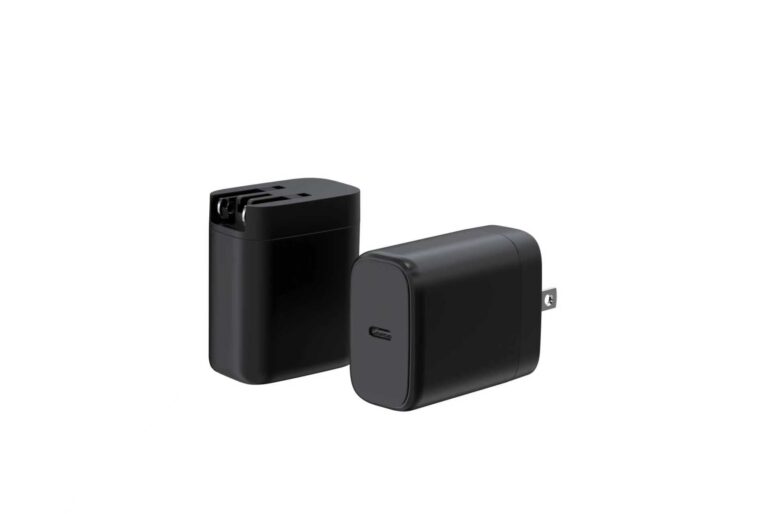
A hearing aid charger is a small product with several engineering decisions inside it: how the instrument connects, whether the case also dries, and what battery chemistry the instrument uses.
For an OEM those decisions are made once per platform, and they determine both the user experience and the service requirements.

How do rechargeable hearing aids charge?
Through contacts or a coil.
Rechargeable instruments charge either through physical contacts in a dock or case, or inductively without exposed contacts; the choice affects hygiene, wear and the charging electronics.
Contact charging is electrically simple and efficient, with the trade that exposed contacts collect moisture and debris. Inductive charging removes the contacts and their hygiene question, at the cost of lower transfer efficiency and a more complex charging circuit.
The device’s classification determines the applicable safety framework for the charger as part of the device, and the relevant standard for medical electrical equipment is published by the IEC (IEC 60601-1).
Contact charging versus inductive charging
The two approaches differ in their maintenance profile as much as in their electronics. Contacts need cleaning and can corrode; inductive coils need alignment and produce heat. The choice usually follows the instrument’s mechanical design rather than the charger’s.
| Aspect | Contact charging | Inductive charging |
|---|---|---|
| Efficiency | Higher | Lower, with more heat |
| Hygiene | Contacts require cleaning | No exposed contacts |
| Alignment | Mechanical, by design | Requires coil alignment |
| Service | Contact wear and corrosion | Coil and sealed electronics |
Drying cycles and humidity control
Many charging cases also dry the instruments overnight, because moisture is the main cause of early failure in small wearables. The drying function adds a heating element and a control cycle, which changes the product’s thermal design and its energy use.
For the user the practical specification is a drying cycle that runs in reasonable time without excessive warmth, and a case that is easy to clean. For the manufacturer it is a thermal design and a safety assessment.
Battery chemistry, cycle life and end of life
Small cells have limited capacity, and their cycle life determines how long the instrument remains usable between replacements. The charger’s behaviour affects that: charging beyond the cell’s recommended window or allowing heat to accumulate shortens it.
That makes charge control a durability feature rather than only a safety one, and it is a specification line audiologists increasingly ask about.

Travel cases and USB power input
A travel case usually charges from a USB source, which means the case contains the charging electronics and the user supplies the adapter. That arrangement shifts part of the specification to the wall adapter, and the documentation should say what the case requires.
Where the case charges from a wide-input adapter, international travel needs only a plug change, the same pattern as any other portable device.
What audiologists should verify before recommending
Four questions cover most of the decision: which charging method the instrument uses, what the drying cycle does, how long a charge lasts in normal use, and what the manufacturer’s service arrangement is for the charger.
Those answers are more useful to a patient than a specification table, and they also determine the number of support contacts in the first year.
OEM note: designing a charger for a hearing-aid platform
The specification follows the instrument: contact geometry or coil position, the drying requirement, charge control limits and the enclosure’s tolerance of moisture and cleaning. What the charger contributes is the electrical behaviour and a serviceable enclosure.
WECENT builds compact charging platforms for OEM programmes through its OEM/ODM programme, with sampling, certification planning and per-batch inspection records from the quality control gates; the standard range is listed in the product catalogue.
Service and warranty considerations
Because the charger is used nightly, its wear items are the contacts, the case mechanism and the cable. A warranty programme that covers those items with a defined replacement route is easier to operate than one that treats the whole product as a unit.
The documentation set for each unit – specification, batch record and change control – is what allows a service decision to be made from records rather than from inspection (ISTA covers transit performance for packaging, and FDA medical device pages provide context for devices regulated in the US market).
Programmes in this area are decided by documentation as much as by hardware. The practical discipline is to keep one file per model containing the specification, the test and inspection records and the market documents, and to review it whenever the bill of materials or the production site changes. WECENT produces per-batch inspection records at its quality control gates and provides model-level specifications and certification planning through its OEM/ODM programme, with the platform range listed in the product catalogue.
For wearable charging programmes, the same file answers most questions that arise during qualification, audit or listing review: which standard applies, which model was tested, and which batch the shipped units came from. Reference documents for the relevant requirements are published by the standards and regulatory bodies, including the official text and the related requirement, with the equivalent market rule and https://www.ista.org/ applying where the product is sold into those markets.
Two further habits keep the file usable over time. The first is to record the review date and the reviewer against each document, so that an outdated report is visible rather than assumed current. The second is to keep the commercial documents – quotation, agreed specification and packaging artwork – in the same folder as the technical evidence, because a question about a shipped unit usually requires both.
A further point concerns the production reality behind the paperwork. Claims that survive scrutiny are the ones a factory can reproduce batch after batch, which means the specification, the test method and the acceptance criteria have to travel together with the order. Where they do not, the same product can be built to two different understandings of the same document.
Finally, buyers should decide in advance what evidence they will need if a question arises later, and request it at the sampling stage rather than after the shipment. Requesting records retrospectively is possible, but it is slower and it removes the opportunity to correct a specification before tooling. WECENT supports programmes with model-level specifications and per-batch inspection records produced at its quality control gates, available under NDA through its OEM/ODM programme, with the platform range listed in its product catalogue catalogue.
FAQ
Do rechargeable hearing aids need a special charger?
Yes. The charger matches the instrument’s charging method, either contacts or an inductive coil, and its specification follows the device’s classification where the instrument is regulated as medical electrical equipment.
Is inductive charging better than contact charging for hearing aids?
It depends on the priorities. Inductive charging removes exposed contacts and their hygiene and corrosion issues but transfers less efficiently and generates more heat; contact charging is more efficient and needs cleaning.
What does a hearing aid drying cycle do?
It removes moisture from the instrument overnight, addressing the main cause of early failure in small wearables. It adds a heating element and control cycle, which is why the case’s thermal design is part of the specification.
How long should a hearing aid charge last?
Runtime depends on the instrument’s power consumption and the cell’s capacity, so the useful figure is stated for typical daily use rather than as a maximum. Charge control affects cycle life and therefore the interval between replacements.
What should an OEM specify for a hearing aid charger?
Contact geometry or coil position, the drying requirement if any, charge control limits for the cell chemistry and an enclosure that tolerates moisture and cleaning, together with the documentation the device file requires.
Developing a charging platform for wearables?
Share the instrument’s charging method, cell chemistry and target markets, and WECENT will confirm the platform, documentation and MOQ from a written brief.
{“@context”:”https://schema.org”,”@type”:”FAQPage”,”mainEntity”:[{“@type”:”Question”,”name”:”Do rechargeable hearing aids need a special charger?”,”acceptedAnswer”:{“@type”:”Answer”,”text”:”Yes. The charger matches the instrument’s charging method, either contacts or an inductive coil, and its specification follows the device’s classification where the instrument is regulated as medical electrical equipment.”}},{“@type”:”Question”,”name”:”Is inductive charging better than contact charging for hearing aids?”,”acceptedAnswer”:{“@type”:”Answer”,”text”:”It depends on the priorities. Inductive charging removes exposed contacts and their hygiene and corrosion issues but transfers less efficiently and generates more heat; contact charging is more efficient and needs cleaning.”}},{“@type”:”Question”,”name”:”What does a hearing aid drying cycle do?”,”acceptedAnswer”:{“@type”:”Answer”,”text”:”It removes moisture from the instrument overnight, addressing the main cause of early failure in small wearables. It adds a heating element and control cycle, which is why the case’s thermal design is part of the specification.”}},{“@type”:”Question”,”name”:”How long should a hearing aid charge last?”,”acceptedAnswer”:{“@type”:”Answer”,”text”:”Runtime depends on the instrument’s power consumption and the cell’s capacity, so the useful figure is stated for typical daily use rather than as a maximum. Charge control affects cycle life and therefore the interval between replacements.”}},{“@type”:”Question”,”name”:”What should an OEM specify for a hearing aid charger?”,”acceptedAnswer”:{“@type”:”Answer”,”text”:”Contact geometry or coil position, the drying requirement if any, charge control limits for the cell chemistry and an enclosure that tolerates moisture and cleaning, together with the documentation the device file requires.”}}]}