
GPSR for Chargers: What the EU General Product Safety Regulation Requires
GPSR for chargers explained: who the responsible person is, what the product safety file must contain, listing duties and labelling for EU sales.
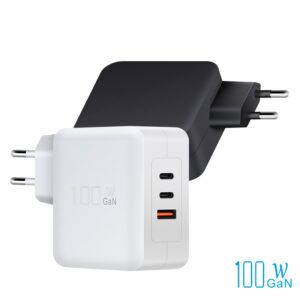
EU market entry for a charger used to be summarised as CE plus an efficiency statement. The General Product Safety Regulation adds a safety file, a named responsible person and specific listing duties, and those obligations sit with the seller even when the factory is elsewhere.
This article sets out what the regulation requires of a charger brand or importer, and what to collect from the factory to satisfy it.
Who is the responsible person under GPSR?
A party established in the EU.
The responsible person is an EU-established manufacturer, importer, authorised representative or fulfilment provider who holds the safety documentation and answers to authorities.
The regulation requires a responsible person established in the European Union to hold the technical documentation and to act as the contact for market surveillance authorities. A manufacturer outside the EU can appoint an authorised representative for that role, or the importer can take it.
For a brand selling directly to consumers, the practical consequence is that a supplier’s address on the packaging is no longer sufficient: there has to be an EU entity accountable for the file.
What the product safety file contains
The file is assembled from documents the factory already produces plus the commercial record of the product. Its purpose is to allow a market surveillance authority to assess the product’s safety without inspecting the goods.
| File element | What it contains | Source |
|---|---|---|
| Technical description | Model, electrical specification, intended use | Product specification |
| Risk assessment | Identified risks and the measures taken | Manufacturer and buyer jointly |
| Test and compliance evidence | Safety and EMC reports, efficiency documentation | Test houses and certification bodies |
| Traceability | Model and batch codes, production records | Factory batch documentation |
| Complaints and incidents | Record of issues and corrective actions | Buyer’s after-sales process |
Risk assessment and incident reporting
The risk assessment should reflect how the product is actually used: plugged and unplugged repeatedly, left in warm rooms, occasionally dropped, and connected to devices of unknown origin. Those conditions define the hazards and the mitigations.
Incident reporting is the ongoing obligation. A record of complaints, returns and any safety-related event, with the corrective action taken, is what demonstrates that the duties are being met after the launch as well as at it.
Online listing obligations
The regulation places specific duties on distance sales: the listing must identify the manufacturer and, where applicable, the responsible person, together with product identification information and any warnings. That changes what an online product page has to display.
For marketplace sellers, the practical work is to update the listing template rather than the product, but the information has to be consistent with the packaging and with the safety file.
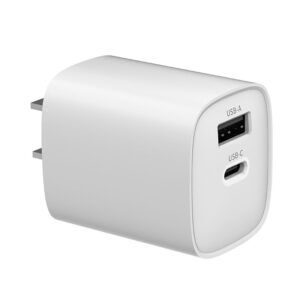
Labelling and language requirements
Warnings and instructions must be in the language of the member state where the product is sold, and the identification information has to be on the product or its packaging. For chargers sold across several member states, the language set becomes a packaging decision.
Where the product carries an efficiency statement or EMC marking, that information complements the safety labelling rather than replacing it. For a programme sold through several channels, the practical control is a labelling matrix that records which market requires which element on which surface.
Working with a factory to assemble the file
The factory supplies the technical basis: the specification, the test reports, the batch records and the production location. The buyer supplies the commercial layer: the responsible person, the listing content, the complaint record and the market list.
A programme document that lists both sets makes the assembly predictable. Without it, the file is usually assembled in response to a query, at which point the missing documents are the expensive ones.
How GPSR interacts with CE and efficiency rules
The obligations are cumulative rather than alternative. A charger placed on the EU market carries the applicable CE marking duties, the external power supply efficiency requirements and the general product safety file.
That is why the documentation set for an EU programme is best assembled once, per model, and reused across markets rather than recreated for each channel.
Practical checklist for a charger programme
Confirm the responsible person, assemble the file per model, update online listings, fix the language set for warnings and keep an incident record. Those five items cover the obligations that most often go unaddressed in a small programme.
WECENT supports EU programmes with model-level specifications, certification planning and per-batch inspection records from its quality control gates, available to buyers under NDA through the OEM/ODM programme; the platform range appears in the product catalogue. Official texts are published in the EU’s legal database for both the general product safety regulation (Regulation (EU) 2023/988) and the external power supply efficiency rules (Regulation (EU) 2019/1782), with radio equipment duties under Directive 2014/53/EU and battery obligations under Regulation (EU) 2023/1542 where applicable.
Programmes in this area are decided by documentation as much as by hardware. The practical discipline is to keep one file per model containing the specification, the test and inspection records and the market documents, and to review it whenever the bill of materials or the production site changes. WECENT produces per-batch inspection records at its quality control gates and provides model-level specifications and certification planning through its OEM/ODM programme, with the platform range listed in the product catalogue.
For EU product safety files, the same file answers most questions that arise during qualification, audit or listing review: which standard applies, which model was tested, and which batch the shipped units came from. Reference documents for the relevant requirements are published by the standards and regulatory bodies, including the official text and the related requirement, with the equivalent market rule and https://eur-lex.europa.eu/eli/reg/2023/1542/oj applying where the product is sold into those markets.
Two further habits keep the file usable over time. The first is to record the review date and the reviewer against each document, so that an outdated report is visible rather than assumed current. The second is to keep the commercial documents – quotation, agreed specification and packaging artwork – in the same folder as the technical evidence, because a question about a shipped unit usually requires both.
A further point concerns the production reality behind the paperwork. Claims that survive scrutiny are the ones a factory can reproduce batch after batch, which means the specification, the test method and the acceptance criteria have to travel together with the order. Where they do not, the same product can be built to two different understandings of the same document.
Finally, buyers should decide in advance what evidence they will need if a question arises later, and request it at the sampling stage rather than after the shipment. Requesting records retrospectively is possible, but it is slower and it removes the opportunity to correct a specification before tooling. WECENT supports programmes with model-level specifications and per-batch inspection records produced at its quality control gates, available under NDA through its OEM/ODM programme, with the platform range listed in its product catalogue catalogue.
FAQ
What does GPSR require for a charger sold in the EU?
A responsible person established in the EU, a product safety file per model containing the technical description, risk assessment, compliance evidence and traceability, updated online listing information, and an ongoing record of complaints and incidents.
Who can act as the responsible person?
An EU-established manufacturer, importer, authorised representative appointed by the manufacturer for that purpose, or a fulfilment service provider. The role carries the obligation to hold the documentation and to answer market surveillance authorities.
What must an online listing show under GPSR?
The manufacturer’s identification and, where applicable, the responsible person, together with product identification information and any required warnings. That information has to be consistent with the packaging and the safety file.
Does GPSR replace CE marking?
No. The duties are cumulative: the applicable CE marking requirements, the external power supply efficiency rules and the general product safety obligations all apply to a charger placed on the EU market.
What should I ask the factory for?
The model-level specification, safety and EMC test reports, the production location and the batch records, so the buyer can assemble the safety file around the responsible person and the commercial documentation.
Preparing an EU market entry?
Share the models, target member states and volumes, and WECENT will confirm the documentation, labelling and traceability available for the safety file.
{“@context”:”https://schema.org”,”@type”:”FAQPage”,”mainEntity”:[{“@type”:”Question”,”name”:”What does GPSR require for a charger sold in the EU?”,”acceptedAnswer”:{“@type”:”Answer”,”text”:”A responsible person established in the EU, a product safety file per model containing the technical description, risk assessment, compliance evidence and traceability, updated online listing information, and an ongoing record of complaints and incidents.”}},{“@type”:”Question”,”name”:”Who can act as the responsible person?”,”acceptedAnswer”:{“@type”:”Answer”,”text”:”An EU-established manufacturer, importer, authorised representative appointed by the manufacturer for that purpose, or a fulfilment service provider. The role carries the obligation to hold the documentation and to answer market surveillance authorities.”}},{“@type”:”Question”,”name”:”What must an online listing show under GPSR?”,”acceptedAnswer”:{“@type”:”Answer”,”text”:”The manufacturer’s identification and, where applicable, the responsible person, together with product identification information and any required warnings. That information has to be consistent with the packaging and the safety file.”}},{“@type”:”Question”,”name”:”Does GPSR replace CE marking?”,”acceptedAnswer”:{“@type”:”Answer”,”text”:”No. The duties are cumulative: the applicable CE marking requirements, the external power supply efficiency rules and the general product safety obligations all apply to a charger placed on the EU market.”}},{“@type”:”Question”,”name”:”What should I ask the factory for?”,”acceptedAnswer”:{“@type”:”Answer”,”text”:”The model-level specification, safety and EMC test reports, the production location and the batch records, so the buyer can assemble the safety file around the responsible person and the commercial documentation.”}}]}
Related articles
 EU Battery Regulation and Power Banks: Design Duties You Cannot OutsourceKnowledge
 Defective Charger Batch: How to Build a Claim That Gets ResolvedKnowledge
 Supplier NDA and Design Protection: Keeping a Custom Charger YoursKnowledge
 Dual Sourcing Chargers: Building a Second Manufacturing Base Outside ChinaKnowledge