
No true universal wall socket will emerge soon due to entrenched regional safety standards (EU Type C/F, US Type A/B, UK Type G, AUS Type I). USB-C is the practical universal charging standard, mandated by EU law for most devices by 2026, enabling one-cable power delivery up to 240W for phones and laptops globally. B2B buyers can source multi-region GaN OEM chargers from China with CE/FCC/PSE/KC certifications and 200 pcs MOQ to cut SKU complexity now.
Check: What Are Global Plug Standards for Universal Travel Chargers?
Why Do Regional Power Plugs Persist Despite Global Trade?
Historical safety reasons explain plug fragmentation. Voltage and frequency differences—110V/60Hz in the US versus 220V/50Hz in Europe—require distinct grounding and insulation designs. IEC World Plugs lack enforcement mechanisms, and no UN or ISO mandate governs wall outlet standardization. Policy barriers remain strongest: safety certification bodies prioritize regional standards over global convergence. For B2B importers, this means maintaining 5–7 major plug types, inflating inventory and SKU counts. Shenzhen manufacturers like Wecent address this by offering modular GaN platforms supporting EU, US, UK, and AUS plugs from a single factory, reducing complexity without sacrificing compliance.
What Makes USB-C the Closest Thing to a Universal Power Standard?
USB-C adoption accelerated after EU regulations requiring USB-C on phones and small devices by late 2024, expanding to laptops by 2026. Power Delivery (PD) 3.1 enables up to 240W over a single cable, supporting everything from earbuds to high-performance laptops. Unlike wall sockets, USB-C is enforced globally through law and industry standards, making it the de facto universal charging interface. For OEM buyers, this means designing around one connector type rather than managing multiple proprietary standards. Wecent’s GaN USB-C chargers range from 20W to 240W across 1–4 ports, enabling brands to deploy identical charging solutions across Europe, North America, and Asia with minimal regional adaptation.
How Is USB-C Mandating Change in Global Charger Design?
EU regulations phase out Lightning and micro-USB, with similar pushes in India and Brazil following suit. The US enforces USB-C indirectly through DOE efficiency standards. By 2026, over 90% of new mobile and portable devices will ship USB-C compatible. For B2B manufacturers, this shifts design priorities from multi-connector architectures to PD-focused solutions. Proprietary chargers become liabilities rather than differentiators. Private-label brands pivot via ODM partnerships—Wecent handles logo customization, packaging, and USB-C GaN specifications tailored to regional requirements, enabling rapid market entry without engineering overhead.
| Region | Plug Type | Voltage | Key Certifications | GaN Advantage |
|---|---|---|---|---|
| EU | Type C/F | 230V, 50Hz | CE, RoHS | Compact multi-port; smaller footprint |
| US | Type A/B | 120V, 60Hz | FCC, DOE | High efficiency; lower heat dissipation |
| UK | Type G | 230V, 50Hz | CE, RoHS | Travel-friendly foldable designs |
| Australia | Type I | 230V, 50Hz | RoHS, local safety | Reduced shipping volume costs |
| Japan/Korea | Type A / Type C | 100V, 50/60Hz | PSE, KC, CCC | Multi-protocol PD support |
| USB-C Strategy | Single cable | 5V–20V across regions | USB-IF PD certified | Works everywhere; pair with region plugs |
What Challenges Do B2B Buyers Face in Multi-Region Sourcing?
Maintaining separate SKUs per region raises production and logistics costs by 30–50%. Certification delays for PSE (Japan) and KC (Korea) extend time-to-market by 4–6 weeks. Warehousing multiple plug variants creates inventory drag, especially for startups and Amazon sellers with limited capital. USB-C standardizes the output but not the input plugs—buyers still require flexible factories capable of rapid retooling. Wecent’s full OEM/ODM service (Level 1–3) eliminates this bottleneck: brands select power tier (20W–240W), port configuration, and regional plugs; the factory handles certifications, testing, and compliance. This approach cuts SKU proliferation and accelerates global launches for private-label and wholesale importers.
Check: Travel Charger
How Can GaN Technology Bridge the Universal Socket Gap?
Gallium Nitride semiconductors are 30% smaller and cooler than silicon equivalents, enabling multi-port, high-wattage designs in compact form factors. This efficiency translates directly to travel chargers that support multiple plugs without bulk penalties. Wecent’s 20W–240W GaN lineup ships globally with factory-direct pricing, enabling brands to offer premium charging without proprietary complexity. A single 100W–240W GaN charger replaces three separate regional designs, slashing per-unit costs and warranty overhead. The technology future-proofs OEM investments: as USB-C adoption accelerates, GaN-based multi-port chargers become the standard bridge between legacy regional plugs and universal cable standards.
When Will USB-C Fully Replace Regional Chargers for OEMs?
Full EU enforcement occurs by 2026–2027; global convergence likely by 2030 if USB-IF and regional bodies align standards. Wall sockets remain unchanged—USB-C replaces cables and proprietary chargers, not outlets. Strategic B2B advice: begin sourcing USB-C PD 3.0/3.1 designs now. Wecent’s GaN supports scaling to 240W for laptops and phones, future-proofing multi-year supply agreements. Delaying USB-C adoption risks inventory obsolescence and certification re-work. Multi-region OEM partnerships with certified factories minimize compliance risks and accelerate the transition.
Wecent Expert Views
With 15+ years of manufacturing experience and 200+ global clients, Wecent’s perspective on the universal socket debate is clear: true electrical standardization remains unlikely, but USB-C delivers practical universality today. Our GaN charger platform spans 20W–240W across 1–4 ports, supporting EU, US, UK, AUS, and Asia-Pacific markets from a single ISO9001-certified factory. Every unit undergoes 100% functional testing before shipment and carries a 2-year warranty. For OEM buyers facing SKU fragmentation, our Level 1–3 OEM/ODM service—starting at just 200 pcs MOQ—enables rapid customization: logo, packaging, power tier, and regional plugs. As USB-C mandates roll out globally, pairing with a Shenzhen-based manufacturer equipped for multi-region compliance ensures your supply chain doesn’t get caught between legacy plugs and future standards.
| Factor | Regional Silicon Multi-Plug | USB-C GaN OEM Strategy |
|---|---|---|
| SKU Count | 5–7 per product line | 1–2 (core + regional variants) |
| Cost per Unit | Higher (redundant designs) | Lower (unified platform, 30% GaN efficiency) |
| Certification Time | 8–12 weeks per region | 4–6 weeks (batch compliance) |
| Logistics Volume | +35% shipping cost | −20–30% (compact GaN form factor) |
| Warranty Claims | Higher (multi-vendor risk) | Lower (single certified source) |
| ROI Horizon | 24–36 months | 12–18 months |
| Future-Proofing | High re-work risk | USB-C ready; low transition cost |
Conclusion
A true universal wall socket will not emerge within the foreseeable future—regional electrical standards remain deeply embedded in infrastructure and safety regulations. However, the practical answer to universal charging already exists: USB-C paired with GaN technology. EU mandates and global adoption timelines ensure that by 2026–2027, USB-C will be the dominant charging standard for phones, tablets, and laptops worldwide. For B2B buyers—OEM importers, private-label brands, and Amazon sellers—this creates both urgency and opportunity.
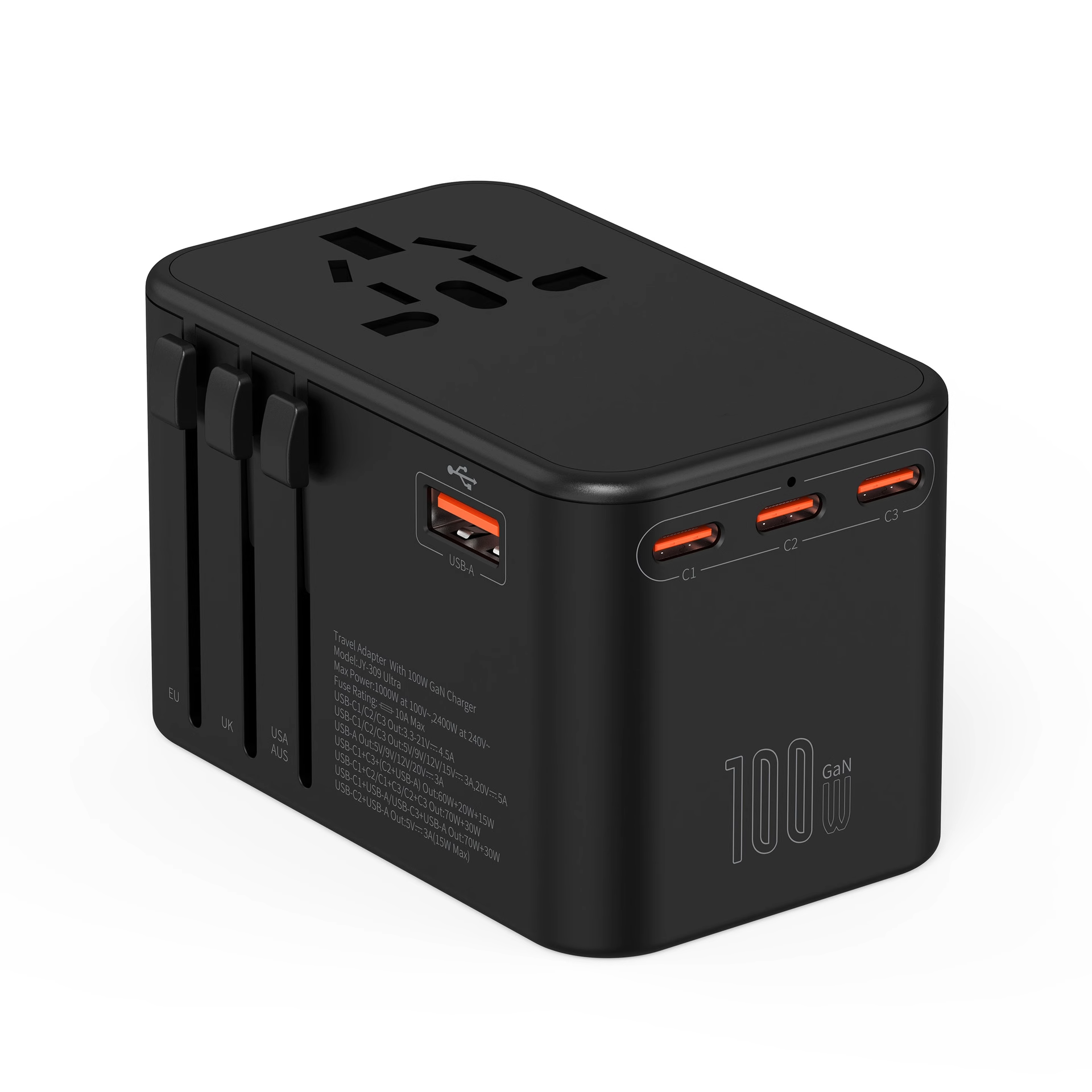
Sourcing multi-region GaN chargers from certified Shenzhen factories now eliminates SKU chaos, reduces certification delays, and future-proofs supply chains against regulatory shifts. Wecent exemplifies this approach: 15+ years of manufacturing expertise, 200+ global clients, and full OEM/ODM capabilities starting at just 200 pcs MOQ. From compact 20W pocket chargers to high-wattage 240W laptop solutions, Wecent’s ISO9001-certified platform supports EU, US, UK, and AUS plug types with CE, FCC, RoHS, PSE, and KC compliance.
The path forward is clear: stop waiting for a universal socket and start scaling with USB-C GaN OEM solutions today. Regional plugs will persist; universal charging cables will dominate.
FAQs
What certifications does Wecent provide for multi-region GaN chargers?
Wecent delivers CE, FCC, RoHS, PSE, KC, and CCC certifications (model-dependent), plus DOE and CEC compliance. Full portfolio ensures EU/US/UK/AUS/Japan/Korea market entry from one ISO9001-certified factory without re-certification delays.
Can Wecent customize USB-C GaN chargers for low MOQ?
Yes. Minimum order quantity is 200 pcs for OEM/ODM projects. Level 1–3 service includes logo, packaging customization, color options, power tiers (20W–240W PD), and regional plug configurations—enabling rapid private-label and wholesale launches.
How does GaN help reduce the impact of plug fragmentation?
GaN technology achieves 30% smaller form factors and 30% efficiency gains versus silicon. This enables multi-port, high-wattage designs that fit compactly, reducing per-unit costs and logistics volume by 20–30% while maintaining full power across regions.
Is USB-C ready for laptop charging worldwide?
Yes. USB Power Delivery 3.1 supports up to 240W, sufficient for all laptops. Wecent’s GaN series includes 100W–240W models with PD 3.0/3.1 certified for global use, enabling one-cable laptop and phone charging across all regions.
What warranty and testing does Wecent provide?
Standard 2-year warranty covers all units. Every charger undergoes 100% functional testing pre-shipment, with batch traceability records for compliance verification and after-sales support globally.