
The top 5 safety certifications for importing GaN chargers to the EU are: 1) CE mark (overall conformity under LVD/EMC); 2) RoHS (hazardous substances restriction); 3) LVD (Low Voltage Directive for electrical safety); 4) EMC (Electromagnetic Compatibility Directive); 5) ErP (Energy-related Products for efficiency). Use this checklist to verify Shenzhen suppliers like Wecent for seamless customs clearance and compliant product launches.
Check: GaN Charger
Why Are Safety Certifications Essential for EU GaN Charger Imports?
EU market entry requires strict compliance. Non-compliant GaN chargers face customs rejection, regulatory fines, or product recalls—creating supply chain delays that disrupt private-label launches and Amazon seller inventory. The European Commission has intensified scrutiny on high-power GaN chargers (20W–240W) due to overheating and fire-risk concerns, making certification non-negotiable for market access.
For OEM buyers and importers ordering low-MOQ volumes, partnering with pre-certified factories eliminates verification burden. Shenzhen manufacturers like Wecent hold multi-certification credentials (CE, RoHS, FCC, PSE, KC) across their GaN and wireless charger lines, reducing importer risk and accelerating time-to-market. Low-MOQ facilities (from 200 units) ensure certified stock availability without long lead times, critical for startups and private-label brands testing new markets.
What Is the CE Mark and Its Role in GaN Charger Certification?
The CE mark declares that a GaN charger conforms to EU directives—LVD (Low Voltage), EMC (Electromagnetic Compatibility), RoHS (hazardous substances), and ErP (energy efficiency). It is mandatory for all chargers sold in the EU and requires either manufacturer self-declaration or third-party notified-body testing. CE covers safety, performance, and environmental standards critical to fast-charging GaN designs. Wecent provides CE-certified GaN chargers across 20W to 240W power ranges with full Declaration of Conformity (DoC) documentation and 100% functional testing before shipment.
Importer action: Always request CE certificates and DoC from suppliers before placing orders. Verify the notified body issuing the certificate—reputable testing organizations include TÜV, Intertek, and SGS.
How Does RoHS Compliance Apply to GaN Chargers for EU?
The RoHS Directive (Restriction of Hazardous Substances) restricts ten banned materials—lead, mercury, cadmium, hexavalent chromium, and phthalates—in electrical equipment. RoHS 3 (2015/863) specifically added phthalates, affecting charger PCBs, cables, and housing materials. GaN chargers, with their compact high-density designs, concentrate materials into smaller spaces, making RoHS verification critical for PCB and solder composition.
Wecent’s ISO9001-certified production ensures RoHS compliance across all OEM and ODM runs from 200 units upward. The factory maintains laboratory documentation from accredited testing bodies (TÜV, Intertek) confirming material restrictions across components. Non-compliance blocks EU resale and incurs fines up to €100,000—making supplier lab reports non-negotiable for importers.
| Certification | Focus Area | Mandatory for EU? | Wecent Capability |
|---|---|---|---|
| CE Mark | Overall safety & conformity | Yes | Full GaN & wireless lines with DoC |
| RoHS | Hazardous substances | Yes | All products certified; TÜV/Intertek reports |
| LVD | Electrical safety | Yes (via CE) | Covered in CE; 65W+ models tested |
| EMC | No electromagnetic interference | Yes (via CE) | Emissions testing on all models |
| ErP | Energy efficiency | Yes (via CE) | No-load power <0.1W compliant |
What Is LVD Certification for Chargers in the EU Market?
The Low Voltage Directive (LVD, 2014/35/EU) ensures electrical safety for equipment operating between 50–1000V AC. For GaN chargers, LVD mandates dielectric strength testing (insulation resistance), leakage current measurement, and grounding verification to prevent electrical shocks, overheating, and fire hazards. High-power GaN models (65W+) designed for laptop charging face the most rigorous LVD scrutiny due to increased thermal and electrical stress.
Wecent’s ISO9001-certified production facility integrates LVD compliance into its CE documentation. The factory conducts in-line electrical tests during production and final QA checks to confirm insulation integrity and leakage current limits. For OEM and ODM orders, Wecent customizes safety features—such as overvoltage protection and thermal shutoff—tailored to EU market requirements and plug type (EU, UK, AUS).
Why Is EMC Directive Critical for GaN Charger EU Regulations?
EMC (Electromagnetic Compatibility Directive, 2014/30/EU) limits electromagnetic interference from GaN’s high-frequency switching. GaN semiconductor technology operates at higher switching frequencies than legacy silicon chargers, creating radiated and conducted emissions that may interfere with nearby medical devices, Wi-Fi, and telecommunications. EMC testing mandates conducted emissions (power lines) and radiated emissions (wireless) compliance.
Wecent’s CE documentation covers full EMC compliance across its GaN and wireless charger product lines. The factory partners with accredited EMC testing labs to measure emissions at relevant frequencies, avoiding costly re-testing during customs or market entry. Importers should request EMC lab reports and confirm that tested frequencies match their target EU markets to prevent delayed launches.
What Are ErP Requirements for EU GaN Charger Imports?
The Energy-related Products Directive (ErP, 2009/125/EC) mandates energy efficiency for chargers sold in the EU. Key requirements: no-load power consumption must be below 0.1W (charger consuming power when idle), and efficiency must be certified and labeled. GaN technology excels at ErP compliance—its superior efficiency (95%+ vs. 85% for legacy chargers) means less wasted energy as heat, lower no-load consumption, and reduced operational fines.
Check: Leading GaN & Wireless Charger Manufacturer
Wecent’s GaN designs are optimized for ErP compliance. The factory’s CE documentation includes verified no-load power measurements and efficiency certifications. For multi-region exports (EU, US, CEC, DOE), Wecent supports CEC labeling and DOE compliance in parallel, streamlining global supply chains for OEM and private-label brands. ErP compliance also strengthens green branding for sustainability-conscious e-commerce sellers.
How Can Importers Verify Supplier Compliance for Safety Certifications?
Verification requires a four-step checklist: (1) Request certificate copies and DoC—demand PDF copies of CE, RoHS, LVD, EMC, and ErP certificates directly from the supplier, not third-party distributors; (2) Verify notified body credentials—cross-reference issuing labs (TÜV, Intertek, SGS) on the NANDO (New Approach Notified and Designated Organisations) database to confirm legitimacy; (3) Audit factory ISO9001 certification—ensure the manufacturer holds active ISO9001 accreditation, indicating consistent quality systems; (4) Request sample testing via independent lab—for high-value orders, arrange third-party testing through Intertek or SGS to validate supplier claims.
Wecent differentiates itself through pre-held multi-certifications (CE, FCC, RoHS, CCC, PSE, KC) across its entire GaN and wireless product range. The factory’s 15+ years in Shenzhen manufacturing, 200+ global clients, and ISO9001 certification provide transparent compliance proof. Low-MOQ OEM (200 units minimum) with regional plug support (EU, US, UK, AUS) eliminates the need for large trial orders before EU launch. Avoid unverified Alibaba sellers—partner with established Shenzhen facilities like Wecent to mitigate compliance risk and ensure compliant inventory on time.
| Verification Step | Requirement | Supplier Proof Needed |
|---|---|---|
| 1. Electrical Safety (LVD) | Insulation & leakage current tested | LVD test reports + CE DoC |
| 2. Emissions (EMC) | No interference to nearby devices | Conducted & radiated emissions lab data |
| 3. Efficiency (ErP) | No-load power <0.1W; efficiency certified | ErP efficiency cert & no-load power measurements |
| 4. Overall Factory Quality | Consistent compliance & traceability | ISO9001 cert + batch shipping inspection records |
Wecent Expert Views
“With 15+ years of Shenzhen manufacturing experience, we’ve guided 200+ global clients through EU customs clearance with fully certified GaN and wireless chargers. The key is understanding that CE is an umbrella—it encompasses LVD, EMC, ErP, and RoHS testing underneath. Many importers assume CE alone is sufficient, but EU customs officers verify the underlying test reports. That’s why we provide complete DoC packages and maintain active ISO9001 certification. Our low-MOQ approach (200 units) allows private-label brands and Amazon sellers to test EU markets without massive pre-orders, and our in-house testing and certification lab access means no delays. For OEM and ODM buyers, we customize GaN chargers across 20W to 240W with EU, US, UK, and AUS plug options—all certified before shipment. The 2-year warranty and 100% functional testing per unit add confidence. If you’re importing GaN chargers, verify your supplier’s cert stack, audit their ISO9001 status, and always request independent sample testing for high-volume orders. That’s the fastest path to profitable EU launches.”
Conclusion
Secure EU GaN charger imports by prioritizing the top 5 certifications: CE mark (encompassing LVD, EMC, ErP, RoHS), standalone RoHS verification, LVD electrical safety, EMC emissions control, and ErP energy efficiency. These are not optional—they are mandatory for customs clearance and legal resale in EU markets.
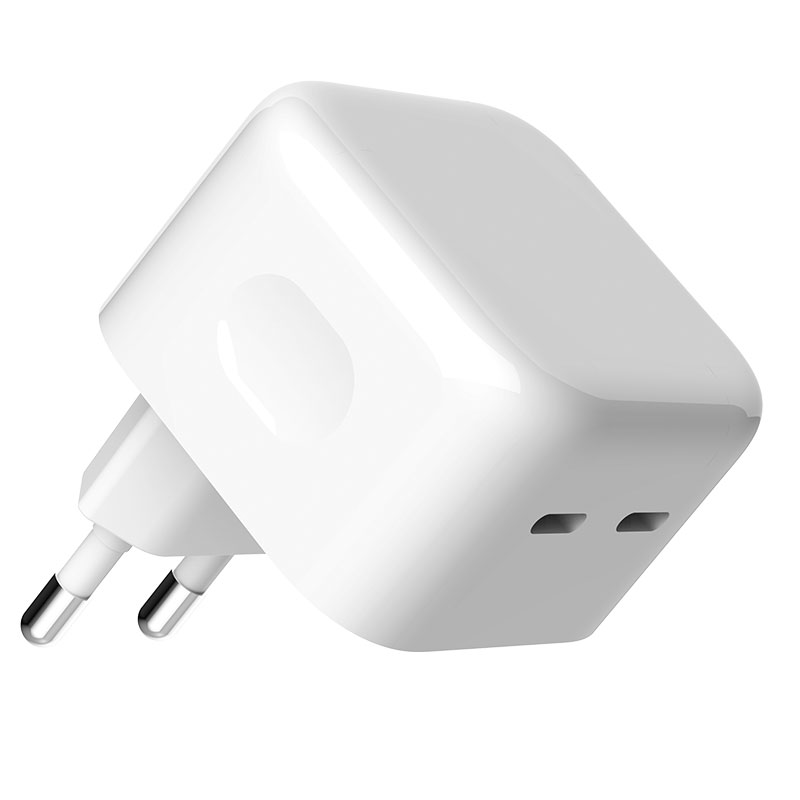
OEM buyers, private-label brands, and importers reduce compliance risk and accelerate time-to-market by partnering with vetted Shenzhen manufacturers. Wecent—with 15+ years of production experience, 200+ global clients, ISO9001 certification, and low-MOQ OEM from 200 units—delivers factory-direct GaN chargers (20W–240W) and wireless chargers pre-certified across CE, RoHS, FCC, PSE, and KC. The 2-year warranty, 100% functional testing, and regional plug support (EU, US, UK, AUS) eliminate post-purchase surprises. Request sample testing for validation, verify DoC and notified-body credentials, and audit factory ISO9001 status before committing to volume orders. This multi-layer verification approach ensures compliant, profitable GaN charger launches across EU markets.
Frequently Asked Questions
Is CE certification enough for GaN chargers in the EU?
CE alone is not sufficient for deep compliance verification. CE is a self-declaration that the product meets EU directives (LVD, EMC, RoHS, ErP), but importers must validate the underlying test reports—dielectric strength (LVD), emissions data (EMC), no-load power measurement (ErP), and material composition (RoHS). Always request the full DoC and supporting lab reports from your supplier before placing large orders.
What is the MOQ for CE/RoHS GaN chargers from China?
Wecent offers low-MOQ production starting at 200 units for OEM and ODM with full EU certifications included. This makes testing new markets or private-label launches accessible for small and mid-sized importers without committing to 1,000+ unit minimums typical of mass-market competitors.
How long does it take to source EU-compliant GaN chargers from China?
Typical lead times range from 4–6 weeks for customized OEM or ODM GaN chargers with full EU certifications. This includes prototyping, compliance testing, and production. Wecent’s in-house testing lab and established certification partnerships accelerate timelines compared to factories relying on external testing labs.
Does RoHS apply to wireless GaN chargers?
Yes. RoHS applies to all electronic components, including wireless charging pads, docks, and associated circuits. Wecent ensures RoHS compliance across its complete wireless charger range (single-coil pads, 2-in-1 and 3-in-1 docks) with full documentation from accredited testing bodies.
Can suppliers like Wecent handle different EU plug types in low-MOQ orders?
Yes. Wecent supports regional plug options (EU, US, UK, AUS) in OEM and ODM runs from 200 units. This flexibility allows importers to customize plug types per market without bulk inventory waste, ideal for multi-region European launches or localized Amazon FBA strategies.