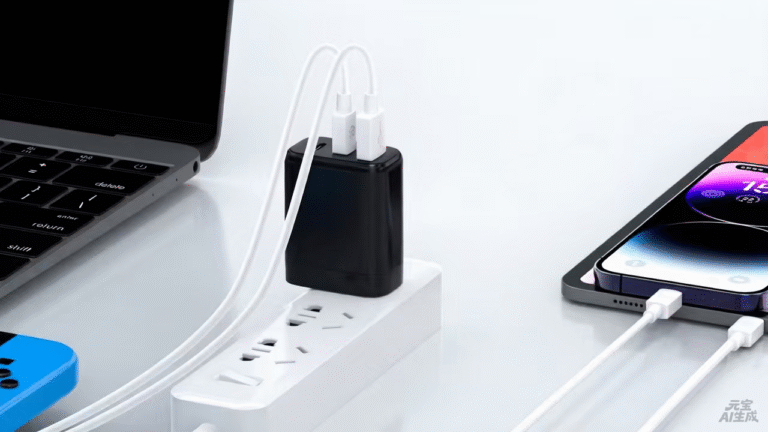
The WEP series is Wecent's fixed-plug OEM platform: the GaN chargers built for brands that want a proven power stage, a clean regional plug and a fast path from platform to branded product. This page is the WEP platform guide — what the series covers, how the fixed-plug design fits an OEM program and how a brand turns the platform into its own line.
Where WEP Sits in the Platform
Wecent runs three platforms with three jobs. The WEG series is the high-power multi-market platform, the WET series is the multi-plug travel platform, and the WEP series is the fixed-plug OEM platform for phone and laptop lines. The fixed-plug design is the WEP series' identity: one regional plug per SKU, a clean label and a simple certification story, which fits the OEM brand that sells regionally and wants the lowest per-unit cost and the simplest inventory. The platform choice for a brand is the first decision: WEP when the line is regional and OEM-focused, WEG when it is high-power or multi-market, WET when it is travel or universal.
The WEP Model Matrix
| Model group | Power | Port mix | Plug | Typical OEM use |
|---|---|---|---|---|
| WEP 45W family | 45W | 1C / 1C1A | EU, UK, US, AUS | Phone + ultrabook entry |
| WEP 65W family | 65W | 1C / 1C1A / 2C | EU, UK, US, AUS | Ultrabook workhorse |
| WEP 100W family | 100W | 1C / 2C / 2C1A | EU, UK, US, AUS | Full-size laptop |
| WEP 140W family | 140W | 2C / 2C1A | EU, UK, US, AUS | High-power laptop |
| WEP 200W family | 200W | Multi-port | EU, UK, US, AUS | Workstation and gaming |
The matrix is the platform's selection map: each family covers a wattage tier and a port mix with a fixed plug, and the OEM brand picks the family by its channel's region and the fleet's device stack. For current models, the 65W WEP configuration and the 140W configuration show the range, and the OEM service page documents the platform's customization path.
The Fixed-Plug Advantage for OEM
The fixed-plug design carries real advantages for an OEM line: the per-unit cost is lower without the interchangeable mechanism, the label and the certification story are simple per region, and the inventory is a clean one-SKU-per-region structure. The trade-off is the regional stock: each market needs its own SKU, and a forecast error in one region cannot be absorbed by another. The OEM brand should choose the fixed-plug platform when the line is regional and the inventory system can manage the per-region SKUs; the interchangeable platform becomes attractive when the channel crosses regions and the SKU count starts to hurt.
The OEM Customization Path
The WEP platform's OEM path follows the standard layers: the platform selection, the brand layer (logo, colors, finish and packaging), the compliance file for the branded configuration and the project gates from the sample to the pilot. The platform's fixed-plug identity simplifies the brand layer — the logo and the label have a clean surface, and the packaging carries one region's language set — and the certification file is a per-region story. The OEM brand should review the platform's evidence — the PDO table, the thermal data, the certificate file and the change log — before the branding, because the platform's quality is the brand's floor.
The Selection Questions for a WEP Line
The WEP selection reduces to four questions. First, which region does the line serve, and which plug and certificate apply? Second, what is the fleet's device stack, and which wattage tier covers it? Third, how many ports must work together, and what is the required split? Fourth, what is the brand layer — the logo, the colors and the packaging — and which parts of the platform can carry it? The four answers are the line's spec, and the spec is the OEM program's contract.
The Verification Before the Line
The WEP line should be verified like any charger line: the PDO table, the split map, the sustained thermal test, the compatibility matrix with the target devices, the certificate set per market and the change log. The verification is the platform's evidence base, and it is what the branded product pages, the marketplace listings and the support desk reference. The buyer who verifies the platform before the branding builds the line on evidence; the one who brands first builds it on hope.
The OEM Program Workflow
The WEP OEM program runs the standard workflow: the platform review, the spec freeze, the branded sample, the packaging sample, the compliance file and the pilot batch. The platform review selects the family by the region and the fleet; the spec freeze locks the wattage, the ports, the markets and the brand layer; the branded sample approves the logo, the colors and the finish on the actual housing; the packaging sample verifies the box, the insert and the regulatory marks; the compliance file covers the branded configuration per market; and the pilot batch is inspected against the approved samples. Each gate has a written approval, and the workflow is the difference between an OEM program and a relabeling exercise.
The Regional SKU and Inventory Story
The fixed-plug platform's inventory story is per region: one SKU per market, one forecast line per region and one certificate per configuration. The story is simple and clean, and the trade-off is the regional stock risk — a forecast error in one market cannot be absorbed by another, because the plugs are physically different. The OEM brand should build the regional forecast from the channel's data, set the reorder triggers per SKU and review the mix quarterly, because the fixed-plug platform's economics are the regional inventory's economics. The brand that manages the regional SKUs well gets the platform's cost advantage; the one that ignores the forecast gets the platform's dead stock.
The Brand Layer on a Fixed-Plug Platform
The brand layer on the WEP platform is clean by design: the fixed plug gives the housing a clean surface for the logo, the label carries one region's marks and the packaging carries one language set. The OEM brand should still approve the physical samples — the logo on the actual material, the label placement and the packaging quality — because the render cannot show how the brand behaves on the product. The brand layer also includes the product page and the listing copy, which should publish the platform's evidence — the PDO table, the compatibility matrix and the certificate file — because the branded product's trust is built on the evidence the platform provides. The brand layer's consistency across the WEP models is what makes the line read as one family: the same logo rules, the same packaging design language and the same copy voice applied to the 65W, the 100W and the 140W SKUs, so the customer sees a system rather than a shelf of unrelated chargers.
Bottom Line
The WEP GaN charger is the fixed-plug OEM platform: clean regional SKUs, a simple certification story and a fast path from platform to branded product. Select the family by the region and the fleet, review the platform's evidence and run the brand layer through the project gates — the platform provides the product, and the OEM discipline provides the line. The platform's value is the repeatability: the second branded WEP model runs the same workflow faster than the first, the regional inventory structure is already proven and the brand layer's samples are already approved — the platform is not just the product but the program's operating system, and the brand that treats it that way builds a line instead of a one-off.
For a WEP platform review with the model matrix and the OEM path, contact Wecent through the contact page, or start from the product collection to shortlist the families against your region and fleet. The review should produce the four answers — the region, the fleet, the port mix and the brand layer — because the four answers are the WEP line's spec, and the spec is what the OEM program will be built and quoted on.
Frequently Asked Questions
How is WEP different from WEG and WET?
WEP is the fixed-plug OEM platform, WEG is the high-power multi-market platform and WET is the multi-plug travel platform; the plug strategy and the target job separate them, and the brand chooses by the line's region and channel.
Can a WEP model be converted to interchangeable plugs?
No; the fixed-plug design is the platform's identity. A brand that needs interchangeable plugs should evaluate the WET platform instead, because the mechanical and certification structures are different.
What is the customization depth on a WEP model?
The brand layer — logo, colors, finish and packaging — is fully customizable, while the electrical and mechanical layers stay within the platform; a design change outside the platform means a new project.
Do WEP models carry one certificate per region?
The certification is per model and per market; the fixed-plug design keeps the per-region story simple, and the certificate file names each plug configuration.
What is the typical OEM lead time for a WEP model?
For a platform-based brand project, the timeline is driven by the brand sample, the packaging and the compliance file; the gate schedule in the quote is the answer. The brand that pre-approves the artwork, the packaging spec and the market list before the first sample shortens the schedule, because the gates move at the speed of the approvals on both sides.
This article is part of Laptop Charger OEM & Fleet Programs, the guide that covers this topic in decision order.