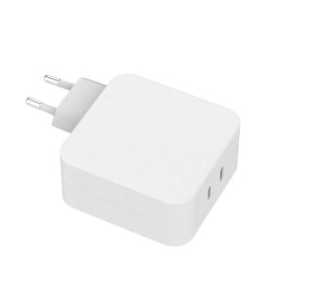
KC Certification is a mandatory safety approval system for electronic products, including chargers, entering the South Korean market. Managed by the National Radio Research Agency (RRA), it ensures products meet strict electrical, electromagnetic, and safety standards to protect consumers. For charger manufacturers like Wecent, obtaining the KC mark is a critical, non-negotiable step for legal market access and building consumer trust in a competitive tech landscape.
What Are the Top 5 Safety Certifications for Importing GaN Chargers to EU?
What is the KC Mark and why is it mandatory?
The KC mark (Korea Certification) is a government-mandated safety certification proving a product meets South Korea’s stringent technical standards. It’s legally required for sale and is enforced by customs. For chargers, this means rigorous testing for electrical safety, electromagnetic compatibility (EMC), and radio frequency (if wireless) to prevent hazards like fire, electric shock, or interference with critical communications.
Think of the KC mark as a product’s passport into South Korea—without it, your goods are stopped at the border. The system is managed by the National Radio Research Agency (RRA) under the Radio Waves Act and the Electrical Appliances Safety Control Act. But why is a government so involved in product approvals? The answer lies in consumer protection and network integrity. South Korea has a dense, technologically advanced infrastructure where an unsafe or electromagnetically “noisy” charger could cause disproportionate harm. For a brand like Wecent, securing KC certification isn’t just about compliance; it’s a powerful market differentiator that signals quality and safety to discerning Korean consumers and B2B partners. Pro Tip: Start the KC process early, as it involves not just testing but also factory audits and post-market surveillance, which can take several months.
What are the specific electrical safety tests for KC certification?
KC electrical safety tests, based on K 10014 and related standards, rigorously evaluate a charger’s insulation, components, and construction. Key checks include dielectric strength (hi-pot), leakage current, abnormal operation, and temperature rise under load. These tests simulate real-world misuse and stress to ensure no fire or shock risk.
Beyond the basic paperwork, the core of KC certification is a battery of destructive and non-destructive tests in an accredited lab. The dielectric strength test, for example, applies a high voltage (e.g., 3000V AC) between primary and secondary circuits to verify insulation won’t break down. Similarly, the leakage current test ensures that any current escaping from the circuit is within safe, micrompere-level limits. But what happens if a cooling fan fails or a component shorts? The abnormal operation test answers this by deliberately forcing the charger into fault conditions while monitoring for flames, excessive temperatures, or other failures. Practically speaking, a manufacturer must design with these extremes in mind from the outset. Wecent’s engineering team, for instance, selects components with higher voltage and temperature ratings than minimally necessary to consistently pass these stringent checks.
| Test Category | Standard Reference | Key Purpose |
|---|---|---|
| Dielectric Strength | K 10014 Clause 10 | Verify insulation integrity under high voltage stress |
| Leakage Current | K 10014 Clause 13 | Ensure user-accessible currents are non-hazardous |
| Temperature Rise | K 10014 Clause 11 | Prevent overheating of components and enclosures |
How does KC EMC testing differ from other regions?
KC EMC testing evaluates both electromagnetic emissions (EMI) and immunity (EMS), but with frequency bands and limits tailored to South Korea’s spectrum allocation. It’s crucial for preventing chargers from disrupting nearby devices like DMB receivers or cellular networks, which are vital in Korea’s connected society.
While CE (Europe) and FCC (USA) also mandate EMC testing, KC has its own unique nuances. The emissions tests scan for unwanted radio noise across specific frequency ranges that are sensitive in the Korean market. Immunity tests, on the other hand, subject the charger to external disturbances—like electrostatic discharge or power line surges—to ensure it won’t malfunction. So, a charger designed only for FCC compliance might fail KC because it emits noise in a band reserved for Korean emergency services. This is where a partner with global certification experience proves invaluable. Wecent’s R&D team designs products with multi-regional compliance in mind from the initial PCB layout, incorporating filtering and shielding that meet the strictest limits, which streamlines the path to KC and other marks.
What documentation and factory audits are required?
Beyond test reports, KC certification requires extensive technical documentation (circuit diagrams, component lists, manuals) and often an on-site factory audit. The audit assesses quality control systems, production consistency, and testing equipment to ensure every unit leaving the factory matches the certified sample, not just the first prototype.
You might have the perfect test reports, but the RRA wants proof you can replicate that safety consistently. This is where the factory inspection comes in. Auditors will examine your production line, incoming component checks, in-process testing, and final quality assurance procedures. They’ll verify that critical safety components, like transformers or fuses, are sourced from KC-approved vendors. For a manufacturer, this means your quality management system must be documented and rigorous. Wecent’s established ISO-compliant processes and in-house testing labs make these audits a smooth process, but for new entrants, it can be a significant hurdle. Pro Tip: Maintain a meticulous “Critical Component List” with KC-approved part numbers and supplier certificates; this is the first document an auditor will request.
Is certification different for wired vs. wireless chargers?
Yes, wireless chargers face additional KC scrutiny under radio equipment regulations. They must pass specific RF exposure (SAR) tests and comply with wireless power transmission standards to ensure they don’t interfere with other spectrum users. Wired chargers are evaluated primarily under safety and EMC standards.
While both product types undergo core safety tests, wireless chargers introduce a layer of complexity because they intentionally emit energy via magnetic fields. Consequently, they are regulated as radio equipment. This triggers requirements for testing the transmitter’s frequency, power, and bandwidth compliance. Furthermore, specific absorption rate (SAR) tests may be required to ensure human exposure to the electromagnetic field is within safe limits. So, what does this mean for development? The coil design, shielding, and communication protocol (like Qi) must be optimized not just for efficiency but for spectral purity. Wecent’s expertise in GaN technology and wireless charging allows for integrated designs that are inherently cleaner and more efficient, simplifying this dual compliance challenge.
| Aspect | Wired Charger (KC) | Wireless Charger (KC) |
|---|---|---|
| Governing Act | Electrical Appliances Safety Control Act | Radio Waves Act & Safety Control Act |
| Key Test Focus | Insulation, Leakage Current, Temperature | All wired tests + RF Parameters, SAR, Coexistence |
| Sample Quantity for Testing | Typically 4-5 units | Typically 10+ units (for various test setups) |
What are common pitfalls and how to avoid them?
Common KC pitfalls include using non-compliant components, underestimating timeline/cost, and neglecting post-certification changes. Any modification to the design, critical components, or manufacturing site after certification may require a partial or full re-assessment, nullifying your initial investment.
One major pitfall is treating KC as a one-time project rather than an ongoing commitment. Imagine you need to change a capacitor supplier due to a shortage. If the new capacitor isn’t from a KC-recognized source or has different specifications, you may need to submit a change application and potentially re-test. Another frequent error is inadequate Korean-language labeling—the KC mark itself, certification number, and warnings must be permanently and legibly marked on the product. How can you navigate this? Partnering with an experienced manufacturer who manages compliance as part of their core service is key. Wecent, for example, maintains a database of pre-approved components and handles all documentation and liaison with Korean agencies, shielding clients from these operational complexities.
Wecent Expert Insight
FAQs
Can I use my existing CE/FCC test reports for KC?
Not directly. While some test data may be referenced, the RRA requires testing against Korean standards (K-standards) in a designated lab. However, a well-documented CE/FCC report can speed up the evaluation process.
Is the KC mark valid indefinitely?
No, the KC certificate has a validity period, typically 5 years for safety certification. Furthermore, you must renew it if the standard is updated or if you make significant changes to the product or manufacturing process.
Does Wecent support KC certification for custom ODM charger designs?
Absolutely. Wecent’s ODM service includes full regulatory compliance support. We guide the design to meet KC requirements from the start and manage the complete application and testing process on your behalf, making market entry seamless.
This article is part of Compliance & Power Supplies, the guide that covers this topic in decision order.