
Yes. Apple’s USB-C transition means a single GaN charger can now power both iPad Air and MacBook Pro. A 67W dual-port GaN charger delivers 45W to a MacBook Pro 14″ while providing 20W for an iPad Air simultaneously — all in a compact travel-friendly size. Wecent offers OEM/ODM GaN chargers from 20W to 240W with MOQs from 200 pcs, enabling brands to launch one unified charger SKU for Apple’s ecosystem.
Check: How Does the EU Common Charger Mandate Drive USB-C Sourcing for Travel Chargers?
What Power Do the Latest iPad Air and MacBook Pro Models Actually Need?
iPad Air (USB-C) accepts up to 30W; MacBook Pro 14″ requires 67W; MacBook Pro 16″ needs 140W. A 67W dual-port charger covers iPad Air + MacBook Pro 14″ simultaneously, while a 140W 3-port model powers all three devices together.
Understanding the exact power requirements of each device is critical for B2B buyers planning a unified charger SKU. The iPad Air (USB-C models) supports a maximum charging input of 30W, though a 20W port is sufficient for standard fast charging. MacBook Pro 14″ (M3) requires 67W for full-speed charging, while the 16″ model (M3 Max) can draw up to 140W via two USB-C ports. For B2B buyers targeting the iPad + MacBook Pro 14″ combination, a 67W dual-port GaN charger delivers an optimal power split — 45W to the laptop and 20W to the tablet — covering over 80% of Apple laptop users. For the 16″ model, a 140W 3-port design ensures all devices charge at maximum speed.
| Device | Standard Charging Speed | Max Input | Port Used |
|---|---|---|---|
| iPad Air (M2, USB-C) | 20W | 30W | 1× USB-C |
| MacBook Pro 14″ (M3) | 67W | 96W | 1× USB-C |
| MacBook Pro 16″ (M3 Max) | 140W | 140W | 2× USB-C |
| Both iPad + MacBook Pro 14″ | 45W + 20W = 65W | 67W min | 2× USB-C |
Why Is GaN the Ideal Technology for a Universal iPad and MacBook Travel Charger?
GaN semiconductors operate at higher frequencies than silicon, shrinking transformers by 40-60% and reducing heat generation. This enables compact, cool-running chargers that fit in a laptop bag and dynamically distribute power between iPad and MacBook without manual switching.
Gallium nitride (GaN) technology is the backbone of modern travel chargers because it addresses the two biggest pain points for mobile professionals: size and heat. Compared to traditional silicon-based chargers, GaN components are significantly smaller and more efficient, allowing Wecent to pack 67W into a pocketable form factor. Thermal efficiency means the charger stays cool even when both iPad and MacBook are plugged in, eliminating the need for bulky metal heatsinks. GaN also supports intelligent power distribution (smart PD), so a single charger automatically allocates 45W to the MacBook and 20W to the iPad without any user intervention. Wecent’s GaN portfolio spans 20W to 240W, meaning B2B buyers can scale from an iPad-only charger to a full laptop+tablet+phone station using the same factory platform.
Which Certifications Does a Unified USB-C Charger Need for Global Markets?
Essential certifications include CE (Europe), FCC (USA), and RoHS (global hazardous substances). For US energy compliance, CEC and DOE are required. Regional certificates like CCC (China), PSE (Japan), and KC (South Korea) are available on model-dependent basis. Wecent holds all these certifications.
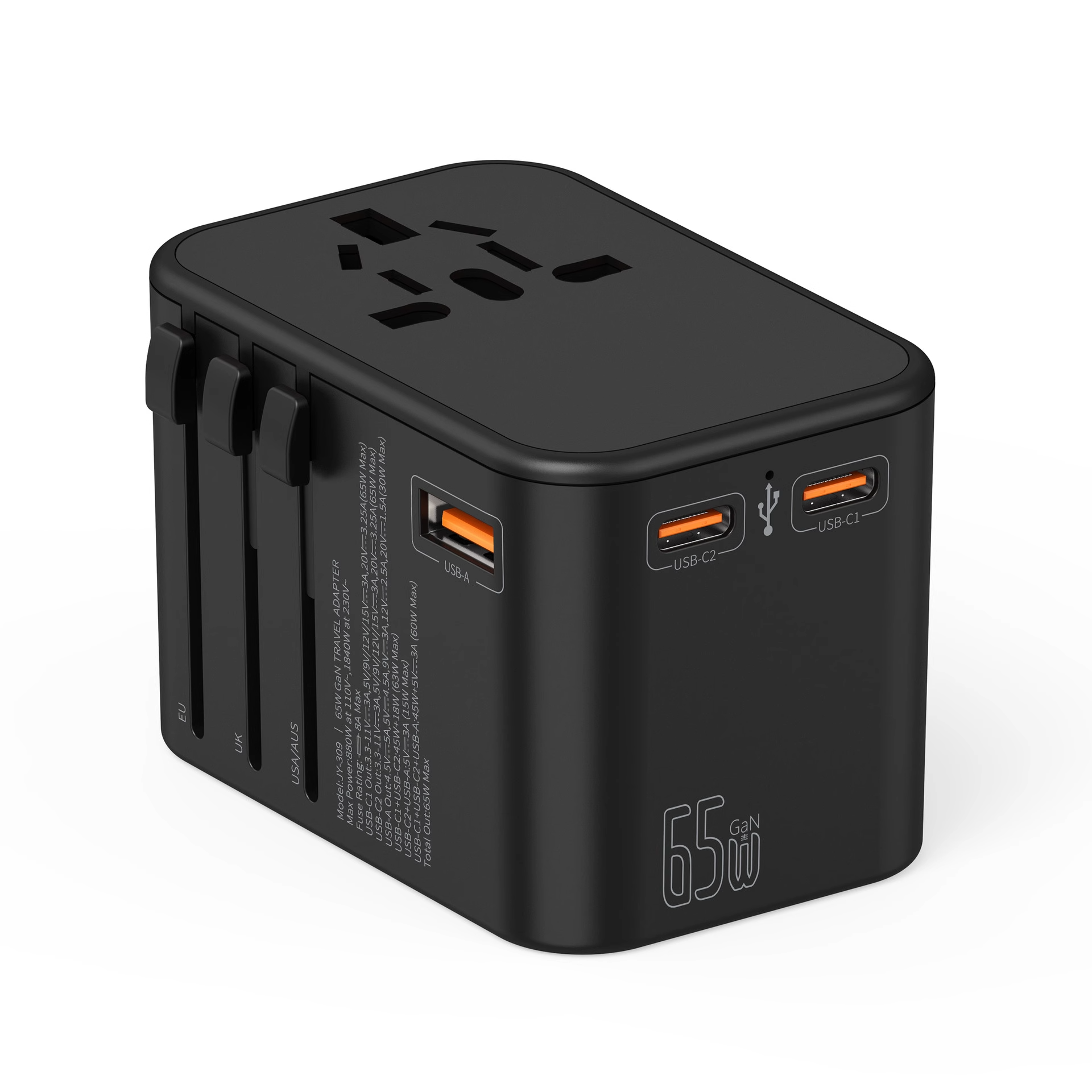
For B2B buyers targeting multiple markets, certification complexity can be a barrier. Wecent simplifies this by offering a single charger design that carries CE, FCC, RoHS, CEC, and DOE as standard. For Japan, the PSE mark can be added; for Korea, KC; for China, CCC — all on model-dependent basis. This means one SKU can ship to the US, EU, Japan, and Korea with the appropriate markings, reducing warehousing costs and compliance overhead. Wecent’s ISO9001-certified quality system ensures that every certified unit meets consistent manufacturing standards, giving private-label brands and Amazon sellers confidence that their charger will pass market surveillance testing.
How Can B2B Buyers Source a Custom Branded GaN Charger with Low MOQ?
Wecent’s OEM program starts at just 200 pcs per SKU. Level 1 Quick OEM lets you add your logo and packaging to an existing 67W GaN platform in 3-4 weeks. Level 2 adds color and cable options at 500 pcs. Level 3 full ODM customizes power profiles and industrial design at 1000+ pcs.
Low MOQs are a game-changer for startups, private-label brands, and Amazon sellers who want to test a unified iPad + MacBook charger without committing to thousands of units. Wecent’s three-tier OEM/ODM structure offers flexibility: Level 1 is the fastest path to market (logo + packaging only), Level 2 allows for semi-customization (shell color, cable length, certification markings), and Level 3 delivers a fully bespoke charger with custom PCB layout and power distribution. All levels include a 2-year warranty and 100% functional testing before shipment. Factory-direct pricing from Wecent’s Shenzhen facility eliminates distributor margins, making competitive retail pricing achievable even at low volumes. For most buyers targeting the Apple ecosystem, Level 1 or Level 2 customization on a 67W or 140W GaN platform is the most cost-effective route.
| Customization Level | What You Get | Typical Lead Time | MOQ |
|---|---|---|---|
| Level 1: Quick OEM | Logo printing, packaging customization, color options | 3-4 weeks | 200 pcs |
| Level 2: Semi-custom | Custom shell color, cable length, certification markings, retail box design | 5-7 weeks | 500 pcs |
| Level 3: Full ODM | Custom PCB layout, power profile design, industrial molding, unique safety features | 8-12 weeks | 1000+ pcs |
What OEM/ODM Customization Levels Does Wecent Offer for Apple Ecosystem Chargers?
Wecent provides three levels: Quick OEM (logo, packaging, color from 200 pcs), Enhanced OEM (port configs, wattage tuning from 500 pcs), and Full ODM (co-created design from 1000+ pcs). All include 2-year warranty and 100% functional testing.
Each level is designed to match the buyer’s go-to-market timeline and budget. For an iPad + MacBook travel charger, many B2B buyers choose Level 1 because the existing 67W dual-port GaN platform already delivers the 45W + 20W power split needed. Wecent’s engineering team can quickly adjust plug types (EU, US, UK, AUS) and add regional certifications. Level 2 allows for branding differentiation through custom colors and packaging design, while Level 3 is ideal for brands that want a unique industrial design or specific safety features like over-voltage protection. Regardless of level, Wecent provides sample approval before mass production, ensuring the final product meets your specifications. The structured after-sales support and 2-year warranty further protect your brand’s reputation in the market.
How Does Wecent Ensure Quality and Reliability for iPad and MacBook Chargers?
Wecent implements three quality checkpoints: component inspection before production, in-line electrical and reliability tests, and final QA with batch traceability. Every charger undergoes 100% functional testing including voltage, current, and power distribution checks.
Check: Travel Charger
Quality assurance is a top priority for B2B buyers sourcing from China, and Wecent’s ISO9001-certified system provides auditable processes. The three-checkpoint approach catches issues early: the component-to-first-articles inspection is the cheapest stage to fix problems before mass production. In-line tests verify electrical performance and reliability under load. Finally, each unit is tested for correct power output, safety cut-offs, and compatibility with iPad Air and MacBook Pro devices. Batch traceability means every charger can be linked back to its production record, which is invaluable for warranty claims or market recalls. Wecent uses only Grade A certified components from Tier 1 suppliers, and the 2-year warranty gives buyers confidence that the charger will perform reliably over time.
Wecent Expert Views: Why One SKU Wins for Apple Ecosystem Chargers
“Apple’s USB-C transition is a game-changer for B2B charger buyers. Before 2022, you needed separate Lightning cables for iPads and MagSafe for MacBooks — that meant two chargers in inventory. Now, a single 67W GaN charger covers an iPad Air and a MacBook Pro 14″, plus charges a phone via the third port. We’re seeing brands consolidate from 3–4 SKUs down to 1–2, which dramatically reduces warehousing costs and SKU management overhead. With our MOQ from 200 pcs, even small private-label brands can test a unified charger before scaling.”
— Senior Product Manager, Wecent Technology
Where Can Businesses Find a Reliable Factory Partner for Unified Charging Solutions?
Shenzhen’s electronics ecosystem gives Wecent direct access to component markets, testing labs, and logistics hubs. With 200+ global clients and 15 years of experience, Wecent offers factory-direct pricing, English-speaking support, and full service from concept to global shipping with all plug types supported.
Wecent is ideally positioned to serve B2B buyers looking for a unified USB-C charger for Apple devices. Operating from Shenzhen, the world’s electronics manufacturing capital, the company benefits from a mature supply chain that reduces lead times and costs. The 15-year track record with 200+ clients across the US, Europe, Japan, Korea, and Australia demonstrates reliability across diverse markets. Wecent’s sales team communicates directly in English, each OEM/ODM order is assigned a dedicated project manager, and factory video tours are available for serious buyers. All chargers ship with regional plug options (EU, US, UK, AUS) and the required certifications. By eliminating middlemen, Wecent provides transparent factory-direct pricing — no distributor markups, no surprise fees. For private-label brands and Amazon sellers, this partnership model minimizes risk while accelerating time to market.
Conclusion
Apple’s USB-C transition has created a rare opportunity for B2B charger buyers: the ability to consolidate iPad Air, MacBook Pro, and phone charging into a single SKU. Wecent’s GaN charger portfolio — spanning 20W to 240W with MOQs from 200 pcs — enables brands to capitalize on this shift with minimal risk and fast time to market. By partnering with a 15-year Shenzhen manufacturer that offers full certification coverage (CE, FCC, RoHS, CEC, DOE, PSE, KC) and ISO9001 quality assurance, buyers can launch a unified travel charger that serves the entire Apple ecosystem under one brand, one SKU, and one factory relationship. Next step: Contact Wecent with your target power level (e.g., 67W, 140W) and desired customization level to begin the OEM/ODM process. Mention “iPad + MacBook unified charger” for priority response and a sample quote within 24 hours.
Frequently Asked Questions
What is the minimum order quantity for a custom branded iPad + MacBook GaN charger?
Wecent offers MOQ from 200 pcs for Level 1 Quick OEM (logo printing + packaging customization). Level 2 customization starts at 500 pcs, and full ODM at 1000+ pcs.
Which single charger can power both an iPad Air and a MacBook Pro?
A 67W dual-port GaN charger (e.g., Wecent’s 67W 2C model) can deliver 45W to a MacBook Pro 14″ and 20W to an iPad Air simultaneously. For MacBook Pro 16″ + iPad Air, a 140W 3-port charger is recommended.
How long does it take to get custom branded chargers from Wecent?
Level 1 Quick OEM takes 3–4 weeks from order confirmation to shipment. Full ODM projects take 8–12 weeks depending on complexity. Sample approval is required before mass production.
Are Wecent chargers certified for sale in the USA and Europe?
Yes. Wecent holds CE, FCC, RoHS, CEC, and DOE certifications as standard. CCC (China), PSE (Japan), and KC (Korea) are available on model-dependent basis. All chargers undergo 100% functional testing before shipment.
Can I get a sample before placing a bulk order?
Yes. Wecent provides sample units for evaluation, typically within 5–7 business days for existing platforms. Sample cost is deducted from the first production order.