
For OEM brands, choose 65W GaN chargers for phones, tablets, and light laptops in retail and Amazon markets with PD 3.0 support; opt for 140W GaN chargers for gaming laptops and workstations needing PD 3.1 EPR. Wecent offers both from Shenzhen with 200-piece MOQ, full customization, and global certifications (CE/FCC/RoHS/PSE/KC) for fast private-label scaling.
Check: GaN Charger
What Are 65W and 140W GaN Chargers, and Why Does Wattage Matter for B2B Sourcing?
Gallium Nitride (GaN) chargers represent a fundamental shift in charging efficiency compared to traditional silicon-based adapters. GaN technology delivers 92%+ efficiency, generating less heat while maintaining smaller physical footprints—critical for importers competing on shelf space and portability. A 65W GaN charger suits single or dual-port configurations targeting smartphones, tablets, and ultrabooks, while 140W models power gaming laptops and multi-device workstations simultaneously.
For B2B procurement teams, wattage directly influences market fit, unit cost, and certification complexity. A 65W model reaches broader consumer audiences at lower price points; a 140W model commands premium positioning in enterprise and hybrid-work segments. Wecent’s manufacturing span—20W to 240W across their product lines—enables OEM buyers to select optimal specifications without factory switching, streamlining supply chain consolidation and reducing qualification cycles.
How Does PD 3.0 Compare to PD 3.1 in 65W vs 140W GaN Chargers?
Power Delivery protocols define charging speed and device compatibility. PD 3.0 caps at 100W maximum output (20V/5A), sufficient for most phones and tablets; PD 3.1 introduces Extended Power Range (EPR) supporting up to 240W at higher voltages (28V/5A+). For a 140W charger, PD 3.1 becomes essential to unlock full laptop-charging capabilities, especially for gaming and content-creation devices.
| Feature | PD 3.0 (65W Model) | PD 3.1 (140W Model) |
|---|---|---|
| Max Power Output | 100W | 140W+ (EPR) |
| Voltage Range | 20V/5A | 28V/5A+ |
| Device Fit | Phones, tablets, ultrabooks | Gaming laptops, workstations, multi-device hubs |
| OEM Market Focus | Retail, e-commerce, travel | Enterprise, professional services, B2B |
| Wecent Support | Fully supported with 100% testing | Fully supported with ISO9001 quality system |
Wecent integrates both protocols across their product lineup, with rigorous 100% functional testing and ISO9001-certified quality checkpoints ensuring protocol compliance before shipment. Choosing PD 3.0 for 65W reduces certification overhead; PD 3.1 for 140W future-proofs your brand as laptop charging demands escalate.
Which Markets and Devices Fit 65W GaN Chargers Best for Importers?
The 65W GaN charger dominates consumer retail and e-commerce channels. Primary use cases include iPhone and Android fast-charging, iPad and tablet top-ups, and lightweight laptop compatibility (MacBook Air, Dell XPS 13, Lenovo ThinkPad X series). Amazon sellers, private-label brands, and wholesale distributors favor 65W models for lower per-unit costs, compact shipping footprints, and minimal certification complexity in major markets.
Check: Leading GaN & Wireless Charger Manufacturer
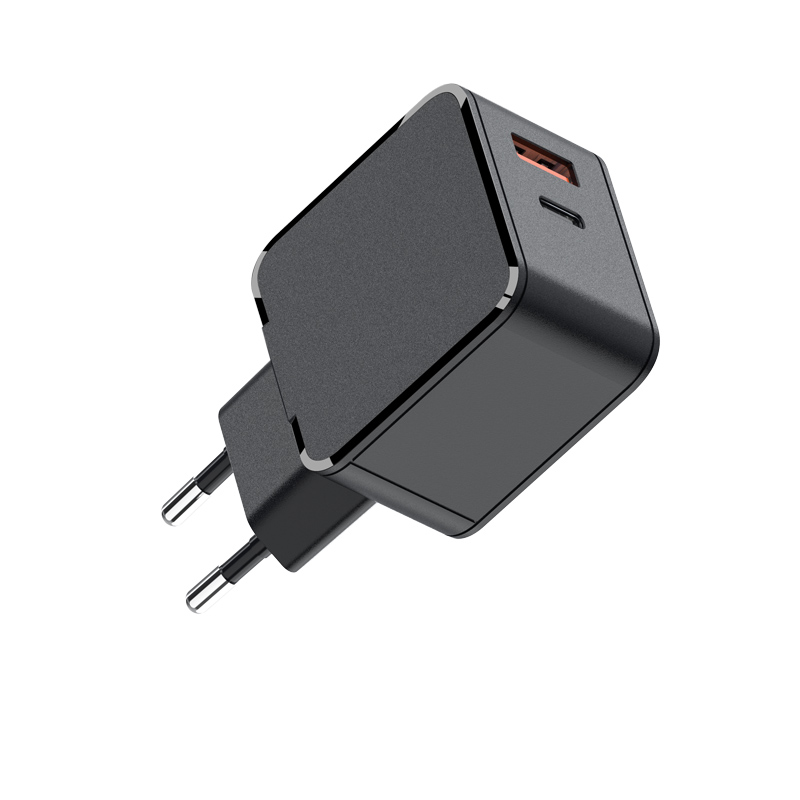
Procurement advantages are clear: retail margins remain healthy despite competitive pricing; compact form factors enable bundled travel sets (charger + cable + pouch); broad PD 3.0 device ecosystem minimizes compatibility complaints. Wecent’s 65W OEM offering includes logo printing, custom color options, branded packaging, and regional plug variants (EU, US, UK, AUS) from a 200-piece minimum order. This accessibility enables startups to test private-label viability without six-figure commitments, accelerating time-to-market on Amazon, Shopify, or distributor channels.
When Should Procurement Managers Choose 140W GaN Chargers for Laptops?
140W GaN chargers target professional and semi-professional segments: gaming laptops (ASUS ROG, MSI Raider, Alienware), workstations (Dell Precision, HP ZBook), and high-end MacBook Pro models. Procurement teams optimizing for margin and differentiation select 140W when serving enterprise buyers, corporate procurement departments, or niche B2B channels prioritizing power and multi-device capability.
Strategic advantages include premium positioning (higher ASP per unit), reduced customer returns (adequate power delivery eliminates “slow charging” complaints), and entry into corporate gifting and laptop bundles. Multi-port configurations—combining USB-C for laptops and USB-A for accessories—streamline desk-area cable management, enhancing perceived value. Wecent’s 140W models support PD 3.1 EPR, multi-port power management, and full certification coverage (CE/FCC/RoHS/PSE/KC/DOE/CEC), mitigating risks in regulated markets like the US, EU, Japan, and Korea. Factory-direct pricing from Shenzhen offsets the higher unit cost, enabling competitive wholesale margins even at lower volumes.
What Are the Cost, Size, and Customization Trade-offs in 65W vs 140W OEM?
Cost structures diverge significantly. A 65W GaN charger typically costs 30–50% less per unit than a 140W model, driven by simpler internal architectures, fewer ports, and reduced thermal management complexity. For high-volume retailers targeting 10,000+ annual units, 65W economics dominate; for niche B2B buyers seeking 500–2,000-unit runs, 140W margins compensate for lower volume through higher selling prices.
Size differences are modest: GaN technology compresses both form factors, but 140W models occupy marginally more space to accommodate dual or quad-port layouts and heat dissipation. Wecent’s OEM/ODM service tiers address customization flexibility. Level 1 (Quick OEM Launch) applies your brand to proven 65W or 140W platforms—fastest market entry. Level 2 (Enhanced OEM) tunes port configurations, wattage, and plug types while maintaining core architecture. Level 3 (Full ODM) co-designs exclusive charger internals and external form factors from scratch.
All customization options—color, logo, packaging, regional plugs—remain available starting at 200 pieces, enabling test-and-iterate cycles without overcommitting inventory. Wecent’s Shenzhen location and 15+ years of manufacturing experience reduce lead times to 3–8 weeks for custom projects, significantly faster than establishing relationships with unfamiliar factories in emerging regions.
Which GaN Wattage Should Your Brand Pick Based on Global Market Trends?
Market selection hinges on your target customer profile and geographic focus. In North America and Europe, where hybrid work and gaming drive laptop adoption, 140W GaN chargers command growing demand. In APAC and emerging markets prioritizing mobile-first experiences, 65W models sustain majority market share due to smartphone saturation and lower purchasing power for premium laptop chargers.
Future-proofing strategy matters. PD 3.1 adoption accelerates as gaming and creative professionals standardize on higher-wattage platforms. Brands committing to 65W today risk obsolescence if market segments shift toward 100W+ laptop chargers within 24–36 months. Wecent’s expansive 20W–240W portfolio and demonstrated expertise across both protocols position your brand to pivot or scale without factory qualification overhead.
Data-driven decision-making integrates client base analysis (SMB, retail, enterprise), margin targets, and regional certification requirements. Factor regional compliance: North American 140W models require DOE/CEC labeling; European 65W and 140W models mandate CE and efficient power delivery marking. Wecent’s multi-cert capability (CE/FCC/RoHS/CEC/DOE/PSE/KC) ensures one Shenzhen factory handles all regional variants, reducing complexity and cost versus sourcing multiple factories per market.
How Can Wecent’s OEM/ODM Services Simplify Your 65W/140W GaN Sourcing?
Wecent bridges the complexity gap between standardized products and fully custom designs. For brands entering the market rapidly, Level 1 Quick OEM Launch applies your logo and packaging to proven 65W or 140W platforms, delivering first shipments in 4–6 weeks. Enhanced OEM (Level 2) accommodates port reconfigurations—for example, shifting from single USB-C to USB-C + dual USB-A for importers targeting specific retail segments. Full ODM (Level 3) co-engineers novel designs, warranting 8–12 week timelines but enabling differentiation competitors cannot replicate.
Risk mitigation anchors Wecent’s value proposition. ISO9001 certification, 100% functional testing per unit, and structured after-sales support reduce warranty claims and customer dissatisfaction. Every production batch includes traceability documentation and shipping inspection records, critical for liability management in regulated markets. The standard 2-year warranty underscores factory confidence in product durability—essential assurance for brands protecting reputation and repeat orders.
Low 200-piece MOQ democratizes OEM access for startups and Amazon sellers, enabling profitable runs at premium product margins without warehouse bloat. Wecent’s existing 200+ global clients—spanning Europe, North America, Japan, Korea, and Australia—demonstrate supply chain reliability and cultural familiarity across major markets.
Wecent Expert Views
“Choosing between 65W and 140W chargers isn’t just a wattage decision—it’s a market segmentation strategy. We’ve worked with over 200 global clients scaling everything from 500,000-unit Amazon phone charger campaigns at 65W to niche 140W enterprise laptop bundles moving 5,000 units annually. Both paths are profitable with Wecent’s OEM/ODM approach. For brands hesitating, we recommend starting with 200-piece pilot runs of your primary wattage tier. PD 3.0 for 65W clears most markets in 6 weeks; PD 3.1 for 140W adds 1–2 weeks for enterprise certification verification. Our Shenzhen factory’s 15-year track record means we’ve already solved thermal management, port durability, and regional compliance headaches—you inherit that institutional knowledge from day one.”
Conclusion
The 65W versus 140W decision hinges on market positioning, margin appetite, and geographic focus. Retail and e-commerce channels gravitate toward affordable, compact 65W solutions with PD 3.0 simplicity; enterprise and gaming segments demand premium 140W PD 3.1 multi-port hubs justifying higher per-unit costs. Wecent’s Shenzhen manufacturing expertise, low 200-piece OEM/ODM minimums, and global certification capability eliminate traditional supply-chain friction—enabling private-label brands to launch in weeks rather than quarters.
For importers, wholesale distributors, and private-label sellers, the path forward combines market research, margin modeling, and pilot-scale testing. Wecent’s three-tier OEM/ODM service spectrum accommodates rapid market entry (Level 1) through differentiated custom designs (Level 3), with 2-year warranties and 100% pre-shipment testing reducing execution risk. Contact Wecent directly to discuss your target wattage, certification needs, and customization priorities—low-MOQ sampling accelerates decision confidence and positions your brand for competitive advantage in fast-moving charging accessory markets.
FAQs
What is the minimum order quantity for Wecent’s 65W or 140W GaN OEM?
Wecent’s MOQ starts at 200 pieces for both 65W and 140W models, with full customization including logo printing, color options, regional plugs (EU, US, UK, AUS), and branded packaging. This accessibility enables startups and Amazon sellers to test private-label lines profitably without large upfront commitments.
Do Wecent 140W GaN chargers support PD 3.1 for laptops?
Yes. Wecent’s 140W GaN chargers fully support PD 3.1 EPR (Extended Power Range) up to 140W with multi-port configurations. All models carry CE/FCC/RoHS/PSE/KC certifications, enabling seamless deployment across US, EU, and APAC markets without additional third-party testing.
How does 65W GaN efficiency compare to 140W models?
Both achieve 92%+ efficiency via GaN semiconductor technology, translating to minimal heat generation and stable charging performance. The efficiency advantage of GaN applies universally across wattage tiers; 65W suits compact retail, while 140W prioritizes multi-device desktop scenarios where efficiency reduces operational costs for businesses.
Can Wecent handle regional plugs for EU and US exports?
Yes. Wecent supports EU, US, UK, and AUS plug variants with corresponding regional certifications (CEC/DOE for US, CE for EU, PSE for Japan, KC for Korea). This enables importers to order single SKU configurations per region, simplifying logistics and compliance across geographies.
What warranty and testing does Wecent provide for OEM orders?
Wecent provides a standard 2-year warranty with 100% functional testing pre-shipment from their ISO9001-certified Shenzhen factory. Each production batch includes traceability documentation and shipping inspection records, ensuring quality assurance and liability protection for private-label brands.