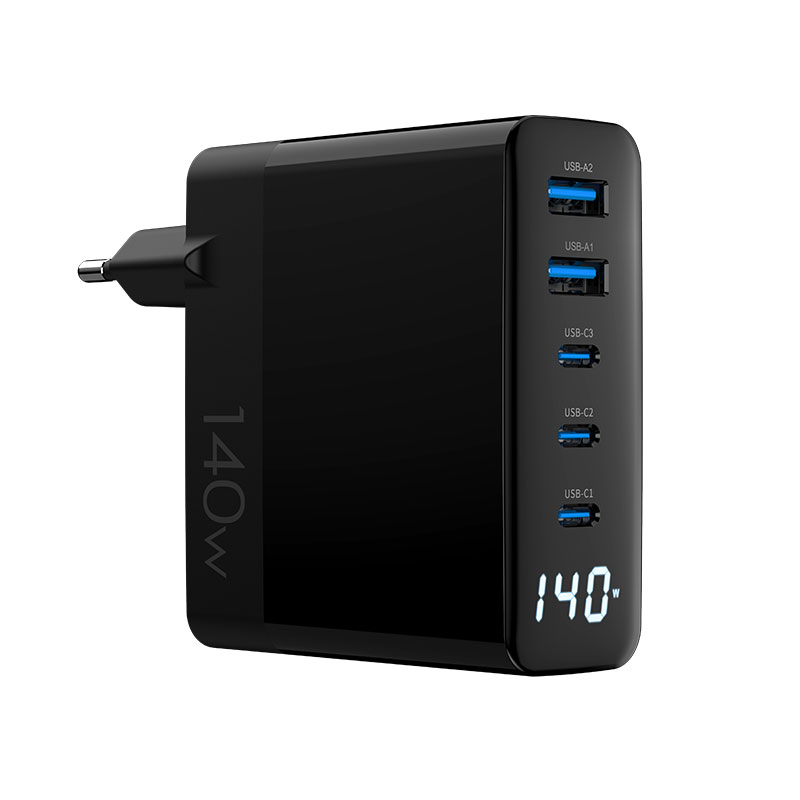
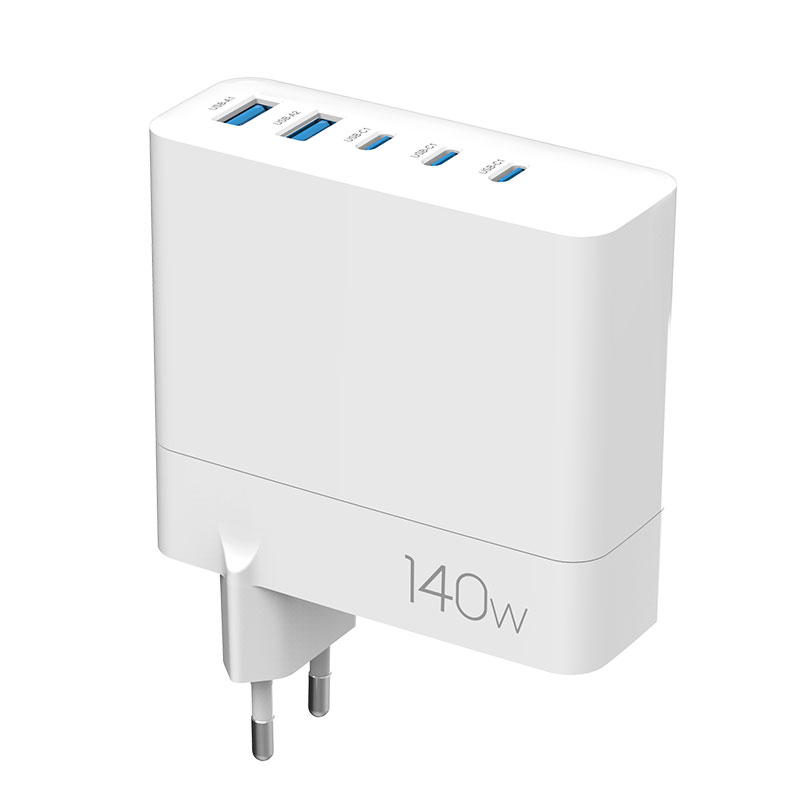
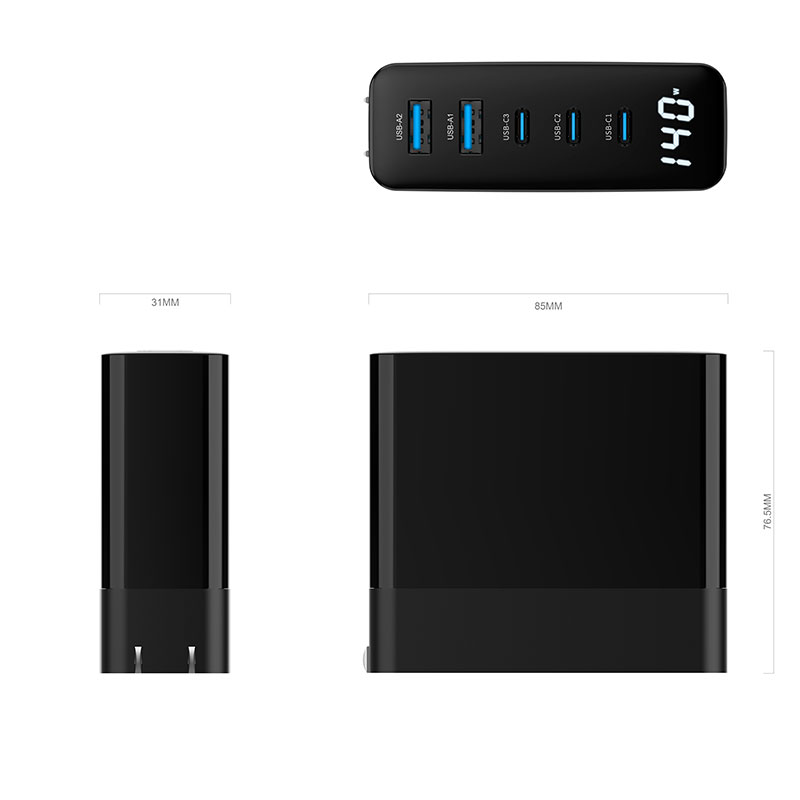
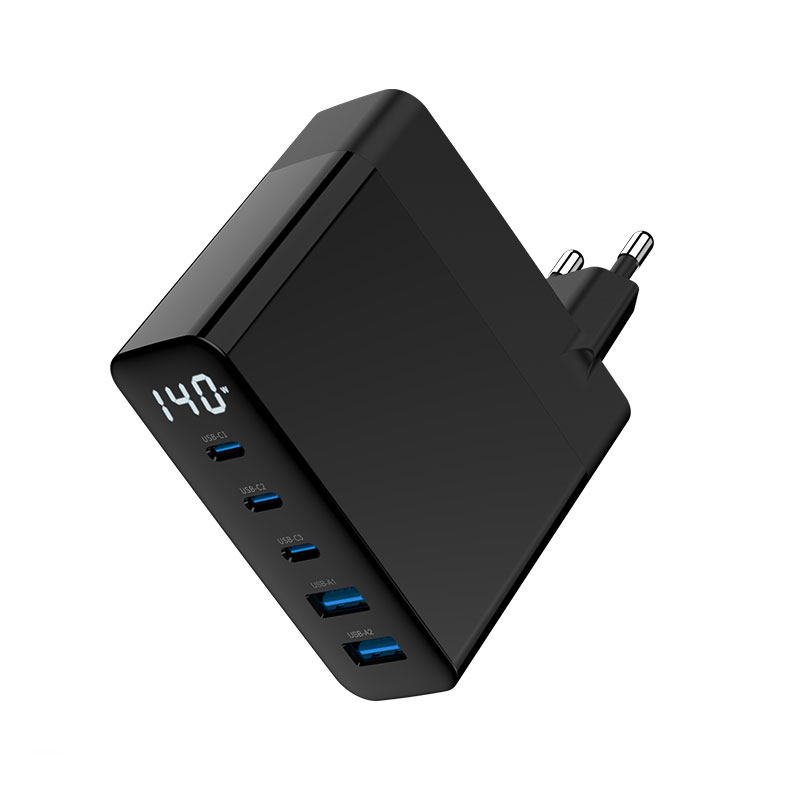
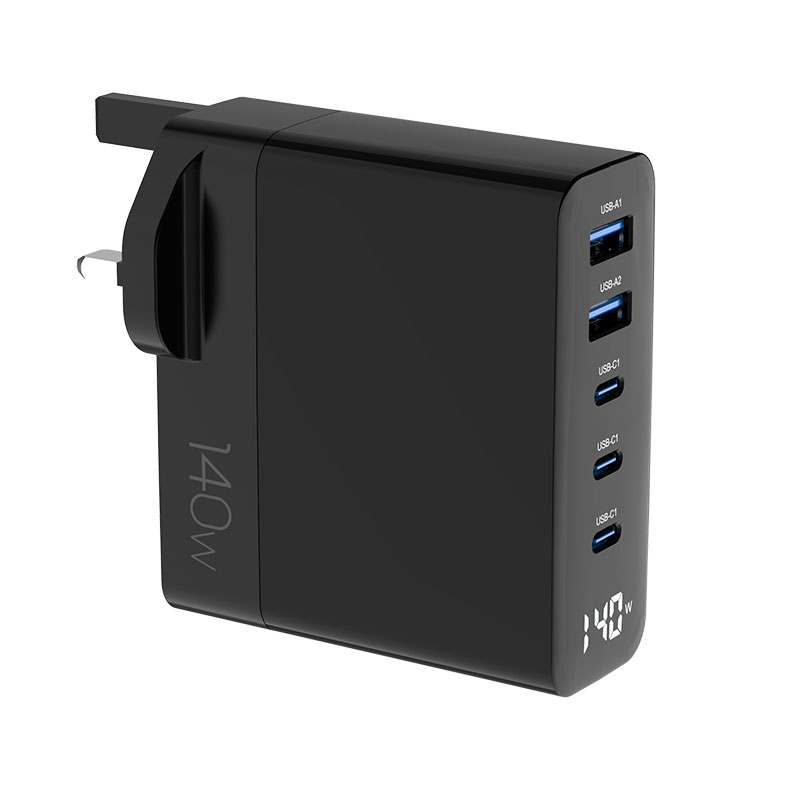
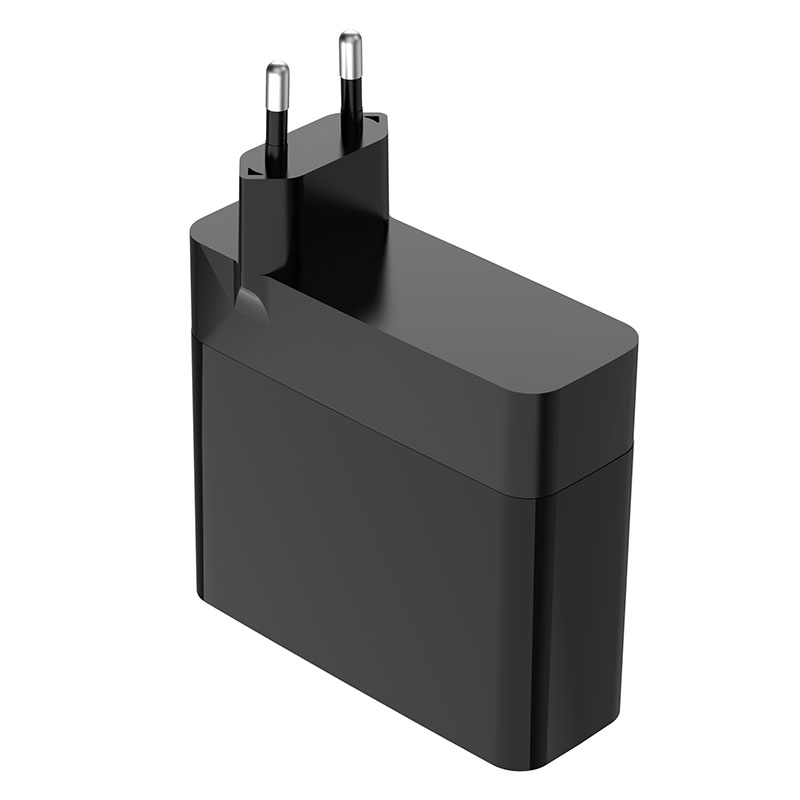
By 2026, GaN (Gallium Nitride) has become the baseline technology for 65W–140W chargers, replacing bulkier silicon‑based designs that struggle with heat and size. GaN enables high‑power‑density, compact adapters with superior thermal efficiency, making it the default choice for OEMs, distributors, and retail brands worldwide. As a result, sourcing from China‑based GaN manufacturers and suppliers has become essential for anyone building or selling modern high‑wattage chargers.
GaN Chargers & Travel Chargers Manufacturer | Wecent Shenzhen
How Has GaN Technology Become the Industry Standard for 65W–140W Chargers?
GaN’s material properties—wide bandgap, higher switching frequency, and lower conduction loss—allow chargers to deliver 65W–140W in much smaller casings than silicon without overheating. This shift has been driven by fast‑charging standards such as USB‑C Power Delivery 3.0/3.1, rising laptop and phone power demands, and green‑efficiency regulations. As more OEM brands convert to compact, multi‑port, high‑power designs, GaN has moved from a premium option to the mainstream standard in the 65W‑140W range.
From a manufacturing perspective, GaN platforms are now mature enough that Chinese GaN charger factories and suppliers can offer 65W–140W designs at scale, with stable yields and competitive BOM costs. This has accelerated the phase‑out of legacy silicon‑only architectures in the high‑wattage segment, especially for travel, retail, and private‑label products.
What Makes 65W–140W GaN Chargers Mainstream for OEMs and Brands?
For OEMs and B2B buyers, 65W–140W GaN chargers combine high power density, multi‑port flexibility, and global input compatibility. A single 65W–140W GaN adapter can power phones, tablets, and laptops while remaining small enough for travel retail, smart‑home kits, or bundled accessories. This “universal‑adapter” use case is why brands and distributors increasingly treat 65W and 140W as core SKUs in their product catalogs.
From a China‑manufacturing standpoint, mature GaN design libraries and standardized topologies (e.g., active‑clamp flyback, LLC‑based stages) allow factories to deliver reliable, certified 65W–140W units with low MOQs. As a result, 65W–140W GaN has become the default “workhorse wattage” for wholesalers, private‑label programs, and boxed‑electronics bundles.
Which Advantages Do High‑Power‑Density GaN Chargers Offer Brands?
High‑power‑density GaN chargers shrink the physical footprint while maintaining or increasing output. For example, a 65W GaN adapter can be 40–50% smaller than a silicon‑based equivalent, and a 140W GaN charger can approach the size of an older 65W brick. This space saving reduces packaging volume, shipping costs, and shelf space, which directly benefits distributors and brands.
In addition, GaN’s higher efficiency (often 90–95% vs 80–85% for silicon) lowers standby power and heat generation, improving safety and reducing thermal derating. For Chinese manufacturers and OEM suppliers, this translates into easier certification, simpler cooling designs, and higher reliability metrics—key selling points for B2B buyers focused on QA and compliance.
How Does Thermal Performance Set GaN 65W–140W Chargers Apart?
GaN devices switch faster and dissipate less energy as heat, which keeps the internal temperature of 65W–140W chargers lower than their silicon counterparts. Well‑designed GaN adapters can operate at 40–55 °C under full load, compared with 60–80 °C for many silicon‑based units. This improved thermal performance reduces stress on components and extends MTBF for both OEM and retail products.
From a factory‑sourcing angle, good thermal management means simpler heatsinks, fewer external fans, and lower risk of thermal‑shutdown recalls. Chinese GaN charger manufacturers that prioritize layout, encapsulation, and thermal‑interface materials can therefore deliver 65W–140W chargers that meet CE, FCC, UL/IEC, and other regional standards without sacrificing compactness.
Why Are Silicon‑Based 65W–140W Chargers Being Phased Out?
Silicon‑based 65W–140W chargers are being phased out in favor of GaN because they are larger, less efficient, and harder to cool safely at high power. For multi‑port 65W–140W designs, silicon‑only solutions require more passives, larger inductors, and more complex cooling, which drive up cost and mechanical complexity. As end‑users demand smaller, universal chargers, silicon‑only designs no longer match the market expectations.
On the manufacturing side, Chinese suppliers are increasingly shifting R&D and production capacity to GaN‑centric platforms. This means that silicon‑based 65W–140W chargers are seeing fewer design updates, less innovation, and fewer qualified BOM sources, making them less attractive for OEMs and wholesalers planning long‑term product lines.
How Can 65W–140W GaN Chargers Boost Your Product Catalog?
For brands and distributors, 65W–140W GaN chargers are highly versatile SKUs that can be positioned as “one adapter for many devices.” A 65W charger appeals to mainstream smartphone and ultrabook users, while a 140W unit targets gaming laptops, dual‑device setups, and high‑end bundles. This flexibility lets OEM partners and retailers expand their portfolios without introducing entirely new form factors.
From a China‑sourcing perspective, 65W–140W GaN platforms are mature enough that manufacturers can offer private‑label, OEM, and ODM options with fast turnaround and low MOQs. This makes it easier to launch first‑party or white‑label charging lines that align with existing mobile, laptop, or accessory ecosystems.
Sample 65W vs 140W Use‑Case Table
What Should You Look for in a China‑Based GaN Charger Manufacturer?
When selecting a China‑based GaN charger manufacturer, focus on three pillars: technical capability, compliance, and B2B service. Technically, the factory should demonstrate proven designs across 20W–240W, including 65W and 140W USB‑C PD models, and show strong thermal and reliability data. Compliance markers include CE, FCC, RoHS, USB‑IF, KC, PSE, and UL/IEC‑related certifications.
For OEMs and wholesalers, the manufacturer should support flexible MOQs (ideally starting at 200–500 pcs), logo printing, color and packaging customization, and straightforward documentation. Lead time, quality‑control procedures (e.g., burn‑in tests, aging runs), and after‑sales support are equally important for long‑term partnerships.
How Does Wecent Fit into the 65W–140W GaN Charger Ecosystem?
Wecent, based in Shenzhen, China, is a dedicated GaN and wireless charger manufacturer specializing in 20W–240W high‑performance adapters and accessories. The company’s product line includes 65W and 140W GaN chargers optimized for travel, laptop, and multi‑device use, with global certifications such as CE, FCC, RoHS, PSE, KC, and USB‑IF compliance. Wecent leverages its 15‑year history and 200+ international clients to serve OEM, ODM, wholesale, and distributor partners worldwide.
For sourcing 65W–140W GaN chargers, Wecent offers low MOQs starting at 200 pcs, which lowers the barrier to entry for smaller brands and regional distributors. The factory supports comprehensive customization, from PCB‑level tuning and safety features to branding on PCBs, housings, and packaging, enabling true white‑label and co‑branded solutions on a single platform.
When Should You Choose a 65W vs 140W GaN Charger for OEM Batches?
For OEM applications, 65W GaN chargers are often the best fit for cost‑sensitive, high‑volume SKUs such as bundled phone adapters, base‑level travel kits, or general‑purpose retail packs. They are typically 30–50% cheaper per unit than 140W models and easier to integrate into existing single‑port or dual‑port designs. A 65W unit is ideal when the primary device is a smartphone or lightweight notebook.
In contrast, 140W GaN chargers target premium segments, gaming‑laptop ecosystems, and multi‑device setups where one adapter powers a laptop and secondary gadgets. These chargers are more complex thermally and require higher‑grade components and more robust cooling strategies, making them better suited for higher‑margin, low‑to‑mid‑volume OEM programs.
Where Can Brands Source 65W–140W GaN Chargers in China?
Brands and wholesalers typically source 65W–140W GaN chargers from Shenzhen‑based manufacturers and suppliers, as the region concentrates IC vendors, PCB factories, and certification labs. Many Chinese GaN charger factories now specialize in 20W–140W USB‑C PD adapters, with some extending into 200W+ for industrial or medical applications. This ecosystem enables fast design iterations, tight supply‑chain control, and competitive pricing.
For OEM buyers, partnering with an established Shenzhen manufacturer like Wecent offers access to a full GaN portfolio, including travel chargers, multi‑port USB‑C PD bricks, and complementary cables and accessories. This one‑stop approach reduces the need to coordinate multiple suppliers and streamlines QC, logistics, and support for global brands.
Can 65W–140W GaN Chargers Meet Global Certification Requirements?
Yes, modern 65W–140W GaN chargers are designed to meet the key regional standards required for global distribution. Leading Chinese manufacturers typically qualify their 65W–140W designs for CE (EU), FCC (USA), RoHS, USB‑IF, PSE (Japan), KC (South Korea), and related safety frameworks such as IEC/UL‑based PD‑specific requirements. This makes it easier for OEMs and distributors to list products on Amazon, Lazada, JD, and other regulated marketplaces.
When evaluating a GaN charger supplier, brands should request test reports, certificates, and sample compliance documentation. Factories that already ship 65W–140W products to multiple markets can usually add your brand’s name to existing test files, shortening the time to market and reducing compliance risk.
How Can Wholesale and OEM Partners Future‑Proof Their GaN Charger Lines?
To future‑proof 65W–140W GaN charger lines, wholesale and OEM partners should adopt modular, GaN‑forward platforms that support USB‑C PD 3.0/3.1, multi‑port outputs, and software‑based power‑profile tuning. Investing in a single robust platform (e.g., 65W core with 100W/140W variants) reduces engineering redundancy and allows faster launches of new SKUs under different brand identities.
For B2B partners in China, this means selecting a manufacturer that maintains R&D alignment with newer standards such as PD 3.1 EPR (Extended Power Range) for 140W and beyond. Factories that regularly update their design libraries and component partners (e.g., GaN‑on‑Si and GaN‑on‑SiC IC vendors) will be better positioned to support evolving power demands and regulatory requirements.
Wecent Expert Views
“GaN has now become the default architecture for 65W–140W chargers, not because it’s flashy, but because it solves real business problems: size, efficiency, and compliance,” says a Wecent technical lead. “For brands and distributors, the key is choosing a China‑based manufacturer that treats 65W and 140W as core platforms, not one‑off designs. At Wecent, our 20W–240W GaN portfolio is built around scalable topologies, global certifications, and low‑MOQ OEM services, so our partners can launch new SKUs quickly and with minimal risk.”
What Are the Key Takeaways for Brands and Distributors?
GaN technology has solidified its position as the industry standard for 65W–140W chargers, driven by superior power density, thermal performance, and compact form factors. For OEMs, wholesalers, and private‑label brands, this means prioritizing partnerships with China‑based GaN manufacturers that offer proven 65W–140W designs, global certifications, and flexible OEM services. Choosing a reliable factory such as Wecent enables you to align with current market trends, reduce long‑term design risk, and scale high‑wattage charging solutions efficiently across multiple regions.
By focusing on 65W–140W GaN platforms, brands can future‑proof their product catalogs, simplify compliance, and leverage the same high‑efficiency technology found in top‑tier consumer chargers—from affordable travel adapters to premium 140W laptop power solutions.
FAQ
1. What wattage should I choose for my first GaN product line?
For an entry‑level GaN product line, 65W is usually the best starting point because it balances cost, size, and device compatibility. It’s ideal for smartphones, ultrabooks, and basic travel kits. If you target premium laptops or multi‑device users, adding a 140W SKU later keeps your catalog future‑proof.
2. Why are 65W–140W GaN chargers often made in China?
China, especially the Shenzhen region, hosts a dense ecosystem of GaN IC suppliers, PCB manufacturers, certification labs, and logistics channels. This allows manufacturers to design, test, and scale 65W–140W GaN chargers quickly and cost‑effectively, making China the primary sourcing hub for global OEMs and distributors.
3. How low can MOQs go for 65W–140W GaN chargers?
Many reputable Chinese GaN charger manufacturers now offer MOQs starting at 200–500 pcs for 65W–140W units, especially for OEM and ODM programs. Wecent, for example, supports MOQs from 200 pcs, enabling small brands and distributors to test new SKUs without heavy upfront investment.
4. Do 65W–140W GaN chargers support older devices?
Yes, 65W–140W GaN chargers typically support backward‑compatible protocols such as USB‑PD 2.0/3.0, PPS, and legacy QC/QC+ where applicable. This allows them to safely charge older smartphones, tablets, and laptops while still offering full‑speed charging for newer high‑power devices.
5. How can I ensure my GaN chargers are safe for global markets?
To ensure safety and compliance, work with a manufacturer that already holds key certifications (CE, FCC, RoHS, USB‑IF, PSE, KC, etc.) and provides test reports and documentation. Request sample test files and conduct basic QA checks on your first batch to confirm labeling, markings, and performance meet your target markets’ requirements.
