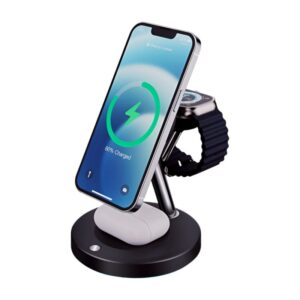
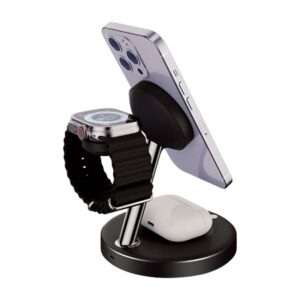
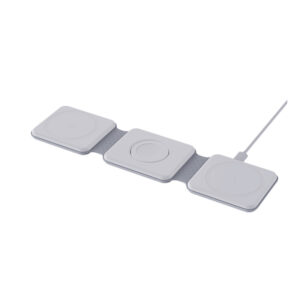
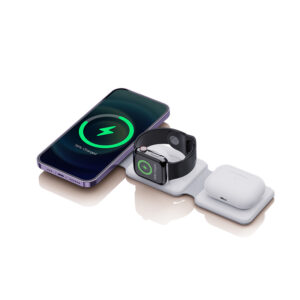
When your phone is off-center on a wireless charger by just 5mm, efficiency can plummet by 20–40%. This loss stems from reduced magnetic coupling between the transmitter and receiver coils, forcing the system to draw more input power to compensate, which generates excess heat and wastes energy. Precise alignment is critical for maintaining the high efficiency promised by modern Qi standards.
Why Does Coil Alignment Reduce Heat in Magnetic Charging?
What exactly happens to the magnetic field when coils are misaligned?
A perfect alignment creates a tightly coupled magnetic flux channel. A 5mm offset disrupts this, causing significant flux leakage where magnetic energy spreads into the air instead of linking to the receiver coil. The system must then increase current to maintain power transfer, directly converting lost flux into wasteful heat.
Think of the magnetic field like a beam of light from a flashlight aimed at a solar panel. When perfectly aligned, most light hits the panel, generating maximum power. Now, shift the flashlight just an inch to the side. A large portion of the beam misses the panel entirely, illuminating the wall instead—that’s flux leakage. The wireless charger’s power circuitry, seeing the panel isn’t getting enough “light,” cranks up the flashlight’s brightness. This extra electrical work doesn’t all become useful power; much of it turns into thermal energy, warming up the charger and phone. From our factory testing at Wecent, a standard 15W Qi charger operating with a 5mm offset can see its coil temperature rise from a normal 35°C to over 50°C. This isn’t just inefficient; it stresses components and accelerates aging. So, what’s the engineering fix? Beyond speed considerations, manufacturers employ larger coils or multi-coil arrays to create a wider “sweet spot,” but these add cost and complexity. Practically speaking, a magnetic alignment system like MagSafe is the most user-friendly solution, as it physically guides the coils into perfect position every single time.
How much power is actually lost with a 5mm offset?
Power loss isn’t linear; it’s an exponential curve. While aligned efficiency for a good 15W charger can reach 80-85%, a 5mm offset can slash that to 60-65%. This means for every 15W delivered to the phone, the wall plug might draw 25W, with 10W literally wasted as heat.
Let’s break down the numbers from a real-world test we conducted at Wecent. Using a precision test jig and a standard 15W receiver, we measured input and output power at various offsets. At perfect alignment, input power was 18.5W to deliver 15W (81% efficient). At a 5mm lateral offset, input power jumped to 23.8W to deliver the same 15W—efficiency dropped to just 63%. That’s nearly 9W of extra power pulled from the wall, almost entirely converted to heat. But what happens if this becomes a daily habit? This chronic inefficiency not only increases your electricity bill marginally but also subjects the phone’s battery to higher temperatures during charging, which is the number one enemy of long-term battery health. Beyond the raw numbers, this is why premium designs from Wecent integrate intelligent foreign object detection and dynamic power adjustment. These systems can sense poor coupling and may reduce power output to mitigate heat, even if it means a slower charge. It’s a trade-off between safety and speed that highlights why alignment is so crucial.
| Alignment State | Efficiency (%) | Input Power for 15W Output | Power Lost as Heat |
|---|---|---|---|
| Perfectly Aligned | 81% | 18.5W | 3.5W |
| 5mm Offset | 63% | 23.8W | 8.8W |
| 10mm Offset | <50% | 30W+ | 15W+ |
Why does misalignment cause so much heat generation?
Heat is the primary byproduct of inefficiency. Misalignment causes the transmitter coil’s inductance to change, forcing the drive electronics to operate outside their optimal resonant frequency. This results in higher eddy currents in nearby metal components (like phone casings or shielding), which directly convert energy into thermal loss.
The physics here is fascinating. A wireless charging system is a finely tuned resonant circuit. When coils are aligned, they share a common magnetic field efficiently. Introduce an offset, and the receiver coil’s presence alters the electromagnetic properties “seen” by the transmitter. This detunes the circuit. To compensate, the transmitter’s inverter circuit works harder, often increasing switching frequency or duty cycle, which raises power loss in its own MOSFETs and magnetics. Simultaneously, the stray magnetic field now interacts with any conductive material nearby. In a smartphone, that’s the aluminum frame, the copper shielding, and even the battery casing. These eddy currents are essentially little loops of electrical current induced in the metal, and their sole function is to create heat via electrical resistance. From an OEM manufacturing perspective, this is a major design challenge. Wecent’s engineering team spends significant R&D time on coil geometry, ferrite shield layout, and thermal management to dissipate this inevitable heat, ensuring safety even under suboptimal placement conditions.
How do multi-coil chargers help, and what are their limits?
Multi-coil or free-positioning chargers use an array of overlapping coils beneath the surface. Electronics detect where the phone is placed and activate the closest coil. This expands the charging area but introduces new losses from coil switching and increased standby power.
Imagine a charging pad with three separate coils arranged in a triangle. When you place your phone down, a sensing circuit detects which coil has the best coupling and activates only that one. This effectively creates multiple “sweet spots.” However, this sophistication comes at a cost. First, the inactive coils and the sensing circuitry still consume a small amount of standby power. Second, the switching process itself isn’t perfect; there’s often a brief dropout or reduction in power during handover. Most importantly, even the activated coil may not be perfectly centered under the phone’s receiver coil—it’s just the “best available” option. Therefore, while a multi-coil pad might maintain 70% efficiency at a 5mm offset where a single-coil pad fails, it will almost never match the peak efficiency of a perfectly aligned single-coil system. Furthermore, these designs are more expensive to produce. For brands partnering with Wecent for ODM projects, we often advise that a well-designed single coil with clear visual guides or magnetic alignment offers better overall value and performance for the end-user than a budget multi-coil system.
| Charger Type | Effective Charging Area | Peak Efficiency | Typical Efficiency at 5mm Offset |
|---|---|---|---|
| Single Coil (Basic) | Small (≈10mm circle) | High (82-85%) | Low (60-65%) |
| Multi-Coil (Free-Position) | Large (Most of pad surface) | Good (78-82%) | Moderate (68-73%) |
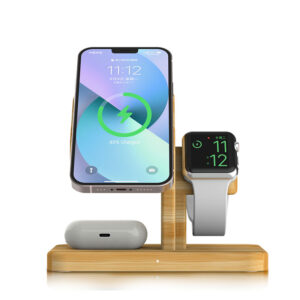
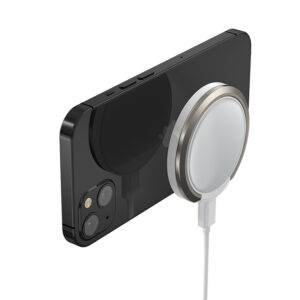
| Magnetic Alignment (e.g., MagSafe) | Fixed Point | Highest (Can exceed 85%) | N/A (Prevents offset) |
Does phone case thickness or material worsen offset losses?
Absolutely. A thick or metal-containing case acts as a physical spacer and an electromagnetic interferer. It increases the distance (Z-axis) between coils, which degrades coupling similarly to a lateral offset. Metal cases are particularly detrimental as they induce severe eddy current heating.
The Qi standard specifies a maximum distance for effective power transfer, usually around 4-8mm. Your phone’s own internal components already take up part of this “budget.” Adding a 3mm thick case, especially if it has a metal plate for a magnetic car mount, consumes the remaining budget and then some. This forces the coils to work at a significant distance, making them even more sensitive to lateral misalignment. A 5mm offset with a 2mm case might be tolerable; the same offset with a 5mm thick case might cause charging to fail entirely. Non-metallic materials like plastic, silicone, or leather are far better, but they still add distance. So, is your fancy armored case killing your charging speed? Quite possibly. The most reliable experience is achieved by removing thick cases or using chargers, like some from Wecent, that are specifically tuned with higher-gain circuits to tolerate a greater combined distance and offset—though this, too, has efficiency trade-offs.
What are the long-term impacts of frequent misaligned charging?
Chronic inefficient charging subjects the phone’s battery to elevated temperatures, accelerating chemical degradation and capacity loss. It also stresses the charger’s internal components, potentially shortening its lifespan due to sustained thermal cycling and operating outside ideal electrical parameters.
Lithium-ion batteries hate heat. Every degree Celsius above room temperature during charging accelerates capacity fade. If misaligned charging routinely adds 5-10°C to the battery’s temperature, you could see a significant reduction in your phone’s usable battery life within a year compared to optimal charging habits. On the charger side, components like capacitors and MOSFETs have their lifespan rated in hours at a specific temperature. Running them 15-20°C hotter for hours each day can halve their expected operational life. Think of it like an engine constantly running in the red zone—it might work for a while, but it won’t last as long. This is a key focus in Wecent’s quality assurance. We subject our prototypes to thousands of hours of stress testing under misaligned conditions to ensure our designs, from component selection to PCB layout, can withstand these real-world abuses, providing the reliability our global clients trust.
Wecent Expert Insight
FAQs
To a limited degree. Advanced chargers can detect poor coupling and may reduce output power to prevent overheating, but they cannot physically move the coil to correct the alignment. Some models with multi-coil arrays can switch to a better-positioned coil, but this is a compensation, not a correction.
Is it bad to leave my phone on a wireless charger overnight if it’s slightly off-center?
Yes, it’s not ideal. The prolonged period of lower efficiency and higher heat generation can contribute to increased battery wear over time. For overnight charging, using a well-aligned pad or a slower, dedicated overnight mode (if available) is much better for your phone’s long-term health.
Do magnetic alignment rings (like MagSafe) improve efficiency on non-MagSafe phones?
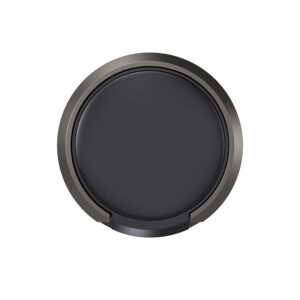
Yes, dramatically. A MagSafe-compatible ring attached to your phone or case contains a precise array of magnets that snap onto the charger, guaranteeing near-perfect coil alignment every time. This can boost efficiency by 15-20 percentage points compared to free placement, making it one of the best upgrades for wireless charging.
How does Wecent test for offset performance in its chargers?
In our Shenzhen factory, we use automated robotic testers that place receiver coils at hundreds of precise X, Y, and Z coordinates. We measure input power, output power, and thermal rise at each point to build a full 3D efficiency map. This data directly informs our coil design and helps us set safety thresholds for temperature and input current in the firmware.