
GaN laptop chargers are replacing heavy power bricks by shrinking 50% smaller while delivering superior efficiency. Unlike silicon-based adapters, GaN technology enables multi-port designs (65W–240W) with PD 3.1 support, cutting weight by 40–60% and heat dissipation significantly. For Ultrabook users and hybrid workers, this means portable, lightweight charging without compromise—making the traditional brick obsolete for modern mobility demands.
Check: Why Is GaN Technology the Future of Laptop Charging?
What’s Wrong with Traditional Laptop Power Bricks?
Traditional laptop power bricks fail modern needs due to their heavy weight (300–500g), excessive heat loss (15–25%), and single-port limitations, hindering mobility for Ultrabook users and increasing shipping costs for B2B importers. These silicon-based designs waste energy, shorten lifespan, and force multiple chargers for multi-device workflows, raising desk clutter and procurement expenses for private-label brands.
| Factor | Silicon Brick | GaN Alternative |
|---|---|---|
| Weight | 300–500g | 150–250g |
| Heat Loss | 15–25% | 5–10% |
| Ports | 1 (USB-A) | 2–4 (USB-C/A PD 3.1) |
| Efficiency | 75–80% | 90–95% |
| Portability | Poor | Excellent |
How Does GaN Technology Enable Smaller, Lighter Chargers?
GaN technology enables smaller, lighter chargers through Gallium Nitride semiconductors that switch faster than silicon, slashing power loss to heat and allowing compact transformers and components—shrinking form factors by 40–50% at 65W–240W. Wecent’s GaN series delivers laptop power in palm-sized designs with multi-port PD 3.0/3.1, eliminating bulky heatsinks for Ultrabook portability.
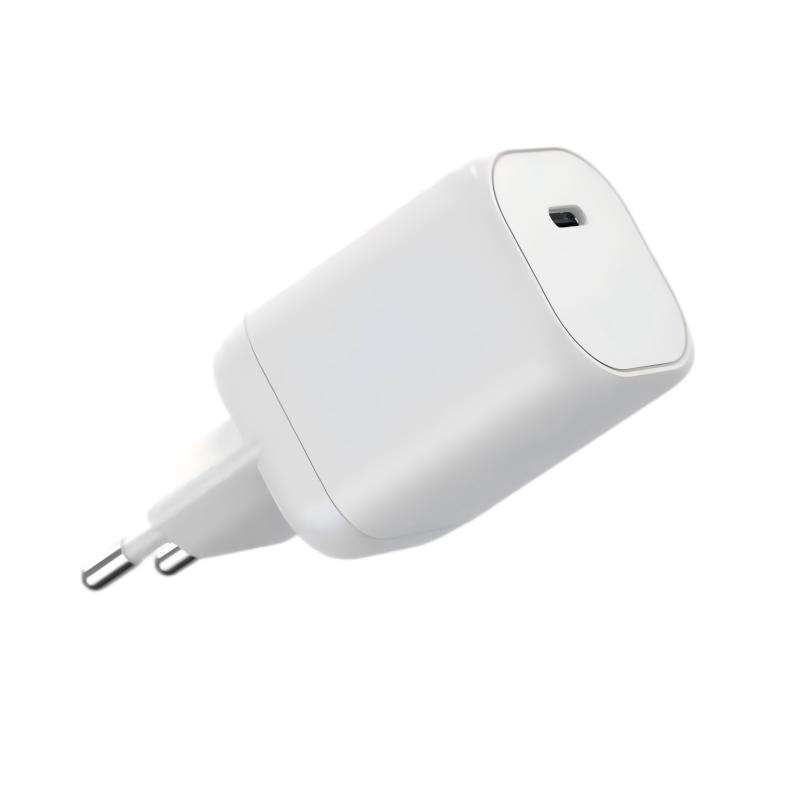
What Weight and Size Savings Do Ultrabook Users Actually Gain?
Ultrabook users gain 40–60% weight savings (e.g., 420g brick to 160g GaN), reducing daily carry load by 1–2 lbs for road warriors and cutting e-commerce shipping costs 8–15% via lower dimensional weight. Wecent’s slim GaN chargers also optimize desk space with multi-port designs, enhancing unboxing appeal and reviews for private-label Amazon sellers.
Which GaN Power Ratings Replace Laptop Bricks for Different Devices?
65W–100W GaN replaces bricks for Ultrabooks like MacBook Air and Dell XPS 13; 150W–240W handles gaming laptops like ASUS ROG. Wecent’s WEP/WET series offers 2–4 ports (USB-C + USB-A) with PD 3.0/3.1, certified CE/FCC/RoHS/PSE/KC, consolidating chargers into one SKU for wholesalers’ efficiency.
Check: GaN Charger
| GaN Power Class | Laptop Segments | Wecent Series | Port Config | Certifications |
|---|---|---|---|---|
| 65W | Ultrabook | GaN Lite 65W | 2× USB-C | CE/FCC/RoHS/PSE/KC |
| 100W | Mid-range/Pro | WEP 100W | 2× USB-C + USB-A | CE/FCC/RoHS/PSE/KC |
| 150W–240W | Gaming/Workstation | WET 240W | 4-Port (USB-C × 2 + USB-A × 2) | CE/FCC/RoHS/CEC/DOE/PSE/KC |
Why Should OEM Buyers Source GaN Laptop Chargers from Shenzhen Factories?
OEM buyers should source from Shenzhen factories like Wecent for low 200 pc MOQs, full OEM/ODM customization (Levels 1–3), and factory-direct pricing with ISO9001 quality, 100% testing, and 2-year warranty. Multi-certifications (CE/FCC/RoHS/PSE/KC) and plug options (EU/US/UK/AUS) speed global entry, de-risking private-label launches.
How Does Slim GaN Design Impact Supply Chain and Profitability for Resellers?
Slim GaN cuts dimensional weight 35–45%, saving 5–10% on bulk shipments and freeing warehouse space; premium positioning boosts margins 15–25%. Wecent’s efficient designs reduce returns 30–50% via lower heat failures, accelerating inventory turnover for Amazon sellers in the Ultrabook trend.
What Certifications and Safety Features Should OEM Buyers Verify?
OEM buyers must verify CE (EU), FCC (US), RoHS, PSE (Japan), KC (Korea), CEC/DOE (US efficiency). Wecent provides these plus thermal, surge, and overcharge protection on all GaN chargers, ensuring compliance and reliability for global distribution without customs delays.
How to Plan a GaN Laptop Charger OEM Project from Prototype to Scale?
Plan via Phase 1: 200 pc pilot (Weeks 1–4, Level 1 OEM); Phase 2: Customize samples (Weeks 5–12); Phase 3: Certify (Weeks 13–16); Phase 4: Mass produce (Weeks 17+). Wecent handles QA, logistics, and scaling from 200 to 50,000 units, minimizing risk for procurement managers.
Weeks 1–4       → Weeks 5–12      → Weeks 13–16    → Weeks 17+
Pilot (200 pcs) → Design Iterate  → Certifications → Mass Production
(Level 1 OEM)   (Level 2/3 OEM)   & Testing       (5K–50K units)
Wecent Expert Views
“Our GaN Lite 65W charger weighs just 140g versus 420g traditional bricks—a 67% reduction—while delivering identical MacBook/ThinkPad speeds. This is why 200+ global clients choose our low-MOQ OEM path: slimming the brick isn’t just marketing; it’s engineering efficiency translated into shipping savings and buyer preference. We’ve shipped to European Amazon sellers and North American wholesalers, offering OEM Levels 1–3 from quick branding to full custom 240W designs. Start with 200 pcs, test market fit in 4 weeks, then scale.”
Conclusion
The shift to slim GaN laptop chargers ends the power brick era, driven by Ultrabook mobility and multi-device needs. For OEM buyers and importers, Wecent delivers 20W–240W GaN with 200 pc MOQs, certifications, and customization—cutting costs 5–10%, boosting margins 15–25%, and reducing risks. Shenzhen’s expertise positions brands to lead this $2B category. Ready to replace the brick? Explore Wecent’s OEM at gdwecent.com/oem-odm.
FAQs
How much weight does a GaN charger save compared to a traditional brick for Ultrabook travel?
GaN reduces charger weight by 40–60% (e.g., 420g traditional brick → 160g GaN equivalent). For Ultrabook users traveling 3–5 days/week, this compounds to 1–2 lbs in total carry load—equivalent to dropping a smartphone from a laptop bag. Wecent’s 65W–100W GaN Lite series achieves this 67% reduction.
Can a single slim GaN charger replace both my laptop brick and phone charger?
Yes—Wecent’s 100W–240W multi-port GaN chargers (2–4 USB-C/USB-A ports) charge laptops, phones, and tablets simultaneously at full speed. A single 100W dual-port GaN replaces a 65W laptop brick + 20W phone charger, consolidating to one pouch and one cable for private-label premium pricing.
What certifications should I verify before importing GaN chargers from a Shenzhen factory?
Verify CE (EU), FCC (US/Canada), RoHS (lead-free), PSE (Japan), and KC (South Korea) before purchase. For North America, confirm CEC and DOE energy compliance—required for major retailers. Wecent holds all major certifications in-house; request documentation before MOQ commitment.
How does GaN efficiency translate to lower total cost of ownership for wholesalers?
GaN’s 90–95% efficiency vs. silicon’s 75–80% reduces heat-related failures by 30–50%, lowering warranty claims and return rates. Lighter chargers cut dimensional weight on bulk shipments by 35–45%, saving 5–10% logistics costs per container for 12–18% margin improvement.
What’s the minimum order quantity (MOQ) to start a private-label slim GaN charger line?
Wecent’s MOQ is 200 pcs per SKU/configuration—among the lowest in Shenzhen. This allows small brands to test market fit, validate Amazon listing rankings, and confirm demand before committing to 5,000+ unit bulk orders, scaling incrementally as sales accelerate.