
The difference between PPS and PD fast charging lies in flexibility: PD (Power Delivery) uses fixed voltage and current profiles—such as 9V/2A or 20V/5A—for universal compatibility across laptops, iPhones, and most Android devices. PPS (Programmable Power Supply) dynamically adjusts voltage between 3.3–21V in 20mV increments and current in 50mA steps, optimizing charging for Samsung Galaxy Super Fast Charging with reduced heat generation. PPS builds on PD 3.0 technology, making it essential for Samsung and Google ecosystems and a critical specification for OEM and ODM buyers sourcing GaN chargers from Chinese manufacturers.
Check: GaN charger manufacturer OEM / ODM partner
What Is a PD Charger and How Does It Work?
PD (Power Delivery) is a USB-IF standardized charging protocol that supports fixed voltage and current combinations—commonly 5V/3A, 9V/3A, 15V/3A, and 20V/5A—enabling up to 240W of power delivery. During negotiation, a device communicates with the charger requesting a specific power profile; the charger then supplies that fixed output consistently. This standardized approach ensures broad compatibility across Apple devices, Windows laptops, tablets, and most Android smartphones. Wecent’s GaN chargers in the 65W to 240W range incorporate PD 3.0 technology, delivering efficient multi-port charging for laptops and phones simultaneously. For OEM and ODM buyers, PD chargers offer reliable global certification pathways (CE, FCC, RoHS, CEC, DOE) and accessibility starting at 200 pieces minimum order quantity, making them ideal for private-label distribution and wholesale partnerships across diverse markets.
What Is PPS Charging and Why Is It Essential for Samsung?
PPS (Programmable Power Supply) is an extension of PD 3.0 that enables real-time voltage and current adjustments in precise increments—voltage between 3.3–21V in 20mV steps and current in 50mA steps—allowing chargers to match device power demands dynamically. Samsung Galaxy devices, beginning with the S-series and continuing with newer models, mandate PPS support to unlock Super Fast Charging speeds of 25W and above. Without PPS support, Samsung devices automatically throttle to slower PD-only rates, reducing charging speed by 30–50%. For importers and private-label brands sourcing GaN chargers from Shenzhen, PPS compatibility is critical to avoid customer dissatisfaction and returns. Wecent’s GaN chargers, including the 100W travel model with dual USB-C and USB-A ports, integrate both PD 3.0 and PPS protocols, ensuring optimal performance across Samsung, Google Pixel, and universal Android ecosystems while maintaining 100% functional testing and ISO9001 quality assurance.
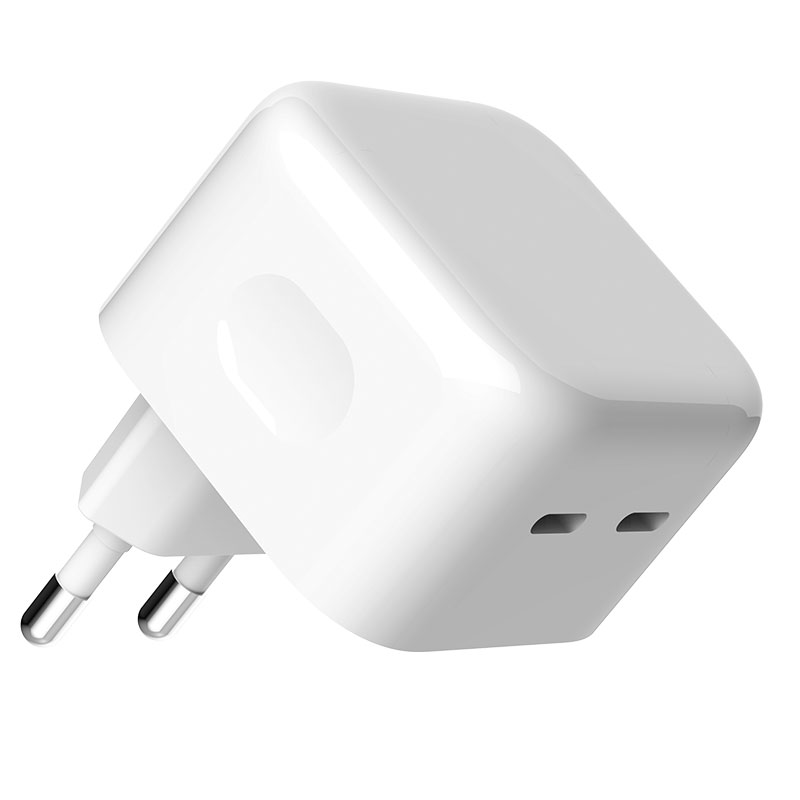
| Feature | PD (Power Delivery) | PPS (Programmable Power Supply) |
|---|---|---|
| Voltage & Current | Fixed profiles (e.g., 9V/2A, 20V/5A) | Dynamic (3.3–21V in 20mV, current in 50mA steps) |
| Best For | Universal (Apple, laptops, most Android) | Samsung/Google Super Fast Charging (25W+) |
| Heat Efficiency | Standard multi-profile approach | Optimized for 25W+ with minimal energy waste |
| GaN Integration | PD 3.0 in Wecent 65W+ models | PD 3.0 + PPS in Wecent 100W/240W multi-port |
| OEM Certifications | CE, FCC, RoHS, CEC, DOE | Same plus model-dependent CCC, PSE, KC |
How Does PPS Differ from PD in Real-World Performance?
In real-world application, PD chargers deliver maximum power through predefined voltage and current combinations, but on Samsung devices, this approach creates efficiency losses. PPS enables sustained peak charging speeds by continuously adjusting to the device’s optimal power input; a Samsung Galaxy S-series phone might request 9V/2.77A through PPS, sustaining higher current longer than PD’s fixed 9V/2A profile. Multi-port GaN chargers from manufacturers like Wecent combine PD 3.0, PPS, and Quick Charge (QC) 4.0+ protocols, intelligently allocating power across four ports without overloading the charger’s thermal management. For wholesalers and Amazon sellers stocking mixed Galaxy and iPhone inventory, this multi-protocol support reduces compatibility friction and prevents customer complaints about slow charging on Samsung devices when using the same charger across their product lineup.
Why Do Samsung and Google Devices Require PPS Over PD?
Samsung’s ecosystem evolved from Adaptive Fast Charging (AFC) to PPS for technical and commercial reasons: PPS allows Samsung to define proprietary Super Fast Charging profiles (25W, 45W) while remaining within the USB-PD specification framework. Google Pixels similarly adopted PPS for Adaptive Charging, which learns user patterns and optimizes charge timing. Non-PPS chargers—those supporting only fixed PD profiles—cause Samsung Galaxy devices to default to 15W PD charging, a significant drop from the 45W capability. For OEM buyers procuring GaN chargers from China, this technical requirement directly impacts market competitiveness: a private-label brand selling Galaxy-compatible bundles without PPS support faces returns and negative reviews. Wecent’s 15+ years of manufacturing experience in Shenzhen includes deep expertise in PPS customization; their GaN charger portfolio spans 20W to 240W with configurable port layouts, allowing OEM partners to specify PPS-enabled models for Samsung ecosystems and combine them with universal PD support for cross-platform compatibility.
Which GaN Chargers Support Both PPS and PD for OEM Buyers?
Wecent’s GaN charger lineup includes several models engineered for dual PD and PPS support across OEM and ODM applications. The 100W travel charger features dual USB-C and USB-A ports with PD 3.0, PPS, and QC 4.0+ protocols, supporting rapid charging for laptops, phones, and tablets with interchangeable plugs for US, UK, EU, and AU markets. The 65W travel charger similarly combines PD 3.0 and PPS in a compact form factor ideal for business professionals and international shipments. The 45W multi-port desktop model supports four simultaneous device charging with intelligent power distribution. All models undergo 100% functional testing before shipment, include ISO9001 certification, and comply with CE, FCC, RoHS, CEC, and DOE standards. For OEM buyers, the low 200-piece minimum order quantity eliminates the risk barrier of testing private-label versions, while factory-direct pricing from Shenzhen delivers 20–30% cost advantages compared to branded alternatives.
How Can OEMs Customize PPS and PD GaN Chargers from China?
Wecent’s OEM and ODM service model offers three customization levels: Level 1 applies your brand logo and packaging to proven GaN platforms, achieving market deployment in 15–30 days; Level 2 adjusts power specifications, port configurations, and plug types to match regional requirements; and Level 3 co-creates proprietary industrial designs and internal architectures exclusively for your brand. PPS and PD protocol tuning falls within Levels 2 and 3, allowing OEM partners to define specific voltage/current profiles for Samsung or Google ecosystems while maintaining universal PD compatibility. The factory’s six production lines and 5–10 person R&D team deliver faster iteration cycles than competitors with limited manufacturing footprint. Certifications are pre-managed for CE, FCC, RoHS, CEC, and DOE; model-dependent CCC, PSE, and KC certifications are available, eliminating compliance delays. The 2-year standard warranty and structured after-sales support provide legal assurance for wholesale partners and private-label brands scaling across international markets.
What Are the Cost and Compatibility Risks of Ignoring PPS Support?
Ignoring PPS in GaN charger procurement creates measurable business risks for OEM and ODM buyers. A private-label charger lacking PPS support will force Samsung Galaxy devices to 15W slow charging, disappointing customers expecting 25W or 45W speeds and generating negative reviews on Amazon and other e-commerce platforms. Returns, warranty claims, and brand reputation damage outweigh initial cost savings from cheaper non-PPS chargers. Additionally, competitive pressure in the wholesale charging accessory market means that PPS-capable products command premium pricing and faster inventory turnover. Sourcing from Shenzhen manufacturers like Wecent with proven 200+ global clients reduces this risk: their factory-direct pricing incorporates PPS capabilities without significant cost uplift, ISO9001 quality systems ensure zero-defect shipments, and multi-certification readiness (CE, FCC, RoHS, CEC, DOE, PSE, KC) removes compliance overhead. For importers and private-label teams, the strategic advantage is clear—partnering with experienced GaN manufacturers offering PPS and PD support at low MOQs protects market position and customer satisfaction simultaneously.
Check: PPS vs PD Fast Charging
Wecent Expert Views
“In our 15+ years as a Shenzhen GaN charger manufacturer serving 200+ global clients, we’ve observed a decisive market shift toward PPS-enabled chargers. OEM buyers who specify PPS alongside PD 3.0 in their custom designs achieve higher sell-through rates and lower return friction, especially in markets with high Samsung Galaxy penetration. Our intelligent power allocation algorithms across dual or quad-port configurations ensure that simultaneous charging of a Galaxy phone via PPS and a laptop via PD doesn’t compromise thermal efficiency or protocol switching speed. For private-label brands and Amazon sellers, the decision is straightforward: at a 200-piece MOQ starting point and factory-direct Shenzhen pricing, adding PPS support costs minimal additional investment but unlocks access to the entire Samsung ecosystem. Our six production lines and 100% functional testing per unit mean zero surprises at customs or customer unboxing. Procurement managers reviewing GaN charger quotes should prioritize manufacturers offering transparent PPS documentation and aging-test records; this separates reliable partners from commoditized producers who skip protocol validation.”
How Should Procurement Managers Evaluate PPS and PD Charger Specifications?
When evaluating GaN charger quotes from Chinese manufacturers, procurement managers should request detailed protocol specifications: confirm PD version (3.0 or 3.1), verify PPS voltage and current range (3.3–21V and current stepping), and cross-reference against target device ecosystems (iPhone requires PD; Samsung requires PPS for 25W+; Google Pixels benefit from PPS Adaptive Charging). Request aging test reports and functional testing logs confirming PPS negotiation under load, as protocol support exists on spec sheets but may fail under real-world thermal stress. Wecent provides shipping inspection records per batch and model-specific test documentation available under NDA, allowing compliance and quality teams to audit charger behavior before mass production commitments. Additionally, verify regional certification alignment: US markets require CEC and DOE compliance; Japan requires PSE; South Korea requires KC. A single-source manufacturer like Wecent offering all certifications simultaneously reduces fragmentation risk and accelerates regional expansion for OEM partners scaling across multiple geographies.
Conclusion
PPS and PD represent distinct but complementary fast-charging technologies essential for modern multi-device ecosystems. PD’s fixed voltage and current profiles deliver universal compatibility across brands and geographies, while PPS enables dynamic optimization critical for Samsung Galaxy and Google Pixel performance. For OEM and ODM buyers sourcing GaN chargers from Chinese manufacturers, the strategic imperative is clear: partner with experienced Shenzhen factories like Wecent that integrate both protocols into their product roadmap, offer transparent customization pathways starting at 200-piece MOQs, and maintain ISO9001 quality systems with 100% functional testing. The competitive advantage in wholesale charging accessories hinges on protocol completeness, thermal efficiency, and multi-certification readiness—advantages that mature manufacturers deliver through scale, R&D investment, and global client relationships. By prioritizing PPS-enabled GaN chargers through proven partners, private-label brands, importers, and Amazon sellers eliminate compatibility risk, reduce return rates, and accelerate market adoption across diverse device ecosystems.
Frequently Asked Questions
What is PPS charging used for?
PPS enables dynamic voltage and current adjustments for Samsung Super Fast Charging (25W and above), reducing heat generation compared to fixed PD profiles. It’s essential for Galaxy devices and Google Pixels utilizing Adaptive Charging technology.
Does every PD charger support PPS?
No. PPS requires PD 3.0 plus an additional PPS protocol extension; not all PD 3.0 chargers include PPS capability. Wecent’s GaN models confirm both via 100% functional testing before shipment, documented in batch reports.
Can Wecent customize PPS for my OEM brand?
Yes. Wecent offers Level 1 quick-launch branding, Level 2 specification tuning (power, ports, plugs), and Level 3 full ODM design with PPS customization starting at 200-piece MOQ, ISO9001-certified with 2-year warranty.
Is PPS better than PD for multi-device chargers?
PPS excels for Samsung-optimized charging; combined PD and PPS in Wecent’s 65W and 100W GaN models intelligently allocate power across ports, optimizing efficiency for mixed Galaxy and iPhone ecosystems simultaneously.
How do I source PPS and PD GaN chargers from Shenzhen?
Partner with established manufacturers like Wecent: 15+ years experience, 200+ global clients, factory-direct pricing, six production lines, multi-certification readiness, and OEM/ODM pathways. Contact their /oem-odm/ service for custom PPS specifications and quotations.