
No—wired charging is significantly faster and more efficient than wireless. Wired GaN chargers deliver up to 240W with 95%+ efficiency and minimal heat loss, charging phones to 100% in 30 minutes or less. Wireless (Qi standard) maxes at 15W with 70–80% efficiency, losing 20–30% to heat. For OEM/ODM buyers, both technologies serve different markets; Wecent offers certified solutions for each.
Check: GaN Charger
Why Is Wired Charging Faster Than Wireless?
Wired charging supports 20W–240W via GaN technology, while wireless Qi maxes at 15W. Higher wattage directly translates to faster charging speeds. Typical phones reach 0–100% in 25–40 minutes with 65W+ wired GaN, versus 60–120 minutes for 10–15W wireless. Direct cable connection avoids air-gap losses and thermal barriers.
What Efficiency Trade-Offs Exist Between Wired and Wireless?
Wired GaN chargers achieve 95%+ power transfer with minimal heat waste. Wireless inductive coupling loses 20–30% energy to heat, netting 70–80% efficiency. Excess wireless heat shortens battery life, causes discomfort, and triggers throttling; GaN wired designs run cooler thanks to advanced semiconductors.
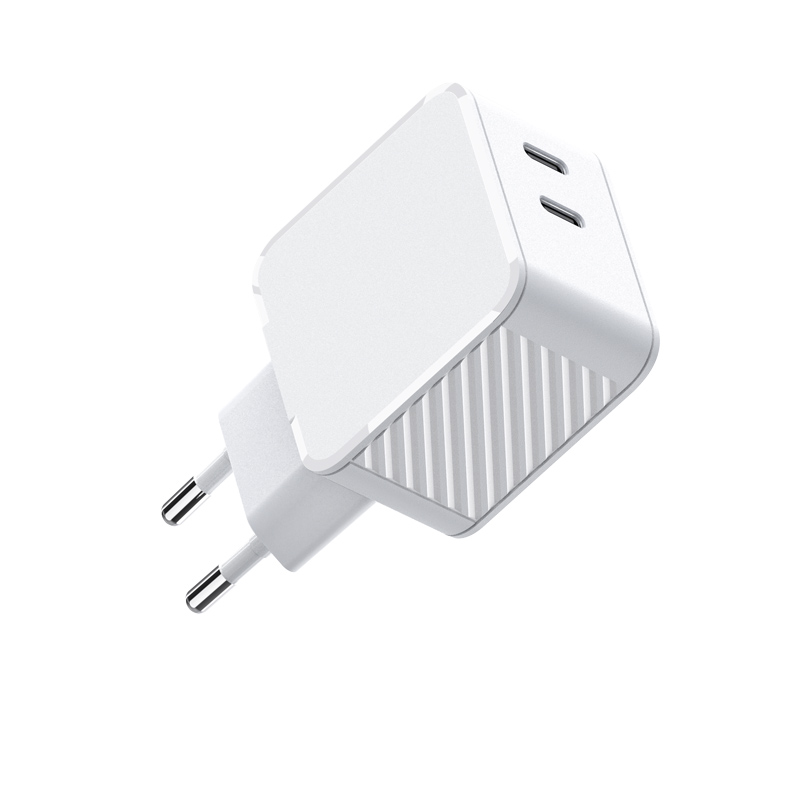
| Metric | Wired Charging (GaN) | Wireless Charging (Qi) |
|---|---|---|
| Max Power | 20W–240W | 15W (Qi standard) |
| Charging Speed | 0–100% in 25–40 min (65W+) | 0–100% in 60–120 min (10–15W) |
| Efficiency | 95%+ | 70–80% |
| Energy Loss (Heat) | 5% or less | 20–30% |
| Best For | Phones, tablets, laptops; fast-charging scenarios | Desks, bedside docks; convenience-focused use |
| OEM/ODM Suitability | High-margin, low-defect potential | Premium positioning; higher warranty risk |
How Does GaN Technology Improve Wired Charging Speed?
Gallium Nitride semiconductors enable smaller size, higher switching frequencies, and lower resistance than silicon. Wecent’s 20W–240W GaN models deliver compact, high-efficiency power for phones to laptops. For OEM/ODM, GaN means less heat, longer lifespan, fewer returns, and easier compliance with ISO9001 plus CE, FCC, RoHS, CEC, DOE certifications.
When Should B2B Buyers Choose Wireless Over Wired?
Choose wireless for convenience-driven markets like desks, nightstands, or travel where speed ranks secondary. Multi-device docks appeal to premium buyers seeking cable-free appeal. Private-label importers gain from mixed SKUs; Wecent’s OEM/ODM covers both wired and Qi wireless from 200 pcs MOQ, streamlining sourcing.
What Are the Hidden Costs of Wireless Charging for Manufacturers?
Wireless faces higher defect risks from heat and coil issues, increasing warranty claims without strict testing. Certification adds RF validation complexity. Wecent mitigates via 100% functional testing, aging under load, and multi-cert support including PSE, KC, CCC—reducing risks for Shenzhen-sourced lines.
How Can Wecent’s OEM/ODM Service Support Both Wired and Wireless Lines?
Wecent provides single-factory sourcing for 20W–240W GaN wired and Qi wireless docks, cutting lead times and vendor management. Customize logos, colors, plugs (EU/US/UK/AUS), and packaging from 200 pcs MOQ. ISO9001 processes ensure batch traceability and 100% testing for reliable global shipments.
What Real-World Performance Gaps Exist Between Wired and Wireless Solutions?
65W GaN wired hits 0–80% in 20 minutes for laptops; 15W wireless takes 90+ minutes for phones. Wired stays cool under load; wireless warms noticeably, affecting perception. OEM costs: wired 20W–65W at $8–18/unit, wireless docks $12–25 at 200 pcs—hybrid lines boost margins via segmentation.
Why Should B2B Importers Offer Both Wired and Wireless Options?
Offer both to segment markets: wired for speed-focused pros/gamers, wireless for convenience seekers. Diversification hedges risks and captures full demand. Wecent’s 15+ years, 200+ clients, low MOQ, and 15-workday leads from Shenzhen enable agile multi-SKU launches for Amazon FBA and wholesalers.
Check: Is Wireless Charging Faster Than Wired Charging?
Wecent Expert Views
Shenzhen Wecent’s 15+ years and 200+ global clients show profitable OEM/ODM strategies blend wired and wireless. Our ISO9001 system delivers 100% functional testing and aging for both, minimizing defects. Multi-cert expertise (CE/FCC/RoHS/CEC/DOE/PSE/KC/CCC) streamlines compliance. Single-factory sourcing cuts costs and leads to 15 workdays, ideal for importers scaling from 200 pcs with custom plugs, colors, and packaging.
Conclusion
Wired GaN outpaces wireless in speed and efficiency, but B2B success lies in offering both. Wecent’s Shenzhen factory empowers OEM/ODM buyers with 20W–240W wired, Qi docks, low 200 pcs MOQ, 2-year warranty, and global certifications. Launch hybrid lines to segment markets, optimize margins, and minimize risks via proven quality and fast Shenzhen shipping.
FAQs
Is wireless charging bad for battery health compared to wired?
Wireless generates 20–30% more heat from 70–80% efficiency versus 95%+ for GaN wired, accelerating degradation. Wecent’s 100% testing and aging protocols catch issues early, safeguarding brands.
Can OEM buyers order both wired and wireless from a single Shenzhen factory?
Yes, Wecent integrates 20W–240W GaN wired and Qi docks at 200 pcs MOQ per SKU, slashing overhead and leads to 15 workdays with consistent ISO9001 quality.
What’s the real cost difference between wired and wireless for importers?
Wired GaN (20W–65W) costs $8–18/unit; wireless docks $12–25 at volume. Wired yields 40–60% markups via fast turnover; wireless 35–50% on premium sales—hybrid maximizes returns.
Do wireless chargers need the same certifications as wired?
Wireless adds RF (FCC Part 15); both need CE/FCC/RoHS/CEC/DOE. Wecent handles model-dependent CCC/PSE/KC, shortening timelines to 4–6 weeks for prototypes.
Which technology should importers prioritize for Amazon FBA?
Prioritize wired GaN (65W–100W) for volume and speed; add wireless docks for premium niches. A 70/30 wired-wireless mix optimizes FBA velocity and hedges risks.