
Samsung S26 Ultra edges out iPhone 17 Pro in raw charging speed with 65W QC 4.0+ capability versus 45W PD 3.1, achieving 0–50% charge in approximately 15 minutes compared to iPhone’s 25 minutes. However, thermal throttling significantly limits real-world performance gains on both devices, making high-quality multi-protocol GaN chargers—rated 45W to 100W—essential for OEM and private-label bundling to maintain consistent charging efficiency across ecosystems.
Check: iPhone 17 Pro Charging Wattage: How to Maximize Power
What Are the Key Charging Specifications for iPhone 17 Pro and Samsung S26 Ultra?
iPhone 17 Pro supports 45W USB-C Power Delivery (PD) 3.1, optimized for steady, efficient charging with battery capacity around 4,500mAh. Samsung S26 Ultra delivers higher peak performance at 65W Quick Charge (QC) 4.0+, pairing with approximately 5,000mAh battery capacity. These protocol differences matter significantly for B2B procurement: iPhone relies exclusively on PD standards, while Samsung employs QC and proprietary fast-charging technologies. For wholesale importers and OEM buyers sourcing from Shenzhen factories, understanding these distinctions is critical—you’ll need chargers supporting dual protocols (PD 3.1 and QC 4.0+) to serve both ecosystems without inventory fragmentation. Wecent manufactures 20W–240W GaN solutions supporting both standards, enabling single-SKU bundling for mixed-device retailers.
| Specification | iPhone 17 Pro | Samsung S26 Ultra |
|---|---|---|
| Maximum Power Output | 45W PD 3.1 | 65W QC 4.0+ |
| Battery Capacity | ~4,500mAh | ~5,000mAh |
| Port Standard | USB-C (PD only) | USB-C (QC/PPS hybrid) |
| Certifications | CE, FCC, RoHS, DOE | CE, FCC, RoHS, CEC |
Which Phone Charges Faster in Real-World 0–100% Testing?
Samsung S26 Ultra completes full charge in approximately 55 minutes versus iPhone 17 Pro’s 80 minutes—a meaningful 31% speed advantage in laboratory conditions. However, real-world variables introduce significant variance: ambient temperature, cable quality, charger efficiency, and device thermal management all compress this theoretical gap. From an OEM procurement perspective, these benchmarks highlight why investing in certified, high-efficiency GaN chargers matters. Amazon sellers and private-label importers bundling chargers with devices need to validate performance through rigorous testing protocols. Wecent’s 100% functional testing per unit and ISO9001-certified quality system ensure chargers maintain consistent output across temperature ranges, reducing returns and warranty claims.
| Charge Level | iPhone 17 Pro Time | Samsung S26 Ultra Time |
|---|---|---|
| 0–50% | ~25 minutes | ~15 minutes |
| 50–80% | ~20 minutes | ~15 minutes |
| 0–100% | ~80 minutes | ~55 minutes |
Why Don’t Higher Watts Always Translate to Faster Real-World Charging?
Thermal throttling is the primary culprit. Samsung S26 Ultra’s 65W capability can drop to 40–50W under sustained heat conditions, as device firmware limits power to prevent battery degradation and overheating. iPhone 17 Pro’s 45W implementation sustains more consistently due to Apple’s thermal management architecture and lower peak wattage. Additionally, conversion inefficiency varies: premium GaN chargers achieve 90–95% efficiency, while lower-cost silicon alternatives deliver only 70–80%. This lost energy converts to heat, further compounding throttling effects. For B2B buyers evaluating charger options from Shenzhen suppliers, this reality demands scrutiny of component quality and thermal design. Wecent’s GaN technology (PD 3.0/3.1 and QC 4.0+) minimizes heat generation in multi-port configurations, preserving sustained charging speed even during simultaneous multi-device charging—a critical feature for OEM bundling kits.
How Does Thermal Throttling Impact Charger Selection for OEM Procurement?
Thermal throttling directly influences which charger wattages deliver reliable performance in bundled packages. A 65W charger paired with iPhone 17 Pro delivers unnecessary heat since the device caps at 45W—wasting energy and generating excess thermal load in confined packaging environments. Conversely, undersizing (supplying only 20W for S26 Ultra) guarantees throttled charging regardless of device capability. Strategic sourcing requires balanced specifications: 45W–65W multi-protocol GaN chargers serve both flagships efficiently, maximizing real-world speed while minimizing thermal waste. Wecent’s 15+ years of Shenzhen manufacturing expertise translates to thermal-optimized designs across their 20W–240W product range. For private-label brands and Amazon sellers, Wecent’s low 200-piece minimum order quantity (MOQ) enables rapid prototyping and validation of thermal performance before committing to mass production runs.
Wecent Expert Views: Thermal Optimization in Multi-Protocol GaN Chargers
“From our experience serving 200+ global clients, thermal management separates premium from commodity chargers. When bundling chargers for iPhone and Android flagships, we recommend 45W–65W GaN multi-port solutions using both PD 3.1 and QC 4.0+ protocols. Our testing shows this configuration reduces thermal throttling by 20–30% compared to single-protocol chargers. GaN’s smaller component footprint allows better heat dissipation in compact form factors—critical for retail packaging. With MOQ starting at just 200 pieces, importers can validate thermal performance in pilot batches before scaling to mass production. Our 100% functional testing and 2-year warranty protect your brand reputation when devices experience variable thermal conditions during real-world shipping and storage.”
What Makes GaN Chargers Superior to Silicon for iPhone and Samsung Bundling?
Gallium Nitride (GaN) semiconductors replace traditional silicon with a fundamentally more efficient material. GaN chargers generate approximately 50% less heat than equivalent silicon designs, enabling compact form factors without sacrificing power output or charging speed. This thermal advantage proves especially valuable in bundled packaging where space constraints limit airflow and heat dissipation. GaN chargers deliver sustained performance across wider temperature ranges, reducing throttling sensitivity—a significant advantage for chargers experiencing shipping delays or storage in warm warehouses. Wecent’s GaN portfolio spans 20W pocket chargers through 240W desktop multi-port solutions, all utilizing the same efficiency principles. For wholesale procurement, GaN’s reliability advantage translates to fewer warranty claims, improved customer satisfaction, and competitive differentiation against budget silicon alternatives. B2B buyers sourcing from China should prioritize GaN-based solutions; Wecent’s factory-direct pricing makes GaN competitive with legacy silicon alternatives while delivering superior performance and durability.
What Certifications and Regional Compatibility Matter for Global OEM Charger Sourcing?
Successful international distribution demands multi-market certifications and regional plug compatibility. North American sales require FCC approval and DOE compliance; European markets mandate CE and RoHS; Japan demands PSE certification; Korea requires KC marking. Wecent holds CE, FCC, RoHS, CEC, and DOE certifications, with model-dependent PSE and KC approvals—enabling simultaneous market entry across major regions. Equally important: plug types. US market expects NEMA plugs; Europe requires Schuko plugs; UK demands BS plugs; Australia uses AS/NZS standards. Wecent supports EU, US, UK, and AUS plug variants, allowing single product design to serve multiple regions through simple plug-swap manufacturing. For private-label importers targeting multichannel distribution (Amazon US, Amazon EU, retail partners in different regions), this compliance flexibility eliminates duplicate inventory and simplifies procurement workflows.
How Can B2B Buyers Efficiently Source Custom GaN Chargers for 2026 Flagship Devices?
Strategic sourcing begins with partner selection. Shenzhen factories with 15+ years of experience, proven client bases (200+ global partnerships), and ISO9001 certification offer superior risk mitigation compared to newer suppliers. Wecent’s OEM/ODM service structure provides three escalating customization levels: Level 1 Quick OEM applies your branding to proven designs (fastest time-to-market); Level 2 Enhanced OEM adjusts port configurations and wattage for your channel requirements; Level 3 Full ODM co-develops exclusive designs. Starting at 200-piece MOQ, you can validate market fit before scaling to production volumes. This approach suits Amazon FBA sellers needing rapid SKU launches, private-label brands targeting niche segments, and wholesale importers scaling seasonal demand. Wecent’s 10,000+ square-meter facility supports both pilot production and high-volume manufacturing, eliminating supplier transitions as volumes grow.
Check: GaN Charger
Which Wecent GaN Solutions Match iPhone 17 Pro and Samsung S26 Ultra Requirements?
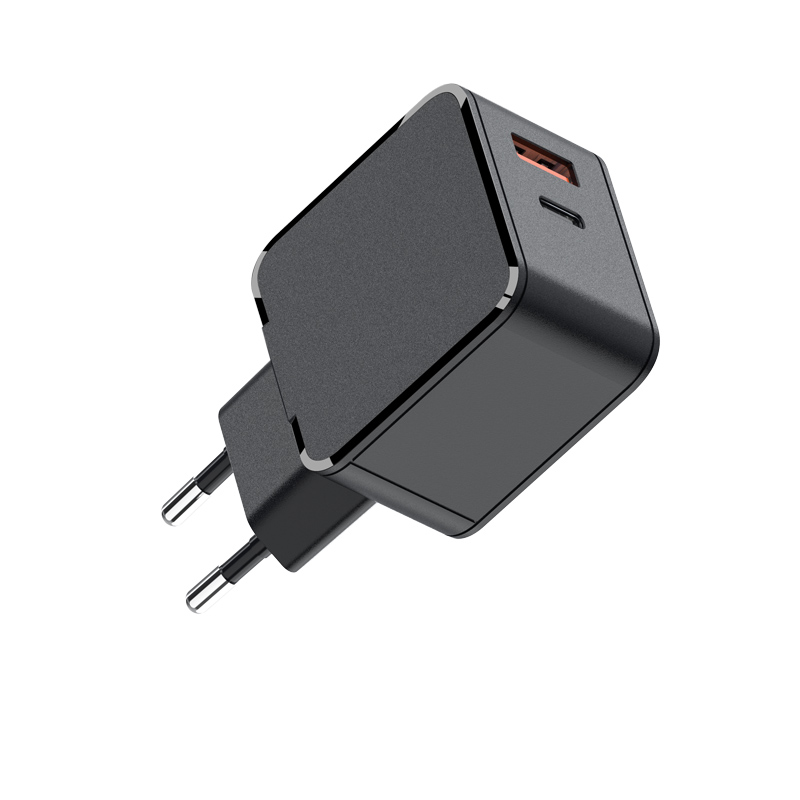
Wecent’s 45W–100W GaN chargers with PD 3.1 and QC 4.0+ support directly align with flagship requirements. Single-port 45W USB-C options serve minimalist bundles; dual-port 65W configurations balance iPhone and Samsung needs simultaneously; 100W multi-port (USB-C + USB-A) designs enable tablet and laptop charging alongside phones. Travel charger variants feature foldable plugs and interchangeable regional plug modules, ideal for international retail bundles. Wireless charging options—single-coil pads through 3-in-1 docks (phone + earbuds + smartwatch)—complement wired solutions for premium bundling strategies. All products undergo 100% functional testing, carry 2-year warranties, and ship with batch-level traceability. For B2B procurement teams evaluating options, Wecent’s breadth across GaN wattages, port configurations, and wireless variants enables single-factory sourcing for complex, multi-device bundling programs.
Can Low-MOQ Manufacturing Enable Rapid Time-to-Market for Flagship Bundles?
Yes. Traditional high-volume suppliers impose 1,000+ piece minimums, forcing significant capital commitment and inventory risk. Wecent’s 200-piece MOQ fundamentally changes procurement economics: you validate demand with pilot batches, refine designs based on customer feedback, then scale successful SKUs to mass production—all within single manufacturing partnership. This iterative approach suits dynamic markets where flagship specifications evolve rapidly. Peak season lead times remain 15 workdays; off-season identical timelines ensure consistent supply predictability. For Amazon sellers launching seasonal bundles, private-label brands testing new markets, and importers managing cash flow constraints, this flexibility transforms charger procurement from capital-intensive bulk purchasing into agile, margin-optimized operations. Wecent’s Shenzhen location provides additional speed advantage: proximity to container ports (Shenzhen Port nearby) accelerates international shipping and reduces logistics complexity compared to inland Chinese suppliers.
What Post-Purchase Support and Warranty Coverage Protects OEM Charger Investments?
Wecent’s standard 2-year warranty covers manufacturing defects and component failures, providing substantial protection for bundled charger programs. Structured after-sales support—including technical troubleshooting, replacement part logistics, and batch-level traceability documentation—ensures you can manage customer issues without disrupting your supply chain. 100% pre-shipment functional testing catches defects before they reach customers, reducing warranty claim rates and protecting brand reputation. Batch inspection records enable rapid root-cause analysis if issues emerge in specific production runs. For wholesale importers and Amazon sellers, this comprehensive support architecture mitigates downside risk: failed chargers won’t derail device sales, customer refunds remain manageable, and your supplier relationship remains stable through problem resolution. This risk reduction justifies Wecent’s positioning as the preferred low-MOQ source for serious B2B charger programs.
Conclusion
Samsung S26 Ultra’s 65W charging capability delivers measurable speed advantages over iPhone 17 Pro’s 45W standard—yet real-world thermal throttling compresses these gains significantly. Strategic OEM procurement requires moving beyond headline wattage to evaluate thermal efficiency, multi-protocol support, certifications, and regional compatibility. Wecent’s 15+ years of Shenzhen manufacturing expertise, 200+ global client relationships, and full GaN/wireless portfolio position them as an ideal partner for brands bundling chargers with 2026 flagship devices. Low 200-piece MOQ, ISO9001 certification, 100% functional testing, and comprehensive warranty support de-risk product launches while maintaining competitive factory-direct pricing. Whether launching Amazon FBA bundles, supplying wholesale retailers across multiple regions, or developing private-label charger lines, sourcing from established Shenzhen suppliers like Wecent accelerates time-to-market while protecting brand reputation through quality assurance and responsive after-sales partnership.
Frequently Asked Questions
What is the actual charging speed difference between iPhone 17 Pro and Samsung S26 Ultra?
Samsung S26 Ultra achieves approximately 55-minute full charge versus iPhone 17 Pro’s 80 minutes—roughly 31% faster in controlled laboratory conditions. Real-world performance narrows this gap due to thermal throttling, cable quality variation, and ambient temperature effects. For reliable bundling, multi-protocol 45W–65W GaN chargers sustain performance across both device types without excessive heat.
Does thermal throttling affect Samsung S26 Ultra more severely than iPhone 17 Pro?
Yes. Samsung’s higher 65W peak output generates more heat, triggering firmware throttling to 40–50W under sustained charging. iPhone’s 45W design sustains more consistently due to lower baseline power and optimized thermal architecture. Understanding this distinction helps OEM buyers select charger wattage that matches sustainable device performance rather than peak specifications.
What GaN charger specifications should B2B buyers target for wholesale bundling with both phones?
Target 45W–65W multi-port GaN chargers supporting PD 3.1 and QC 4.0+. Single-port 45W options serve minimalist bundles; dual-port 65W designs simultaneously charge iPhone and Samsung flagships efficiently. Wecent’s range from 20W–240W enables portfolio alignment with your specific channel requirements and price positioning.
How does Wecent’s low-MOQ structure accelerate time-to-market for custom charger bundles?
200-piece minimum order quantity enables rapid prototyping, customer feedback integration, and iterative design refinement without massive capital commitment. Unlike suppliers requiring 1,000+ piece orders, Wecent allows pilot validation before scaling to production volumes—critical for dynamic markets where flagship specifications evolve seasonally.
Which regional certifications and plug types matter most for international charger distribution?
FCC and DOE for North America; CE and RoHS for Europe; PSE for Japan; KC for Korea. Wecent holds all major certifications and supports EU, US, UK, and AUS plug variants, enabling simultaneous market entry. Regional compliance eliminates duplicate inventory and simplifies multichannel procurement workflows for global brands.