
The EU USB-C mandate 2024 requires all portable devices sold in the EU to adopt USB-C as the standard charging port. Key deadlines: 28 December 2024 for smartphones, tablets, and cameras; 28 April 2026 for laptops. Chargers must support USB PD fast charging and carry CE, FCC, and RoHS certifications. For importers, partnering with a certified factory like Wecent (ISO9001, 15+ years, 200+ clients) ensures compliance with MOQ as low as 200 pieces.
Check: How Does the EU Common Charger Mandate Drive USB-C Sourcing for Travel Chargers?
What is the EU Common Charger Directive and when does it take effect?
Officially an amendment to the Radio Equipment Directive, adopted in 2022, the EU Common Charger Directive aims to reduce e-waste and simplify charging. The key deadlines: 28 December 2024 for handheld devices, and 28 April 2026 for laptops. After these dates, all new products placed on the market must use USB-C. No more proprietary connectors are allowed; existing stock may have transitional arrangements. Importers must ensure chargers are USB-C native from day one.
Which devices are covered by the USB-C mandate?
The full list of affected categories includes smartphones, tablets, digital cameras, earbuds, headsets, handheld gaming consoles, portable speakers, e-readers, keyboards, mice, portable navigation systems, and laptops (2026). Exemptions apply only to devices too small to physically accommodate USB-C, such as smartwatches, certain health trackers, and some medical devices. For OEM buyers, verify your product type; if listed, it must ship with a USB-C port and compatible charger. Wecent can help customize power ratings per device.
What certifications do my chargers need to enter the EU market?
Mandatory certifications include CE marking and RoHS compliance, along with evidence of compliance with USB PD fast charging standards. FCC is required for the US market, but many global buyers request it for flexibility. Wecent holds CE, FCC, RoHS, CEC, DOE, and model-dependent PSE (Japan), KC (Korea), and CCC (China) – giving importers global optionality.
| Certification | Required? | Wecent Status |
|---|---|---|
| CE | Mandatory | ✅ Held |
| RoHS | Mandatory | ✅ Held |
| FCC | Recommended | ✅ Held |
| CEC | US-specific | ✅ Held |
| PSE / KC / CCC | Optional per region | ✅ Available |
Why is GaN technology ideal for EU-compliant chargers?
GaN (gallium nitride) chargers are smaller and run cooler than traditional silicon, helping meet EU eco-design standby power limits. Wecent’s GaN chargers cover 20W to 240W, supporting phones, tablets, and laptops with the same charger – reducing SKU complexity. The table below shows the compliance advantages.
| Feature | GaN | Silicon | EU Compliance Benefit |
|---|---|---|---|
| Size | Compact | Bulky | Easier to package & ship |
| Heat generation | Low | High | Meets standby power rules |
| Efficiency | High | Lower | Lower energy waste |
| Cert readiness | Easy | Requires more design | Faster time to market |
Wecent Expert Views: “GaN is the future-proof choice for the EU mandate. Our GaN chargers already pass all eco-design requirements, and we can scale custom wattages quickly from 200 pcs MOQ. With 15+ years in Shenzhen manufacturing, we deliver CE/FCC/RoHS-certified chargers that meet the USB-C mandate without design compromise. Our 100% functional testing and batch traceability give importers full confidence during EU conformity audits.”
How can Chinese factories like Wecent help you comply with the USB-C mandate?
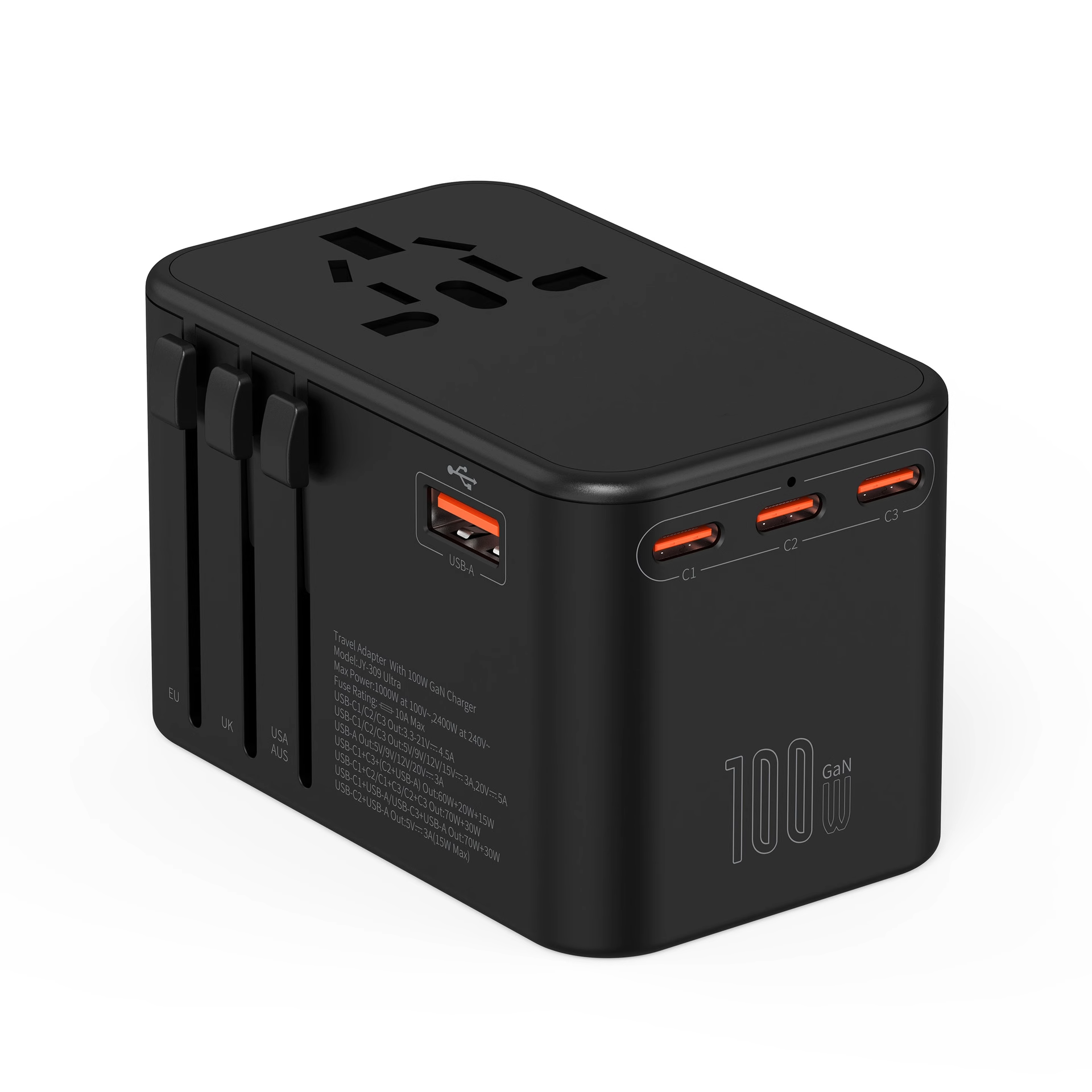
Wecent, based in Shenzhen with over 15 years of experience, leverages the local ecosystem for rapid prototyping and cost-effective sourcing. Built-in certifications (CE, FCC, RoHS, CEC, DOE) mean you don’t start from scratch. Every charger undergoes 100% functional testing before shipment, with batch records kept for traceability – critical for EU conformity audits. Regional plug options (EU, US, UK, AUS) simplify global inventory.
Check: Travel Charger
What OEM/ODM levels and low MOQ options does Wecent offer?
Wecent provides three service levels. Level 1 OEM (Quick Logo & Box): custom logo, packaging, and manual; MOQ 200 pcs; lead time 15–20 days. Level 2 Enhanced OEM: color options, custom power specifications, safety features; MOQ 500–1,000 pcs. Level 3 Full ODM: co-create a charger exclusive to your brand, from PCB layout to certifications. All levels are backed by ISO9001 quality management and a 2-year warranty.
What common compliance pitfalls should importers avoid?
Pitfall 1: Using micro-USB with an adapter – not allowed; the device port must be USB-C. Pitfall 2: Ignoring fast charging interoperability – if your device supports fast charging, the charger must support the same standard (e.g., USB PD). Pitfall 3: Wrong certifications – some factories claim “CE” without proper documentation. Always request valid certificates and test reports. Work with a factory that pre-emptively holds all required certs and provides full compliance documentation. Wecent includes certificates with every shipment.
Conclusion
The EU USB-C mandate is not a future risk – it is already in effect for 2024 and 2025 deadlines. Importers and OEM buyers who delay sourcing risk stock rejection, fines, and lost market share. By partnering with an experienced Chinese manufacturer like Wecent, you gain instant compliance, low MOQ (200 pcs), GaN expertise (20W–240W), and full OEM/ODM flexibility – from quick logo to custom power designs. The common charger law creates a clear competitive advantage for those who act now. Wecent is ready to help you bring compliant, high-quality USB-C chargers to the EU market – fast, cost-effectively, and with zero compliance headaches. Ready to source your EU-compliant charger? Visit Wecent’s OEM/ODM page or contact the sales team for a quote and certification samples.
FAQ
What is the penalty for selling non-compliant chargers after the EU deadline?
Authorities can issue fines, order product recalls, or ban sales. Penalties vary by member state but often include forfeiture of non-compliant stock and legal costs.
Do I need to apply for certifications myself, or can the factory provide them?
Most OEM factories provide CE, RoHS, and FCC as part of the manufacturing process. Wecent includes these certifications for all standard models and can assist with additional country-specific certs (PSE, KC) at minimal extra cost.
Can I customize the charger color, packaging, and plug type with a MOQ of 200 pieces?
Yes. Wecent’s Level 1 OEM service starts at 200 pcs and includes logo printing, custom packaging, and choice of EU, US, UK, or AUS plug – without sacrificing certification integrity.
How long does it take to receive a sample of an EU-compliant GaN charger?
For a standard GaN model already certified, samples ship within 5–7 business days. Full custom ODM samples take 2–3 weeks depending on complexity.
Does Wecent handle shipping and customs clearance for EU destinations?
Wecent ships globally via FedEx, DHL, or sea freight. They provide all necessary export documentation and certificates to facilitate smooth customs clearance in the EU. Buyers are responsible for import duties and VAT.