
A 200pcs minimum order charger helps brands test market trends by minimizing inventory risk to $5K–10K pilots versus $50K+ bulk orders, enabling 4–6 week SKU testing with custom branding, and providing sales data for scaling to 5K+ reorders. Shenzhen factories like Wecent support this with low MOQs, GaN technology from 20W–240W, and multi-certifications (CE, FCC, PSE, KC) for rapid multi-market launches—ideal for Amazon FBA sellers and OEM buyers seeking factory-direct pricing without overcommitment.
Check: Services
How Does Low MOQ Reduce Inventory Risk for Charger Brands?
Traditional charger suppliers impose 5,000–10,000 piece minimum orders, locking brands into $50K+ capital expenditure before validating market demand. Wecent’s 200-piece MOQ enables pilots at $5K–10K investment, preserving cash flow for marketing, Amazon advertising, and supply chain agility. Brands can test multiple SKUs—such as 20W phone chargers versus 65W laptop GaN models—before scaling, reducing dead inventory risk by 90%. With 15+ years of manufacturing experience and 200+ global clients, Wecent’s factory-direct model turns pilot data into reorder confidence within 4 weeks, allowing brands to make data-driven decisions on power ratings, port configurations, and regional certifications before committing to mass production.
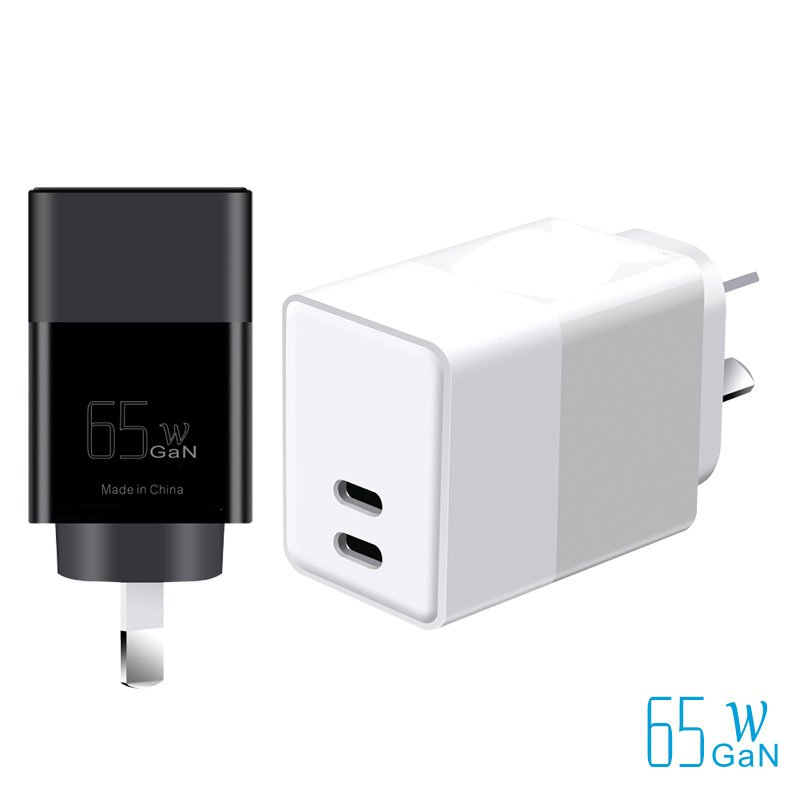
Why Is 200pcs MOQ Ideal for Amazon FBA Sellers and Boutiques?
Amazon FBA sellers face steep storage fees ($0.50–$1.50 per unit monthly) and strict inventory limits, making oversized orders economically unsustainable. Wecent’s 200-piece MOQ solves this pain point by enabling private-label testing without overstock liability. Sellers can customize logos, packaging, and colors at Level 1 OEM (fastest path to market) or Level 2 Enhanced OEM (power/port adjustments), then scale profitably once sales velocity is proven. Boutique brands similarly benefit from small-batch customization, testing GaN trends like magnetic charging or multi-port designs before full commitment. This approach democratizes charger sourcing, allowing emerging e-commerce brands to compete with larger players using factory-direct pricing and rapid turnaround times.
| Supplier Type | Typical MOQ | Cost per Pilot (200pcs GaN) | Lead Time | Certifications |
|---|---|---|---|---|
| Traditional China Factory | 5,000pcs | Not feasible | 8–12 weeks | Limited (CE/RoHS) |
| Wecent (Shenzhen) | 200pcs | $5K–10K | 4–6 weeks | CE/FCC/RoHS/PSE/KC/ISO9001 |
| Dropshipper | 1pc | High markup ($15–20/unit) | 2–4 weeks | Inconsistent |
What Makes Small Batch Manufacturing from Shenzhen a Game-Changer?
Shenzhen’s electronics ecosystem—proximity to GaN component suppliers, compliance testing labs, and logistics hubs—compresses prototyping cycles from 8 weeks to 2 weeks. Wecent’s factory in Baoan District leverages this advantage, conducting 100% functional testing on every unit before shipment, ensuring zero defects on pilot orders. The scalability path is seamless: test at 200 pieces for trend validation (e.g., USB-C GaN for laptop charging), then reorder at 1,000 or 5,000 pieces without supplier switching or quality degradation. Global shipping with regional plug options (EU, US, UK, AUS) and a standard 2-year warranty build buyer confidence, transforming small pilots into long-term partnerships. This agility enables brands to respond to market shifts—such as rising demand for 65W multi-device chargers—within one product cycle, maintaining competitive advantage.
How Do Certifications Enable Multi-Market Trend Testing with Low MOQ?
Wecent’s ISO9001-certified quality system ships with CE, FCC, RoHS, CEC, and DOE certifications standard, plus model-dependent CCC (China), PSE (Japan), and KC (Korea) options. This built-in compliance stack eliminates $10K+ re-certification delays when launching pilots in multiple regions, allowing brands to test EU, US, and Asia-Pacific markets simultaneously from a single 200-piece order batch. GaN technology inherently meets stringent efficiency standards (DOE/CEC), passing regulatory hurdles faster than traditional silicon chargers. By consolidating certifications at the factory level, Wecent reduces buyer liability and accelerates time-to-market for international pilots, letting brands capitalize on regional trends without compliance roadblocks.
Why Choose GaN Chargers for Low-MOQ Market Experiments?
GaN (Gallium Nitride) semiconductors deliver 25%+ higher power density than silicon, enabling compact 20W–240W designs that appeal to modern consumers seeking portable, fast-charging solutions. For low-MOQ pilots, this technology advantage translates to differentiation: boutique brands can test premium positioning (e.g., magnetic wireless charging or 4-port desktop hubs) without competing solely on price. Wecent’s ODM services support custom materials—soft-touch finishes, natural-look surfaces—and bundled sets (charger + cable + pouch), allowing small brands to capture niche segments (travel, gaming, professionals) at 200-piece volumes. Factory-direct pricing keeps per-unit costs 30–50% lower than dropshipping markups, enabling healthier margins even on modest sales volumes and justifying the test investment.
Can Low MOQ OEM Chargers Scale to Full Production Seamlessly?
Yes. Wecent’s 15+ years of experience serving 200+ global clients demonstrates that small-batch pilots scale without quality degradation. The path is straightforward: validate a 200-piece pilot, analyze sales and customer feedback over 4 weeks, then place reorders at 1,000 or 5,000 pieces with identical specifications, certifications, and customization. Wecent’s quality control process—component inspection, in-line electrical testing, and final batch traceability—remains consistent across all volumes, eliminating the “quality cliff” that plagues suppliers unprepared for growth. This reliability is why long-term partnerships develop: brands test trends, succeed, and renew annually with larger commitments, confident in Wecent’s delivery and technical support. For procurement managers overseeing multi-SKU portfolios, this scalability model reduces vendor risk and accelerates cash flow from pilot to production revenue.
Check: Leading GaN & Wireless Charger Manufacturer
| OEM/ODM Tier | Customization Level | Ideal For | Timeline (from 200pcs) |
|---|---|---|---|
| Level 1 | Logo, packaging, colors | Amazon FBA pilots | 4 weeks |
| Level 2 | Power/port tweaks, plug types | Boutique brands | 5–6 weeks |
| Level 3 | Full design, R&D, materials | OEM scaling | 6–8 weeks |
Wecent Expert Views
“Our 200+ clients leverage 200-piece MOQs to validate emerging GaN trends—from 240W multi-device charging stations to magnetic wireless docks—before committing capital to 5,000-unit reorders. What differentiates Wecent is 15 years of ISO9001 operations in Shenzhen’s Baoan manufacturing district: 100% functional testing, multi-market certifications baked into every batch, and OEM/ODM flexibility across all volumes. Brands don’t just get chargers; they get a scalable partnership. We’ve seen pilots evolve into annual multi-SKU relationships because our traceability and technical support eliminate the hidden costs—delays, rejects, compliance headaches—that kill ROI on small batches elsewhere. For procurement managers testing new product lines or Amazon sellers validating seasonal trends, low MOQ at Wecent means risk becomes opportunity.”
How Do Brands Validate Charger SKU Performance Before Scaling?
Brands deploy 200-piece pilots to real-market channels—Amazon FBA, e-commerce websites, retail partners—tracking sales velocity, customer reviews, and return rates over 4–6 weeks. This data (conversion rate, avg. order value, repeat purchases) informs reorder decisions: a 65W GaN charger with 20% return rate signals design or positioning issues, while a 35W phone charger with 5% returns and positive reviews justifies 5,000-unit scaling. Wecent supports this iteration by providing batch traceability records, allowing brands to correlate specific production batches with performance metrics. This closed-loop feedback accelerates product refinement without costly mid-production design changes, reducing time-to-volume by 50% versus traditional manufacturing approaches.
What Are the Total Costs and ROI for a 200pcs Charger Pilot?
A 200-piece GaN charger pilot at Wecent costs $5K–10K (material, labor, testing, shipping), yielding per-unit costs of $25–50 depending on wattage (20W–240W range). Amazon FBA sellers resell at $35–80, generating $7K–16K gross revenue per pilot batch, with 40–50% margins after FBA fees and marketing spend. For boutique brands selling direct, margins reach 60–70%, turning a $7.5K investment into $14K–21K revenue within 6 weeks. Breakeven occurs within pilot window; profit enables reinvestment in reorders or marketing. ROI compounds when brands test 2–3 SKUs simultaneously (phone + laptop + wireless), diversifying risk and capturing multiple market segments with a single $15K–30K pilot budget—impossible under traditional 5,000-unit MOQs.
Does Wecent Support Regional Plug and Certification Customization for Low MOQ?
Yes. Wecent’s 200-piece MOQ includes regional customization: EU, US, UK, and AUS plug types ship within the same batch with factory-applied certifications. Brands can split orders—100 pieces with EU plugs (CE/RoHS standard), 100 pieces with US plugs (FCC/DOE/CEC)—enabling simultaneous market tests in Europe and North America. Model-dependent certifications (PSE for Japan, KC for Korea, CCC for China) are pre-applied when specified, eliminating post-shipment delays. This flexibility turns a single 200-piece order into a multi-region pilot, maximizing data collection and scaling insight per investment dollar, a critical advantage for DTC brands and wholesale importers testing international expansion.
Conclusion
The 200-piece minimum order revolutionizes charger sourcing for emerging brands, Amazon sellers, and procurement teams. By condensing pilot investment from $50K+ to $5K–10K and timelines from 12 weeks to 4–6 weeks, Wecent’s low MOQ transforms trend testing from a capital-intensive gamble into a data-driven discipline. Brands validate GaN technology adoption, regional plug preferences, and price elasticity in real markets, then scale proven SKUs to mass production without vendor lock-in or quality compromises. Shenzhen’s ecosystem advantages—GaN component access, compliance lab proximity, logistics efficiency—ensure consistent, rapid delivery at factory-direct pricing, outcompeting dropshippers and traditional suppliers on speed and cost. For OEM buyers, wholesalers, and e-commerce brands targeting 2026’s fast-growing charging market, Wecent’s 15-year track record, 200+ global clients, and ISO9001 certification provide the reliability and flexibility to test, scale, and dominate trends without overcommitment. Contact Wecent’s team today to launch your pilot and transform market insights into revenue.
FAQs
What is the lowest MOQ for Wecent GaN chargers?
200 pieces standard across all GaN models (20W–240W), with full OEM/ODM customization, certifications (CE, FCC, RoHS, PSE, KC, CCC as applicable), and regional plug options included from the first order.
How long does a 200pcs custom order take from design to shipment?
4–6 weeks for OEM Level 1 (logo/packaging), 5–6 weeks for Level 2 (power/port adjustments), and 6–8 weeks for Level 3 (full ODM design). Timeline includes component sourcing, production, 100% functional testing, and global delivery.
Does Wecent support private labeling and custom packaging for small batches?
Yes, Levels 1–3 OEM/ODM services enable logo printing, custom packaging, color options, and bundled sets (charger + cable + pouch) at 200pcs MOQ without setup fees or volume penalties.
What certifications does Wecent provide for low MOQ pilots?
ISO9001 quality system, CE, FCC, RoHS, CEC, and DOE certifications standard; model-dependent CCC (China), PSE (Japan), and KC (Korea) available, all pre-applied to pilot batches.
Can Amazon sellers test multiple GaN charger SKUs simultaneously with 200pcs MOQ?
Absolutely. Split a 200-piece order across SKUs—e.g., 100 units 35W phone chargers, 100 units 65W laptop chargers—with identical or different regional plugs, enabling multi-trend validation and risk diversification within a single pilot budget.